The A Natural Minor Scale
Nothing but natural notes: A, B, C, D, E, F and G form the A minor scale. It has the same notes as C major, which makes it the easiest minor key to read and a classic first scale on guitar.
Play the open A string for the root, or the 5th fret of the low E string for the familiar first box. Because everything is natural, the shape is easy to learn, and the next step is to hear it against a backing, as practising scales in context explains.
Play the A minor scale
Use the step menu in the player to switch between the single-string run and the box shapes.
Notes of the A minor scale
| Note | Degree | Interval | Semitones from root |
|---|---|---|---|
| A | 1 | Root | 0 |
| B | 2 | Major 2nd | 2 |
| C | b3 | Minor 3rd | 3 |
| D | 4 | Perfect 4th | 5 |
| E | 5 | Perfect 5th | 7 |
| F | b6 | Minor 6th | 8 |
| G | b7 | Minor 7th | 10 |
Structure
A minor scale notes:
How the minor scale is built:
The minor scale is built from the degrees 1 2 b3 4 5 b6 b7, which gives the step pattern W-H-W-W-H-W-W (W = whole step, H = half step).
Counting in semitones from the root: 0, 2, 3, 5, 7, 8, 10. That makes it a 7-note scale.
It is mode 6 of the Major Scale, so both scales share the same notes from a different starting point.
It is also known as Aeolian and Natural Minor.
A Minor Scale Guitar Patterns
Static diagrams of every position shown in the player above.
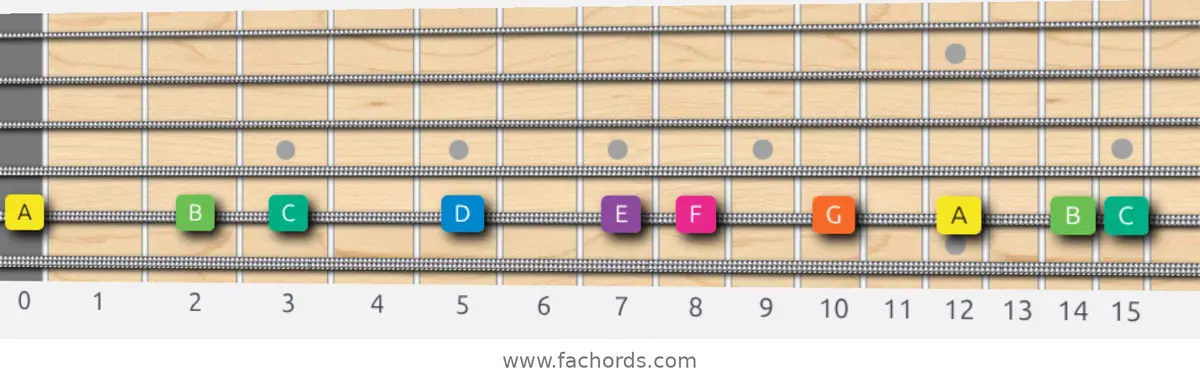
On one string (A)
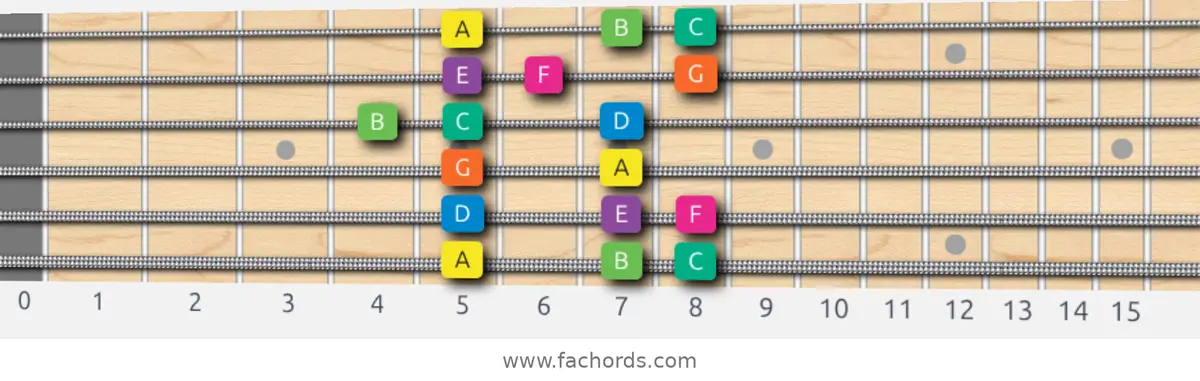
Box pattern — position 1
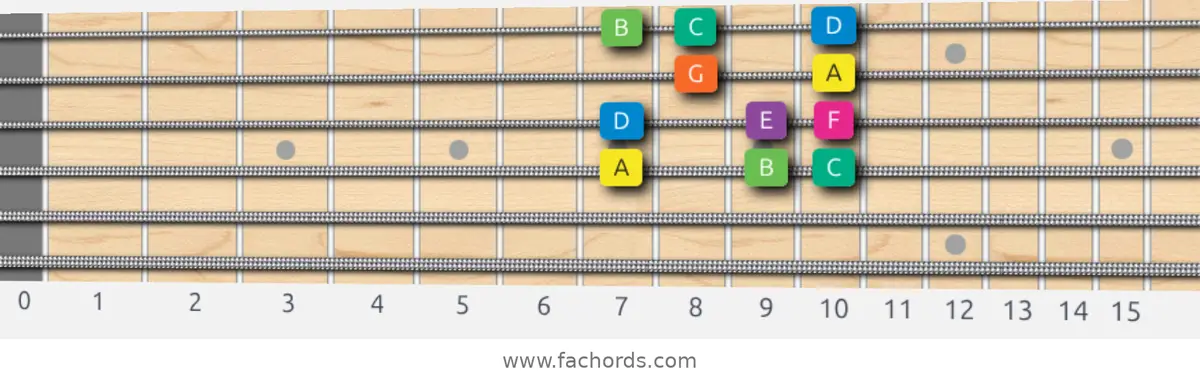
Box pattern — position 2
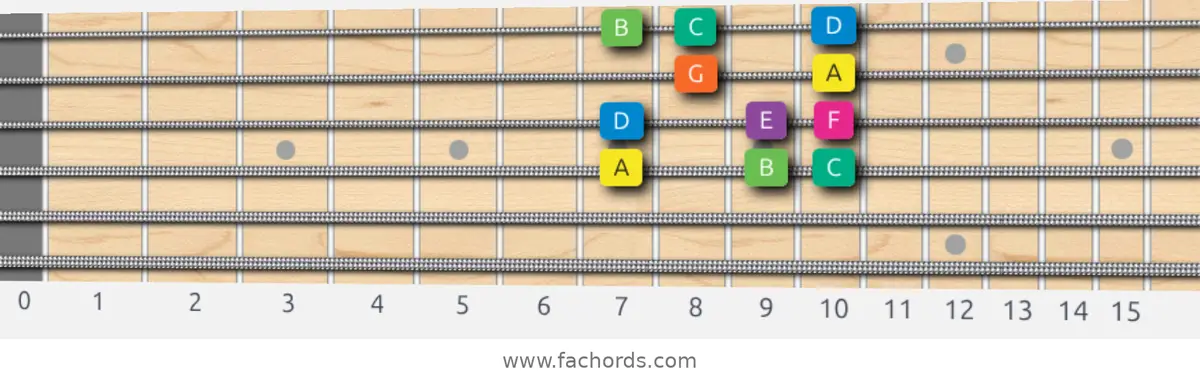
Box pattern — position 3
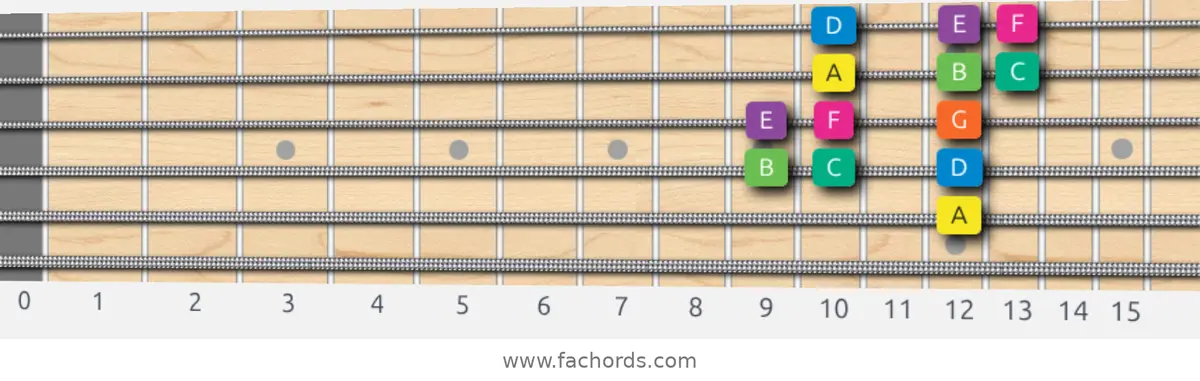
Box pattern — position 4
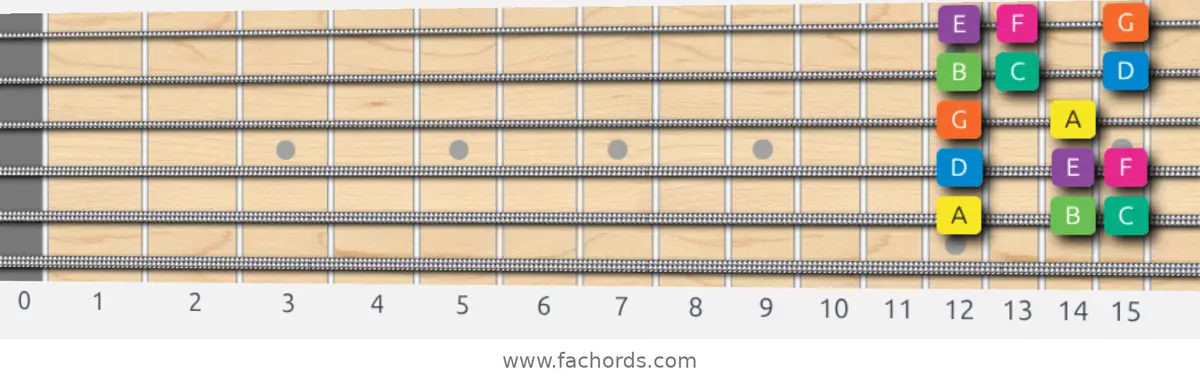
Box pattern — position 5
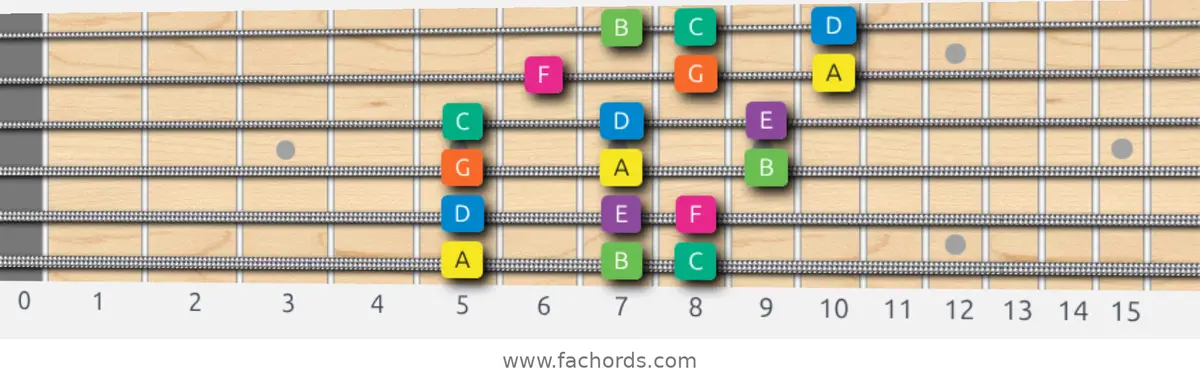
3 notes per string — position 1
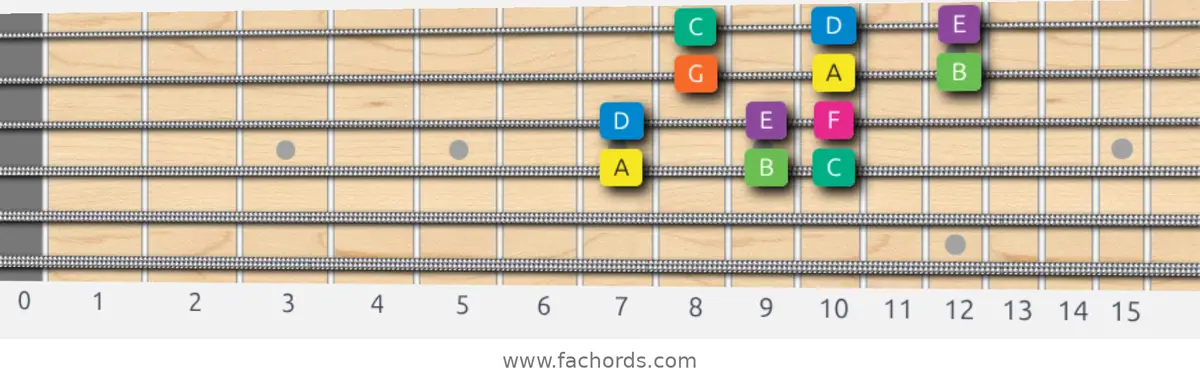
3 notes per string — position 2
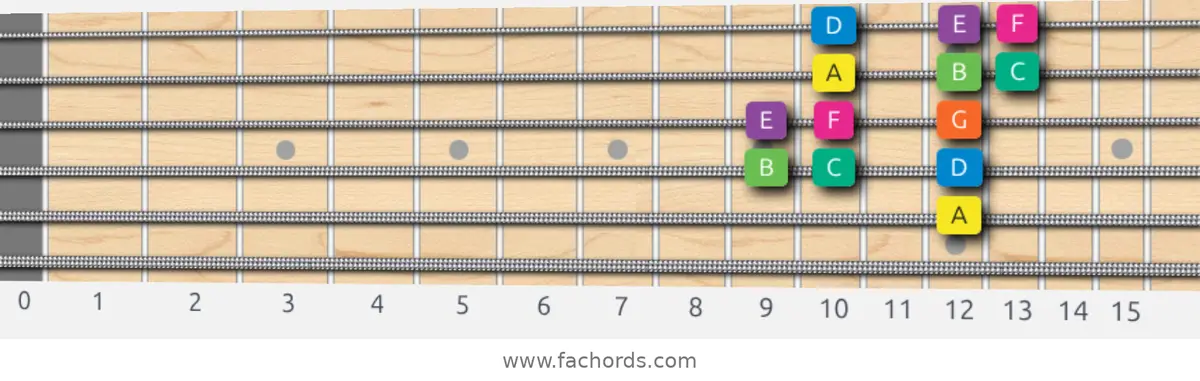
3 notes per string — position 3
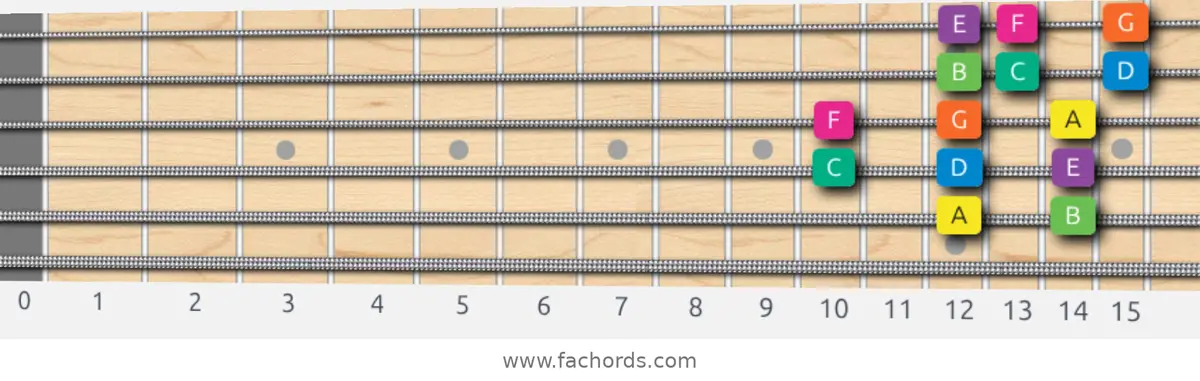
3 notes per string — position 4
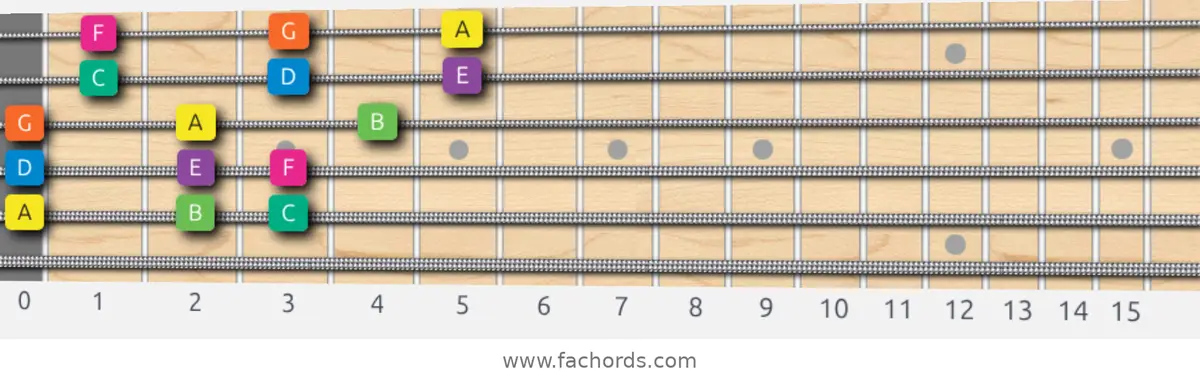
3 notes per string — position 5
Chords in the A minor scale
Stacking thirds on each degree of the scale gives these chords.
Related modes
These scales share the same notes as the minor scale, starting from a different degree.
The minor scale in other keys

Created by
Giancarlo is a musician (teaching guitar since 2000), software engineer, AI consultant and published researcher