Explore the C#dim Guitar Chord: Interactive Practice & Theory
Want a structured chord roadmap instead of jumping between pages?
Go to the full guitar chords tutorial.
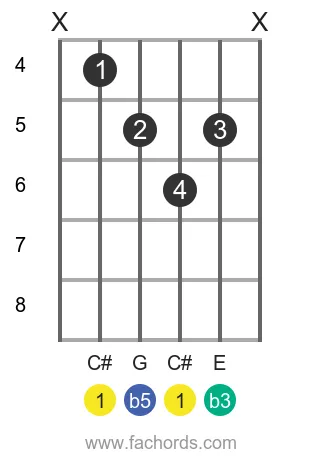
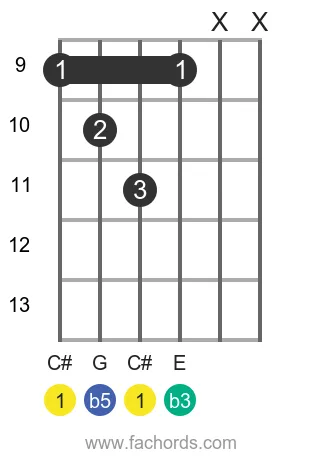
Unlocking a unique tension and dramatic flair, the C# dim chord is a truly expressive member of the Diminished Chords family. This captivating chord is constructed from the notes C#, E, and G, outlining the distinct intervals of Root (1), Minor Third (b3), and Diminished Fifth (b5). Dive into its sonic characteristics using our interactive fretboard tool, where you can explore its fingerings, hear it played as a strum or arpeggio, and receive real-time microphone feedback to perfectly verify your execution.
The C# dim chord inherently carries a sense of instability and a strong pull towards resolution, often functioning as a leading-tone chord in various harmonic contexts. This unique intervallic structure makes it a powerful tool for adding color and movement to your compositions. To deepen your understanding of these versatile harmonies, explore our comprehensive guide to Diminished Guitar Chords. Mastering its construction through stacking intervals is crucial for any aspiring guitarist; learn more with our Chord Construction tutorial. Additionally, seamless transitions are vital for incorporating such chords effectively, so be sure to practice your Improve Chords Change.
Further down this page, you'll discover a complete array of C#dim chord diagrams, progressing from simple open shapes to more intricate barre positions, accompanied by detailed music theory, illustrative song examples, and common musical keys where this chord naturally occurs. But before delving into the analysis, we encourage you to play with the interactive tool above. Experiment with the drum tool to set your rhythm, strum or arpeggiate the chord, and let the mic feedback provide instant verification. Engaging with the chord interactively first will accelerate your practical mastery before you dissect its theoretical foundations.
C# diminished guitar chord is also written as C#dim, C#°, C#m(b5) or C#mb5.
C# dim chord Notes:
Chord formula for the Diminished chord:
C# Dim Guitar Chord Diagrams
Position 1
Movable
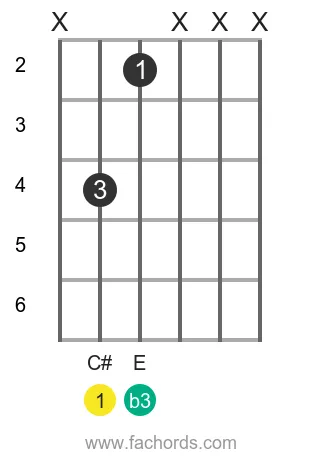
Position 2
Open
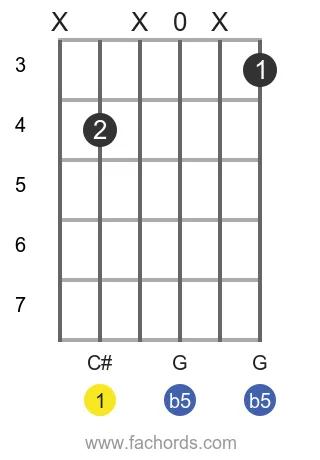
Position 3
Movable
Position 4
Movable
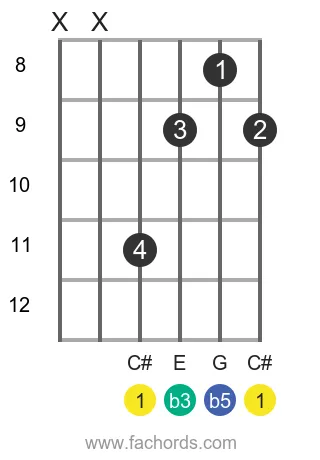
Position 5
Barre
Movable
 Find more shapes in our all guitar chords online library. If you
prefer a printable pdf, download
the Free Guitar Chords Chart Pdf
Find more shapes in our all guitar chords online library. If you
prefer a printable pdf, download
the Free Guitar Chords Chart Pdf
You can also use this accessible C#dim chord page, with written diagram instructions and screen-reader support for blind users.

Created by
Giancarlo is a musician (teaching guitar since 2000), software engineer, AI consultant and published researcher
FAQ
What notes make up the C# diminished (C# dim) chord?
The C# diminished chord is composed of three specific notes: C# as the root, E as the minor third, and G as the diminished fifth. These three notes together create the unique sound of this chord.
What are the core intervals that define a C# dim chord?
The C# dim chord is fundamentally defined by its intervals relative to the root note C#. These intervals are the Root (1), a Minor Third (b3), and a Diminished Fifth (b5). This specific interval structure is characteristic of all diminished chords.
How does the C# diminished chord contribute to tension and resolution in music?
The C# dim chord, like other diminished chords, inherently creates a sense of tension due to its unique interval structure, particularly the diminished fifth. This tension then naturally leads to a feeling of resolution when the music moves to a more stable, consonant chord, adding dynamic contrast and emotional depth to a musical piece.
What does it mean for the C# dim chord to be part of the 'Diminished Chords family'?
Being part of the 'Diminished Chords family' means that the C# dim chord shares the same fundamental interval structure (Root, Minor Third, Diminished Fifth) as all other diminished chords. This common construction gives all chords in this family their characteristic tense sound and similar musical properties.
Are diminished chords, like C# dim, only for advanced guitarists?
While the C# dim chord can add complexity and depth to music, making it appealing for more advanced compositions, understanding its basic structure and how to play it is accessible to guitarists beyond the beginner stage. It's a valuable chord for expanding your harmonic vocabulary, regardless of your experience level.