Practice the G5 Guitar Chord Across the Fretboard
Want a structured chord roadmap instead of jumping between pages?
Go to the full guitar chords tutorial.
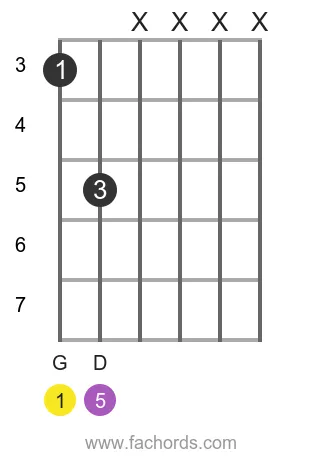
Unlock the raw power of the G5 guitar chord by visualizing its shapes across the fretboard. Our interactive virtual fretboard allows you to see exactly how this fundamental power chord lays out across the strings. Practice different voicings and get immediate verification of your accuracy with real-time microphone feedback. The G5 chord is a potent two-note wonder, built from its Root (G) and a Perfect Fifth (D). Its stripped-down composition gives it the punch essential for rock and metal riffs.
The inherent simplicity of the G5 guitar chord, comprising only a Root and a Perfect Fifth, makes it ideal for high-gain settings. This characteristic purity prevents unwanted harmonic clashes when distortion is applied, making it the bedrock of countless rock, metal, and punk riffs. Understanding this basic interval structure is fundamental for grasping how chords are built and function. To deepen your knowledge of how these powerful two-note structures are formed, explore our comprehensive guide on chord construction. Furthermore, you can delve into the specific techniques and applications of this essential chord type with our dedicated resource on power chords, which are the backbone of aggressive guitar playing.
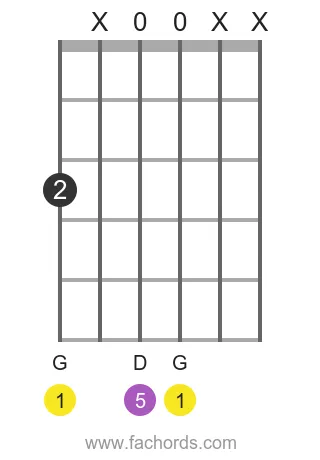
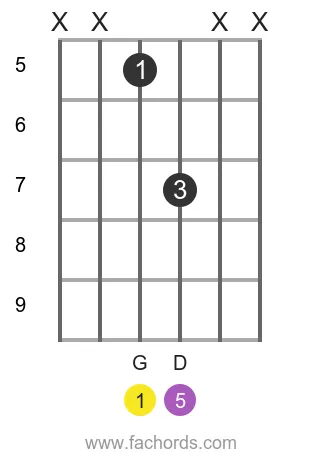
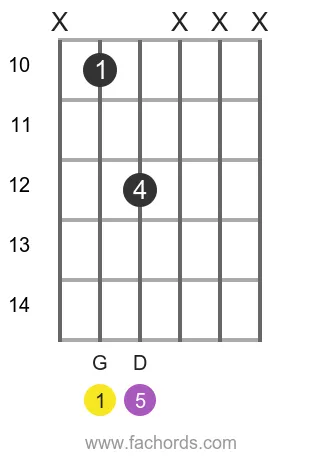
Scroll down to explore all available G5 guitar chord diagrams, presented from the simplest to the more complex, enabling you to progressively build your skills. Dive deeper into the underlying theory, discover how this chord fits into various songs, and understand its role across different musical keys. Before committing to memorization, experiment with our interactive fretboard to visually grasp each shape and confirm your playing with real-time mic feedback. This hands-on approach will solidify your understanding and make learning efficient and enjoyable.
Notes that compose the G 5 chord:
How the Powerchord chord is built:
Guitar Patterns for the G Powerchord chord
Position 1
Movable
Position 2
Open
Position 3
Movable
Position 4
Movable
Position 5
Movable
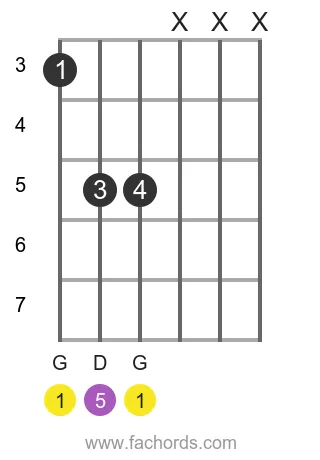
Position 6
Movable
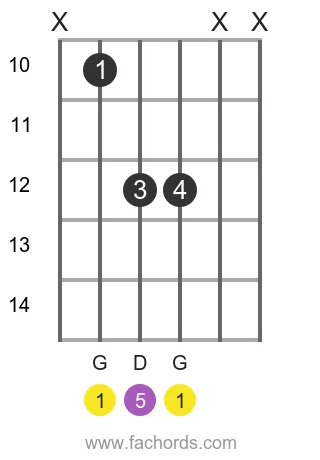
Position 7
Open
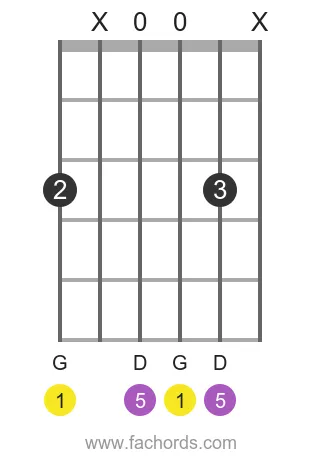
Position 8
Movable
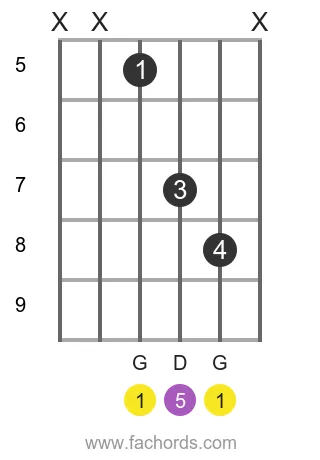
Position 9
Movable
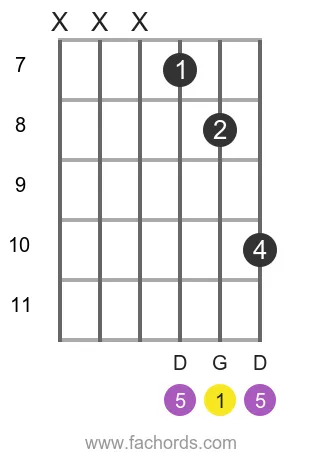
Position 10
Barre
Movable
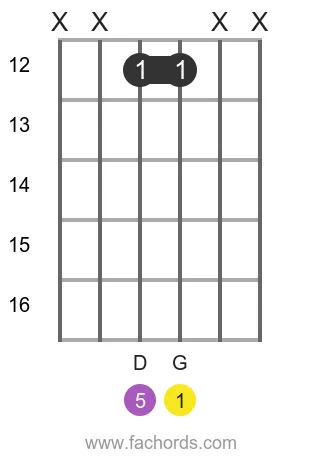
Position 11
Barre
Movable
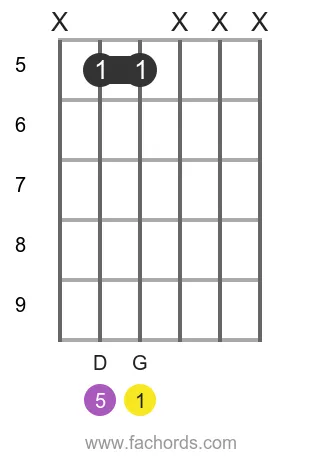
 Find more shapes in our all guitar chords online library. If you
prefer a printable pdf, download
the Free Guitar Chords Chart Pdf
Find more shapes in our all guitar chords online library. If you
prefer a printable pdf, download
the Free Guitar Chords Chart Pdf
You can also use this accessible G5 chord page, with written diagram instructions and screen-reader support for blind users.

Created by
Giancarlo is a musician (teaching guitar since 2000), software engineer, AI consultant and published researcher
FAQ
What is a G5 chord on guitar?
The G5 chord is a fundamental power chord on the guitar. It's defined by its simple, stripped-down composition, consisting of only two notes: the Root (G) and the Perfect Fifth (D). This lean structure gives it a raw, powerful sound.
What notes and intervals make up the G5 chord?
The G5 chord is built from two specific notes: the G, which serves as the Root, and the D, which is the Perfect Fifth. In terms of musical intervals, it's composed of the 1 (Root) and the 5 (Perfect Fifth).
Why is the G5 chord considered a 'power chord'?
It's called a 'power chord' due to its potent and raw sound. This intensity comes from its minimalist structure, containing only the root and fifth, making it very effective for driving rhythm and adding a strong presence to music, especially in rock and metal genres.
Why do G5 chords sound good with distortion on electric guitar?
G5 power chords, like other power chords, sound excellent with distortion because they only consist of the root and the perfect fifth. They lack a major or minor third, which can often create unwanted dissonance or 'muddiness' when heavy distortion is applied, thus maintaining clarity and power.
In which musical genres is the G5 chord commonly used?
The G5 chord is a foundational element in many genres that benefit from its raw and powerful sound. It is a staple in rock, punk, and various heavy music styles, often used to create driving rhythmic foundations.
Is the G5 chord only for beginner guitarists?
While the G5 chord is an excellent starting point for beginners due to its relative simplicity, it's also a highly versatile chord that advanced guitarists frequently incorporate into their playing. Its ability to be played in various positions on the fretboard makes it useful across all skill levels.
