Practice the E maj Guitar Chord with Live Mic Feedback
Want a structured chord roadmap instead of jumping between pages?
Go to the full guitar chords tutorial.
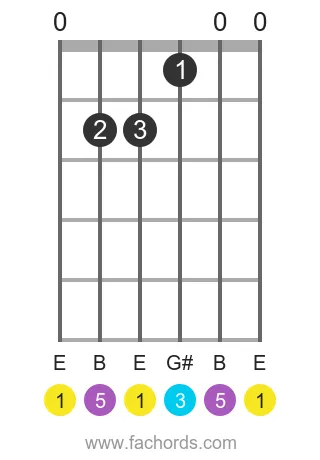
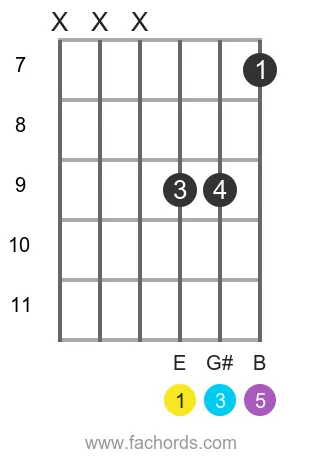
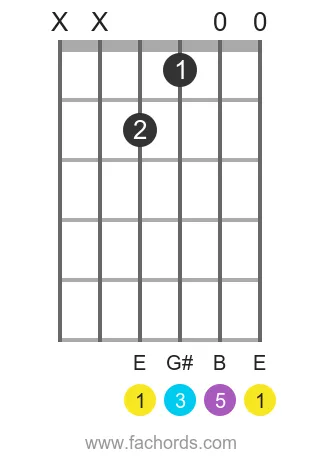
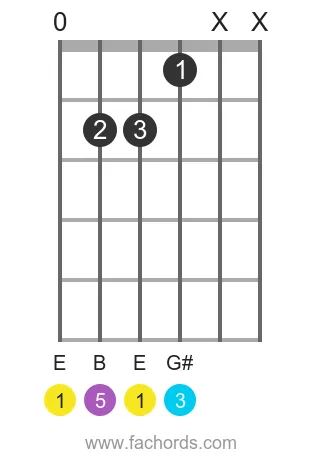
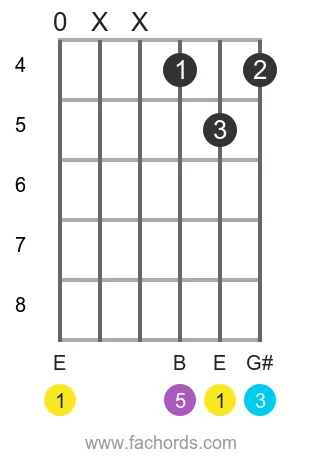
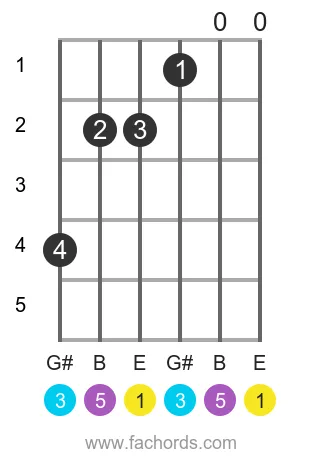
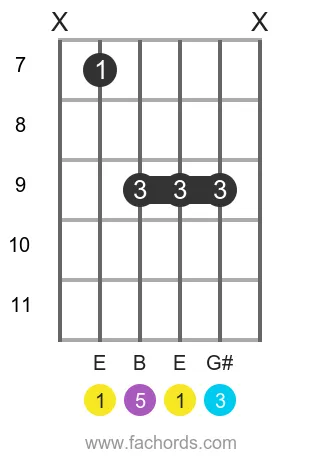
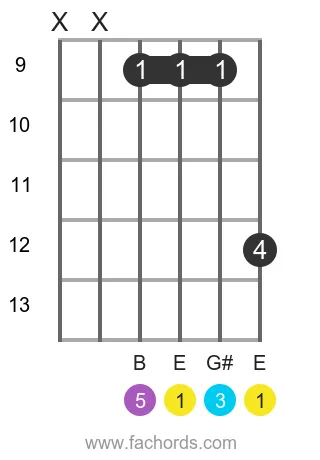
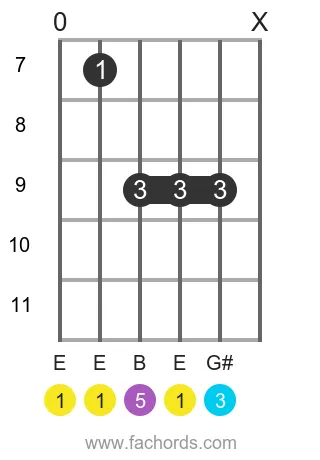
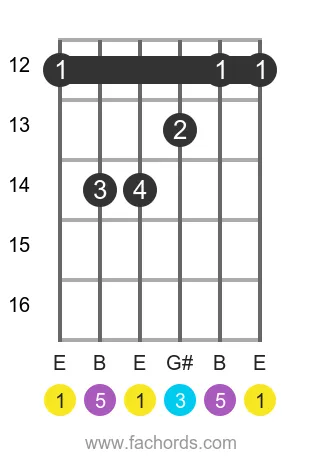
Are you hitting all the notes of the E maj chord correctly? Our interactive fretboard provides instant, real-time mic feedback, allowing you to verify every string and fret of this essential major chord. Composed of the notes E, G#, and B, and defined by the 1, 3, 5 intervals, the E maj chord is a fundamental part of the Major Chords family. Use the playback feature to hear the chord perfectly and refine your technique.
The E maj chord is a cornerstone of harmony, often serving as a stable tonal center in countless songs, giving them a sense of resolution and brightness. Its construction from the root, major third, and perfect fifth (1, 3, 5) creates this characteristic stability. To truly understand how chords are built and function harmonically, explore our comprehensive tutorial on guitar music theory. Mastering the transitions into and out of major chords is also crucial; for help with this, check out our tips to improve chord changes.
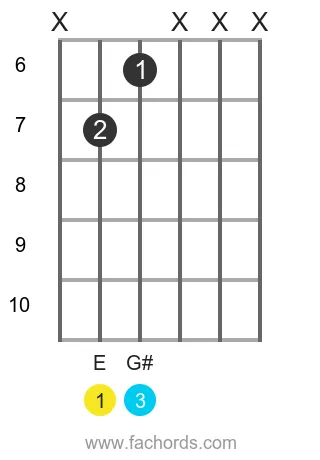
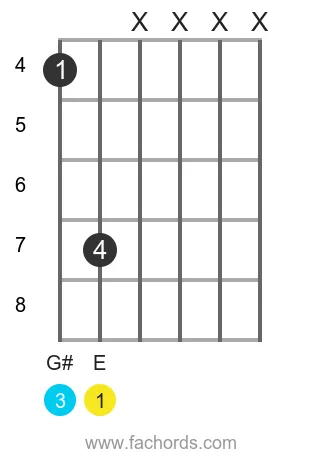
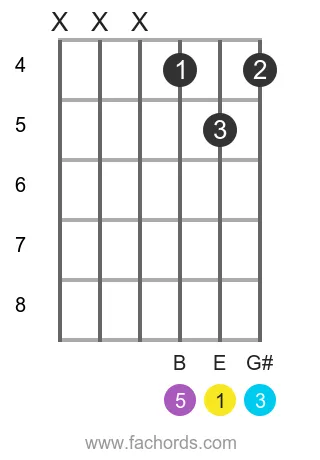
Beyond just playing, understanding the theory behind the E maj chord deepens your musical insight. Scroll down to discover detailed diagrams, ranked from easiest to hardest, alongside fretboard patterns, giving you a full visual guide to its various keys and applications in songs. Before you delve into the theory, however, test your current skills with our interactive tool above and ensure your E maj is spot on.
E major guitar chord is also written as E, Emaj, EM or EΔ.
E maj chord Notes:
Chord Formula:
E Maj Guitar Chord Diagrams
Position 1
Movable
Position 2
Movable
Position 3
Movable
Position 4
Movable
Position 5
Open
Position 6
Open
Position 7
Open
Position 8
Movable
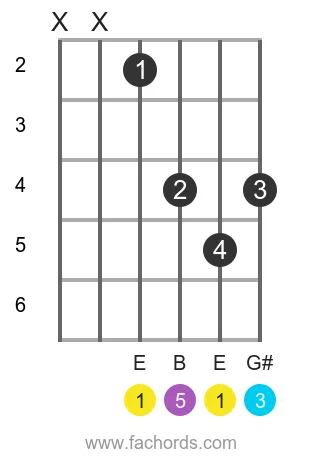
Position 9
Open
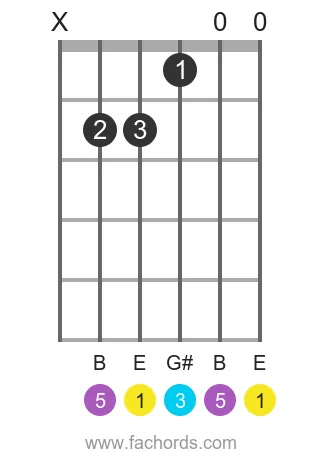
Position 10
Open
Position 11
Barre
Movable
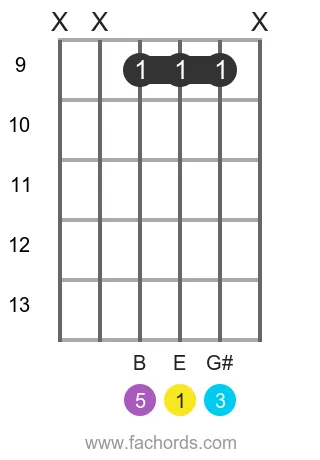
Position 12
Barre
Movable
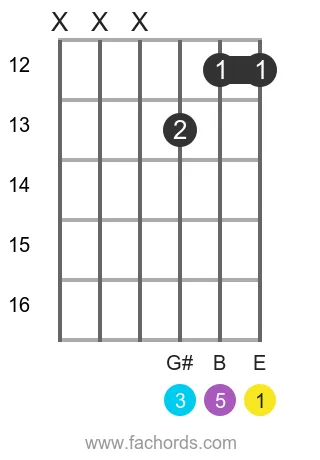
Position 13
Open
Position 14
Barre
Movable
Position 15
Barre
Movable
Position 16
Barre
Open
Position 17
Barre
Movable
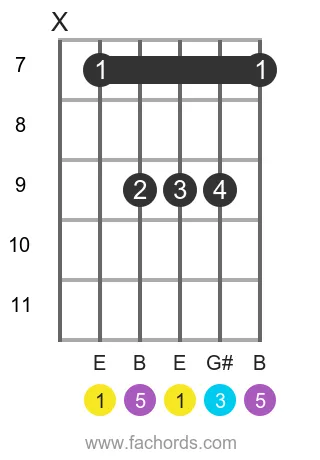
Position 18
Barre
Movable
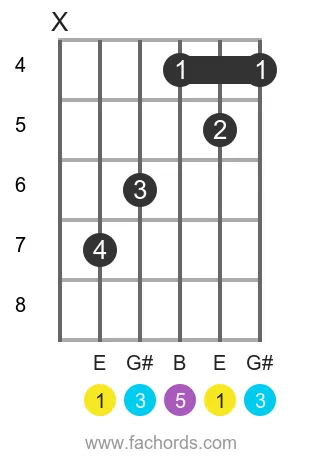
Position 19
Barre
Open
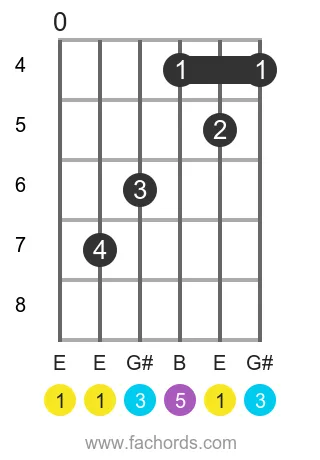
Position 20
Barre
Movable
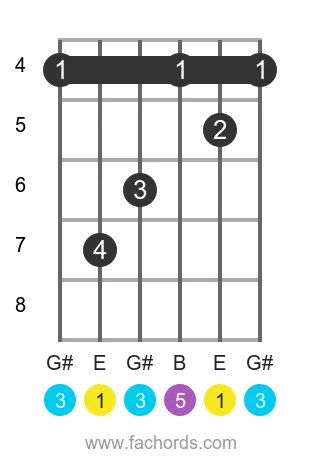
Position 21
Barre
Movable
 Find more shapes in our all guitar chords online library. If you
prefer a printable pdf, download
the Free Guitar Chords Chart Pdf
Find more shapes in our all guitar chords online library. If you
prefer a printable pdf, download
the Free Guitar Chords Chart Pdf
You can also use this accessible Emaj chord page, with written diagram instructions and screen-reader support for blind users.

Created by
Giancarlo is a musician (teaching guitar since 2000), software engineer, AI consultant and published researcher
FAQ
What notes make up the E Major chord?
The E Major chord is fundamentally composed of three specific notes: E, G#, and B. These are the core building blocks that define the sound and identity of an E Major chord.
What do the intervals '1, 3, 5' signify for the E Major chord?
The intervals '1, 3, 5' refer to the root, major third, and perfect fifth, respectively. For the E Major chord, E is the root (1), G# is the major third (3), and B is the perfect fifth (5). These intervals are consistent for all major chords.
How do chord diagrams and fretboard patterns help me play the E Major chord?
Chord diagrams and fretboard patterns are visual aids that show you where to place your fingers on the guitar strings to play the notes E, G#, and B. They help you visualize the physical construction of the chord on the fretboard, making it easier to learn and execute.
Can an E Major chord be played using notes other than E, G#, and B?
No, an E Major chord, by definition, must contain the notes E, G#, and B. While you can play these notes in different octaves or arrangements on the guitar, the presence of these three specific notes is what makes it an E Major chord.
What does it mean that the E Major chord is a 'fundamental part of the Major Chords family'?
This means the E Major chord is a basic and essential example of a major chord. By mastering it, you learn the core structure (root, major third, perfect fifth) that applies to all other major chords, providing a foundational understanding for your guitar journey.
