C# m7 Guitar Chord
Chord Diagrams, Interactive Fretboard and Chord Theory
C# minor 7th guitar chord is also written as C#m7, C#min7, C#-7 or C#mi7.
Position 1
Open
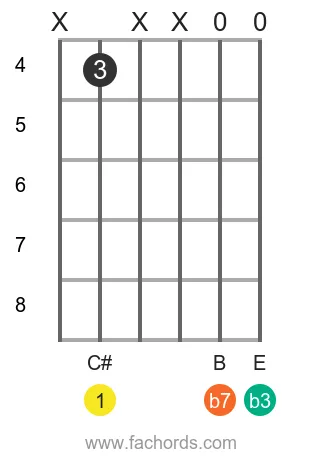
Position 2
Movable
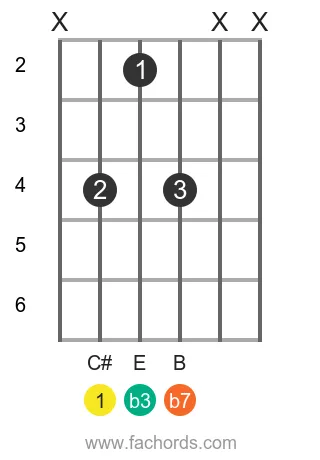
Position 3
Movable
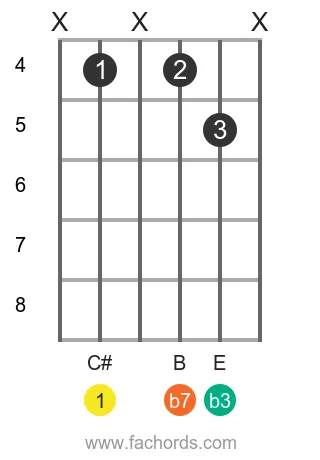
Position 4
Movable
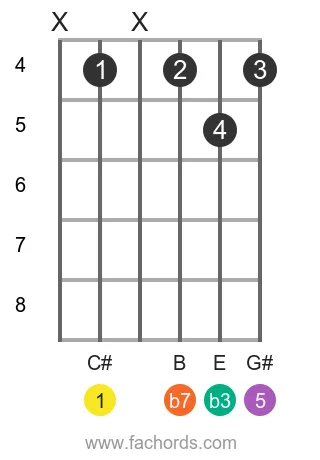
Position 5
Movable
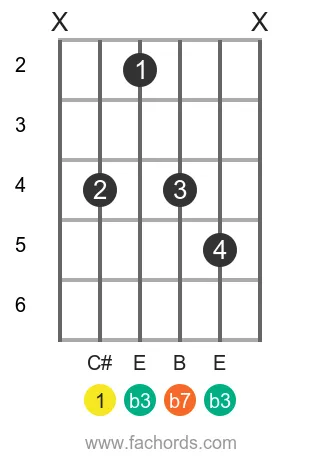
Position 6
Open
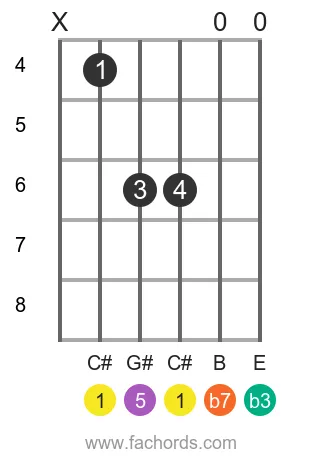
Position 7
Barre
Movable
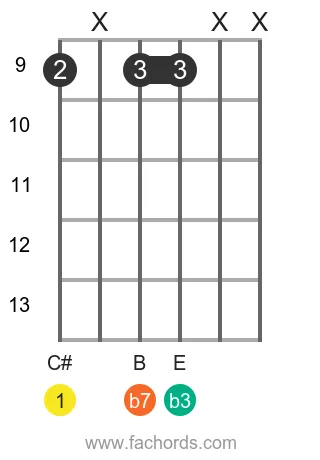
Position 8
Open
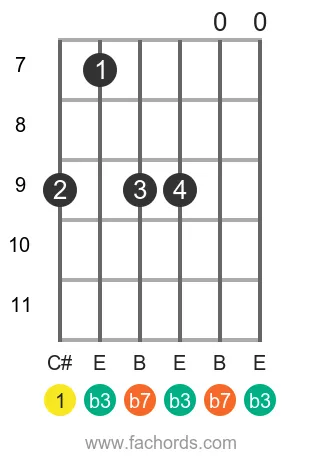
Position 9
Barre
Movable
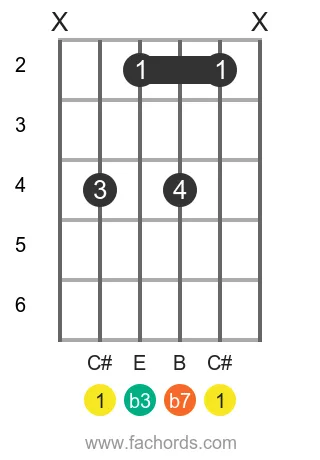
Position 10
Barre
Movable
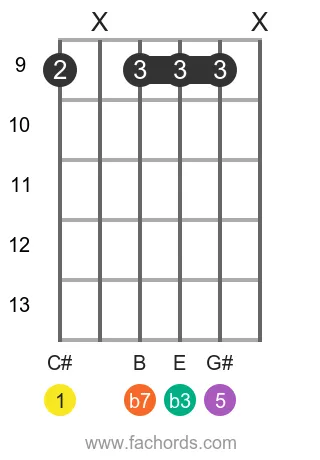
Position 11
Barre
Movable
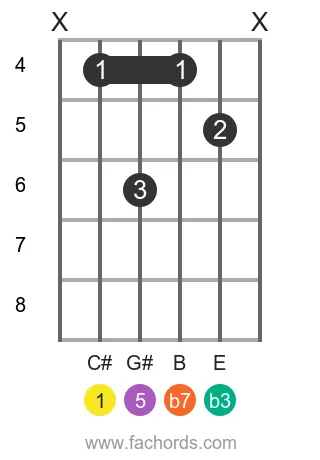
Position 12
Barre
Movable
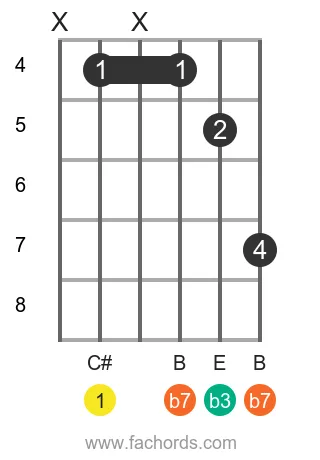
Position 13
Barre
Movable
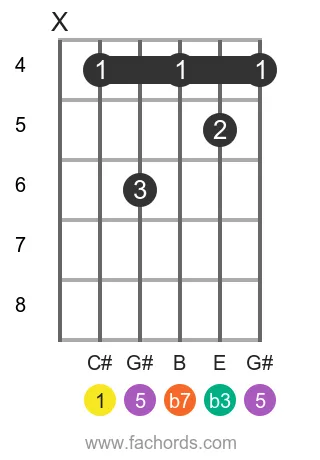
Position 14
Barre
Open
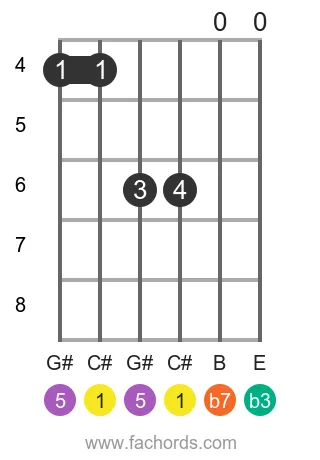
Position 15
Barre
Movable
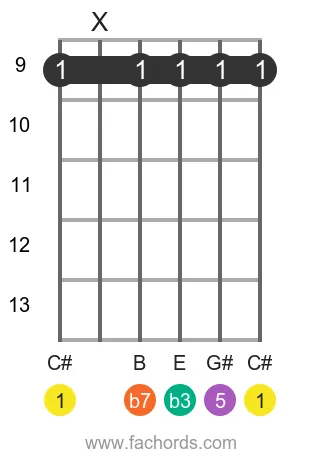
Position 16
Barre
Movable
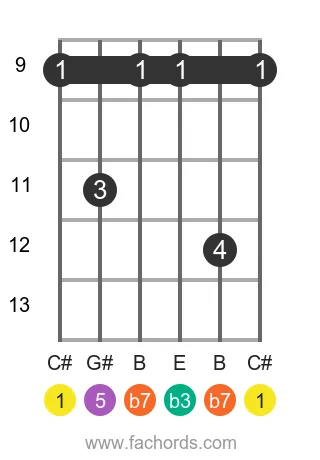
Position 17
Barre
Movable
 Find more shapes in our all guitar chords online library. If you
prefer a printable pdf, download
the Free Guitar Chords Chart Pdf
Find more shapes in our all guitar chords online library. If you
prefer a printable pdf, download
the Free Guitar Chords Chart Pdf
You can also use this accessible C#m7 chord page, with written diagram instructions and screen-reader support for blind users.
Explore the C#m7 Guitar Chord: Interactive Practice & Learning
Want a structured chord roadmap instead of jumping between pages?
Go to the full guitar chords tutorial.
Known for its melancholic yet sophisticated sound, the C#m7 chord brings depth to jazz, R&B, and funk. This versatile chord, part of the Minor Seventh family, is constructed from the notes C#, E, G#, and B, representing the intervals Root (1), Minor Third (b3), Perfect Fifth (5), and Minor Seventh (b7). Unlock its musical potential with our interactive fretboard tool, an ideal exploration lab where you can instantly hear its sound, experiment with fingerings, and get real-time feedback from your microphone to ensure perfect execution.
As a core component of the Minor Seventh family, the C#m7 chord offers a rich, modal flavor, making it essential for creating expressive grooves in contemporary music. Grasping the harmonic role and construction of such chords is vital for any guitarist looking to expand their vocabulary; dive deeper with our comprehensive Chord Construction guide. Many common fingerings for C#m7 involve barre shapes, so refining your technique with our Guitar Bar Chords tutorial will be highly beneficial. Efficiently changing between chords is also crucial for seamless playing; discover effective strategies with our tips to Improve Chord Changes.
Before diving into the detailed theory and diagrams below, we encourage you to spend time playing the C#m7 using the interactive tool above. Utilize the integrated drum tool to set your tempo, then practice strumming or picking the chord and let the microphone verify your accuracy. Further down the page, you'll find a comprehensive collection of C#m7 chord diagrams, ranging from accessible open positions to more challenging barre shapes, alongside explorations of its underlying music theory, popular songs featuring this chord, and the keys where it naturally fits.
Notes that compose the C# m7 chord:
Tones in the Minor Seventh chord:
Play This Chord With Other Roots
C m7 | D m7 | E m7 | F m7 | G m7 | A m7 | B m7 | C#m7 | D#m7 | F#m7 | G#m7 | A#m7 | Abm7 | Bbm7 | Dbm7 | Ebm7 | Gbm7

Created by
Giancarlo is a musician (teaching guitar since 2000), software engineer, AI consultant and published researcher
FAQ
What are the specific notes that form the C#m7 chord?
The C#m7 chord is precisely made up of four notes: C#, E, G#, and B. These notes are derived from its root, minor third, perfect fifth, and minor seventh intervals.
What do the intervals 1, b3, 5, and b7 represent in the C#m7 chord?
These intervals define the structure of the C#m7 chord in relation to its root. '1' is the Root (C#), 'b3' is the Minor Third (E), '5' is the Perfect Fifth (G#), and 'b7' is the Minor Seventh (B). This specific combination creates the chord's characteristic sound.
Why is the C#m7 considered a 'minor chord'?
The C#m7 chord is classified as a minor chord primarily due to the presence of its minor third interval (b3). This interval, specifically the E in the C#m7, gives the chord its fundamental minor quality. The '7' indicates the addition of a minor seventh interval.
How do chord diagrams and fretboard patterns help in learning the C#m7 chord?
Chord diagrams and fretboard patterns are visual tools that highlight the exact positions of the C#, E, G#, and B notes on the guitar fretboard. They show you where to place your fingers to play the C#m7 chord, making the learning process practical and intuitive.
Is the C#m7 chord primarily used in jazz music?
While the C#m7 chord is commonly used in jazz and fits well into jazz chord progressions, its use is not exclusive to that genre. It's a versatile chord that can be found in various styles of music, adding a rich, sophisticated minor seventh sound.