G 6 Guitar Chord
Chord Diagrams, Interactive Fretboard and Chord Theory
G major 6th guitar chord is also written as G6, Gmaj6, GM6 or Gadd6.
Position 1
Open
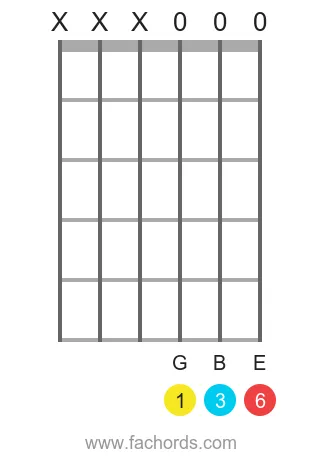
Position 2
Movable
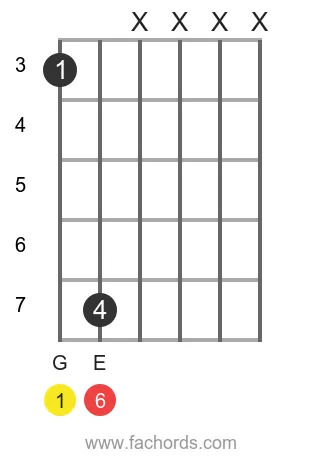
Position 3
Open
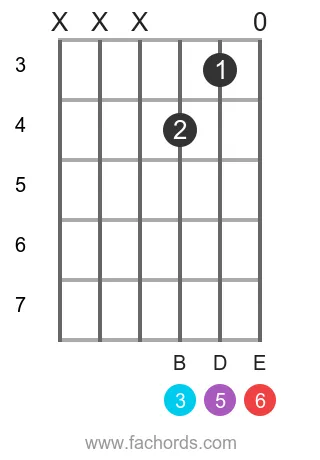
Position 4
Open
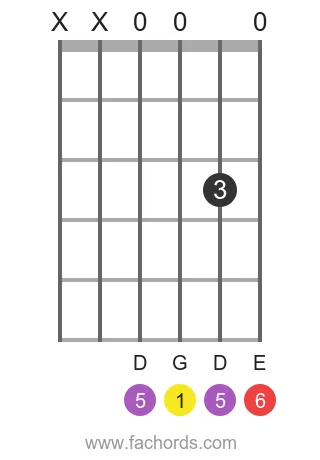
Position 5
Open
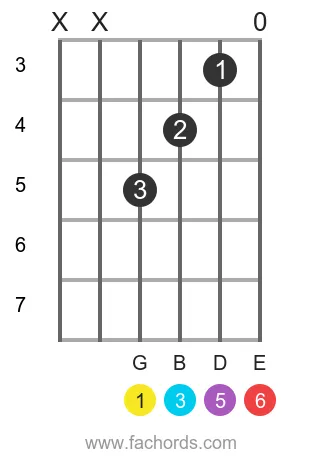
Position 6
Open
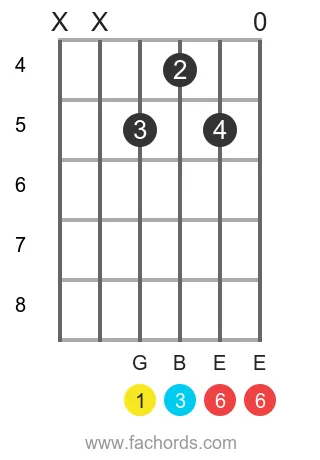
Position 7
Open
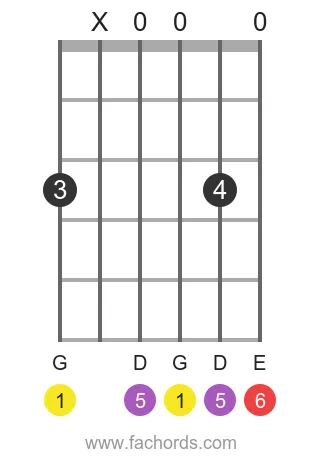
Position 8
Open
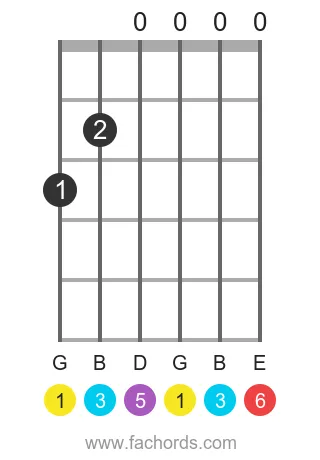
Position 9
Movable
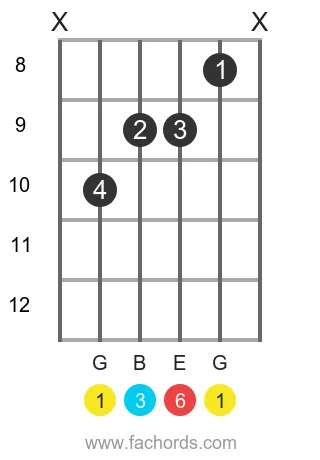
Position 10
Open
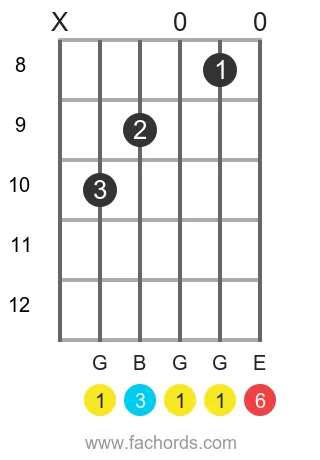
Position 11
Movable
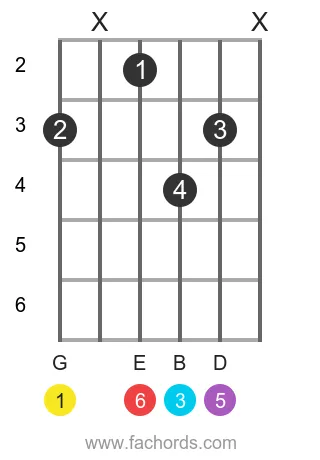
Position 12
Open
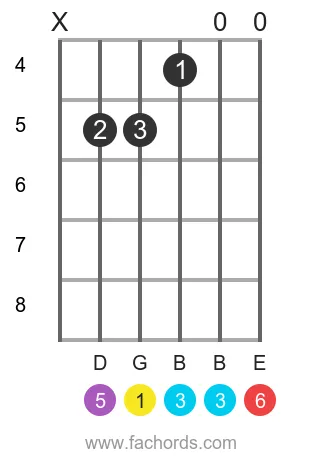
Position 13
Open
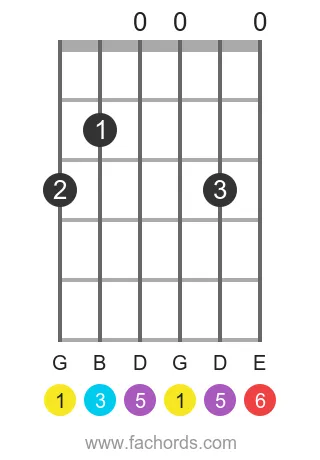
Position 14
Open
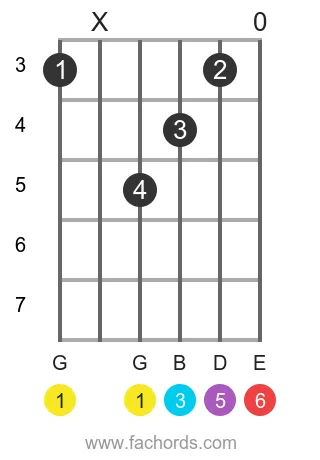
Position 15
Open
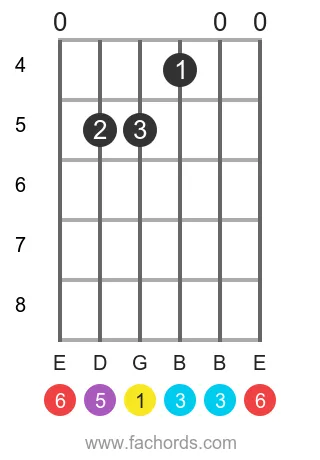
Position 16
Open
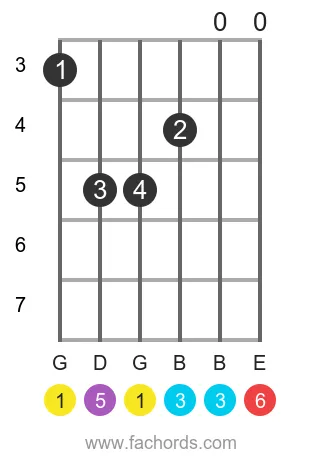
Position 17
Barre
Movable
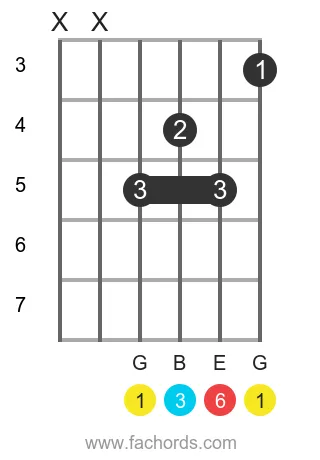
Position 18
Barre
Movable
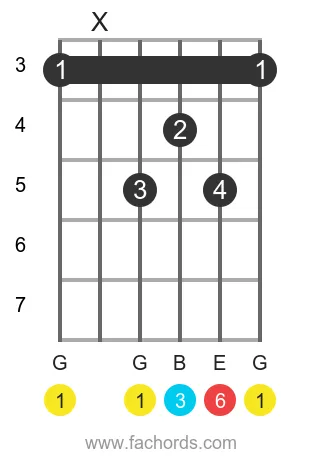
 Find more shapes in our all guitar chords online library. If you
prefer a printable pdf, download
the Free Guitar Chords Chart Pdf
Find more shapes in our all guitar chords online library. If you
prefer a printable pdf, download
the Free Guitar Chords Chart Pdf
You can also use this accessible G6 chord page, with written diagram instructions and screen-reader support for blind users.
Explore the G6 Chord: Visualize Fretboard Shapes & Play
Want a structured chord roadmap instead of jumping between pages?
Go to the full guitar chords tutorial.
Discover the visual landscape of the G 6 chord across your guitar's fretboard. Our interactive virtual fretboard allows you to instantly see and experiment with its various fingerings, helping you grasp the spatial relationships of its tones. Use the real-time mic feedback to accurately verify your playing as you explore new shapes. This intriguing chord, a member of the Major Chords family, is built from the notes G, B, D, and E, corresponding to the intervals 1 (Root), 3 (Major Third), 5 (Perfect Fifth), and 6 (Major Sixth).
The G 6 chord offers a wonderfully sweet and sophisticated flavor, often heard in vintage jazz and soulful compositions, thanks to the characteristic inclusion of the major sixth interval. Understanding the underlying chord construction helps unlock its full harmonic potential and how it functions within different musical contexts. For a deeper dive into this elegant chord family, explore our comprehensive tutorial about sixth guitar chords, which will further expand your harmonic vocabulary. Practicing its shapes will also greatly improve your chord changes and overall fluency.
Rather than just memorizing static images, we encourage you to first explore the various G 6 chord shapes using our interactive fretboard above. Once you've visually and audibly engaged with the chord, you can then delve into its theory, examine diagrams ranked from easiest to hardest, and discover its application in various keys and songs presented below. Grab your guitar and start visualizing these shapes!
G 6 chord Notes:
How to create the Major Sixth chord:
Play This Chord With Other Roots
C 6 | D 6 | E 6 | F 6 | G 6 | A 6 | B 6 | C#6 | D#6 | F#6 | G#6 | A#6 | Ab6 | Bb6 | Db6 | Eb6 | Gb6

Created by
Giancarlo is a musician (teaching guitar since 2000), software engineer, AI consultant and published researcher
FAQ
What notes make up the G 6 chord?
The G 6 chord is composed of four specific notes: G, B, D, and E. These notes combine to create its distinct sound.
What musical intervals define the G 6 chord?
The G 6 chord is defined by its intervals relative to the root note G. These are the 1 (Root), 3 (Major Third), 5 (Perfect Fifth), and 6 (Major Sixth).
Why is the G 6 chord considered part of the 'Major Chords family'?
The G 6 chord belongs to the Major Chords family because its fundamental structure includes a root, major third, and perfect fifth, which are the defining intervals of a major triad. The added major sixth expands upon this major quality.
How does the G 6 chord get its 'unique sound' and 'complexity'?
The G 6 chord derives its unique sound, depth, and complexity from the specific combination of its intervals. The presence of the Major Sixth (E, in the case of G6) alongside the root, major third, and perfect fifth contributes a distinct tonal quality that sets it apart from a standard major chord.
What does the '6' in 'G 6 chord' signify?
The '6' in 'G 6 chord' specifically signifies the inclusion of the Major Sixth interval (E) in the chord, in addition to the root (G), major third (B), and perfect fifth (D). This interval is what gives the chord its characteristic sound.