Explore the C 6 Chord with Interactive Fretboard Diagrams
Want a structured chord roadmap instead of jumping between pages?
Go to the full guitar chords tutorial.
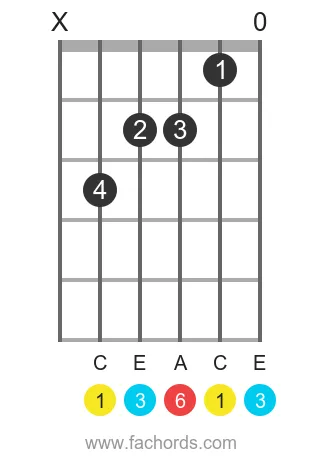
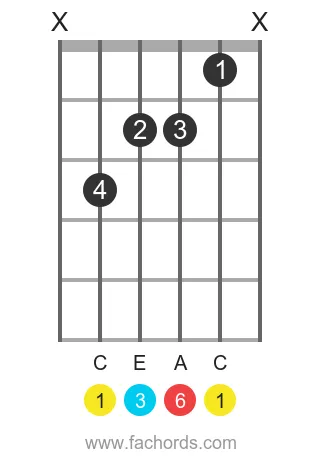
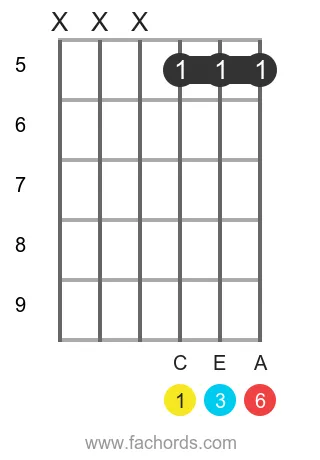
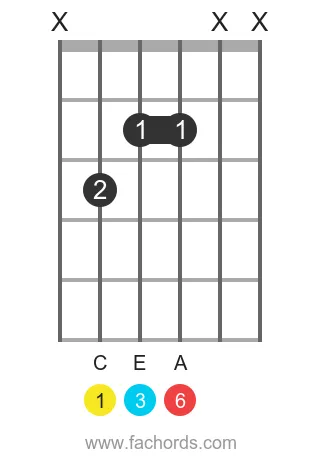
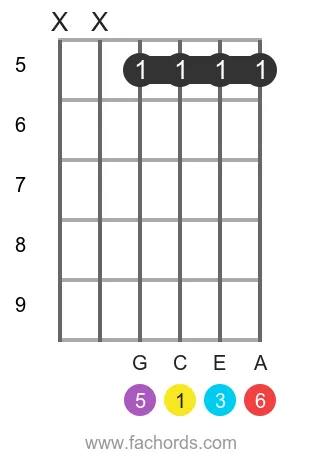
For guitarists looking to visualize chord shapes, the C 6 chord is a fantastic shape to master, often recognized for its distinct, sweet sound. Our interactive virtual fretboard lets you explore multiple voicings for this chord, showing you exactly where to place your fingers across the strings. You can even strum it into your mic for instant feedback on your accuracy! The C6 chord is a bright member of the Major Chords family, built from the notes C, E, G, and A, which correspond to the 1, 3, 5, and 6 intervals: Root, Major Third, Perfect Fifth, and Major Sixth.
The inclusion of the major sixth interval gives the C6 chord its characteristic vintage and smooth sound, often found in jazz and swing music. Understanding how chords are built by stacking intervals is key to unlocking the fretboard. This chord is a prominent member of the sixth (6) guitar chords family, known for their sweet, full quality. For those looking to master different voicings, learning about guitar bar chords can greatly expand your repertoire, as many C6 shapes can be played as barre forms. A solid understanding of chord construction is essential for truly grasping the logic behind these rich harmonies.
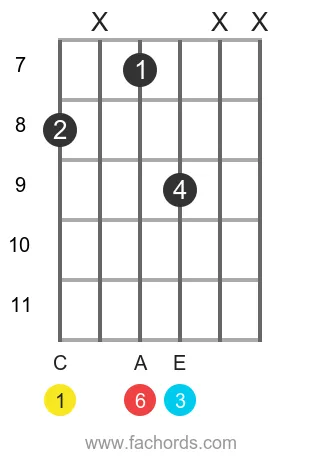
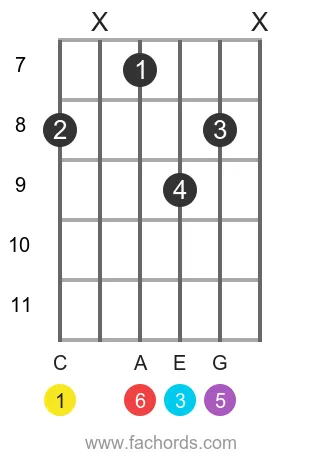
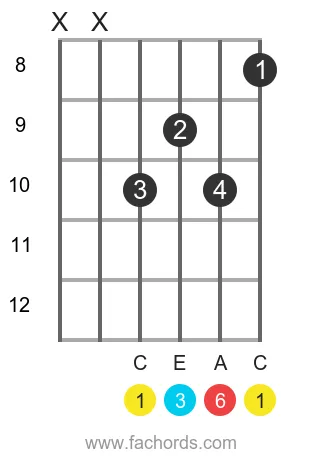
As you scroll down, you'll find detailed chord diagrams, illustrating various ways to play the C 6 chord, progressing from the simplest to more advanced forms. Before you commit to memorizing finger positions, take full advantage of our interactive tool to explore these shapes. Experiment with different voicings, understand the underlying theory, and imagine how this versatile chord fits into countless songs across different keys. Start by exploring the visual fretboard to internalize the geometry of the C6 chord before diving into rote memorization.
C 6 chord Notes:
Formula of the Major Sixth chord:
Guitar Patterns for the C6 chord
Position 1
Movable
Position 2
Movable
Position 3
Movable
Position 4
Movable
Position 5
Open
Position 6
Barre
Movable
Position 7
Barre
Movable
Position 8
Barre
Movable
Position 9
Barre
Movable
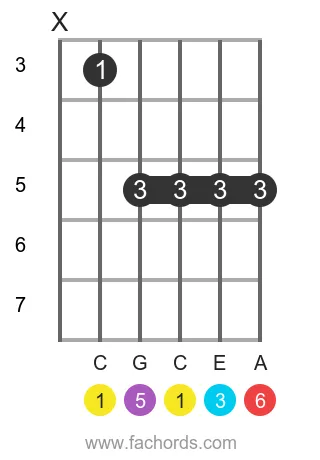
Position 10
Barre
Movable
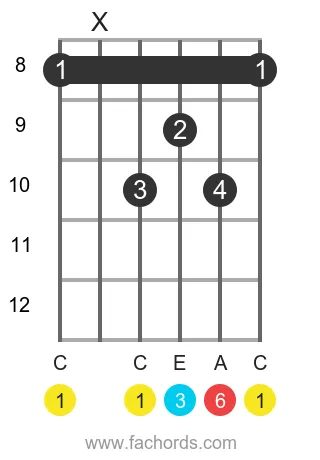
 Find more shapes in our all guitar chords online library. If you
prefer a printable pdf, download
the Free Guitar Chords Chart Pdf
Find more shapes in our all guitar chords online library. If you
prefer a printable pdf, download
the Free Guitar Chords Chart Pdf
You can also use this accessible C6 chord page, with written diagram instructions and screen-reader support for blind users.
FAQ
What is the difference between a C Major chord and a C6 chord?
A C Major chord is fundamentally built from the notes C, E, and G (the root, major third, and perfect fifth). The C6 chord expands on this by adding one more note: A, which is the Major Sixth interval from C. This additional note gives the C6 chord its distinctive and often richer sound.
What does the '6' in the C6 chord name signify?
The '6' in the C6 chord name specifically denotes the inclusion of the Major Sixth interval. This means that, in addition to the root, major third, and perfect fifth that form a major triad, the chord also contains the note corresponding to the Major Sixth from the root.
How are the specific notes of the C6 chord determined?
The notes for the C6 chord are determined by its root note, C, and a specific set of intervals. These intervals are the Root (C), Major Third (E), Perfect Fifth (G), and Major Sixth (A). Combining these four notes creates the C6 chord.
How does the C6 chord sound different, and in what music genres is it often used?
The C6 chord has a unique sound that is often described as bright, open, or slightly sweet, distinct from a standard major chord due to the added Major Sixth. This characteristic sound makes it popular across various music genres, including jazz, blues, country, and some forms of pop music, to add harmonic color.
Is the C6 chord considered a major chord?
Yes, the C6 chord is part of the Major Chords family. It includes the fundamental major triad (Root, Major Third, Perfect Fifth) and simply extends it by adding the Major Sixth interval, maintaining its overall major quality.
