C# maj7 Guitar Chord
Chord Diagrams, Interactive Fretboard and Chord Theory
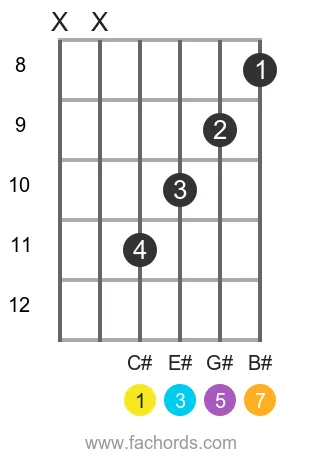
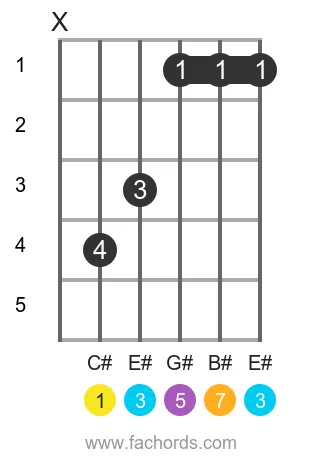
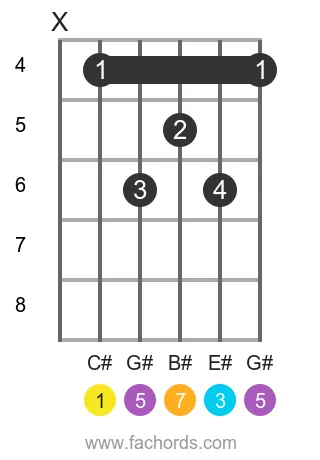
C# major 7th guitar chord is also written as C#maj7, C#M7, C#Δ7 or C#ma7.
Position 1
Movable
Position 2
Barre
Movable
Position 3
Barre
Movable
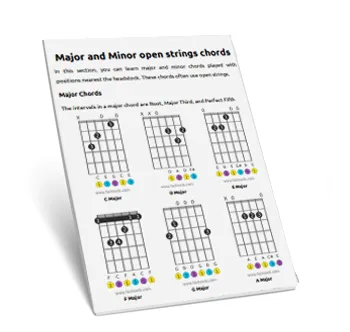
 Find more shapes in our all guitar chords online library. If you
prefer a printable pdf, download
the Free Guitar Chords Chart Pdf
Find more shapes in our all guitar chords online library. If you
prefer a printable pdf, download
the Free Guitar Chords Chart Pdf
You can also use this accessible C#maj7 chord page, with written diagram instructions and screen-reader support for blind users.
Understand and Play the C#maj7 Chord
Want a structured chord roadmap instead of jumping between pages?
Go to the full guitar chords tutorial.
The C#maj7 chord is constructed from the intervals Root (1), Major Third (3), Perfect Fifth (5), and Major Seventh (7), defining its place within the Major Chords family. This rich, resonant chord comprises the notes C#, E#, G#, and B#. To gain a deep understanding of its structure and sound, utilize the interactive fretboard tool: explore all possible fingerings, hear the chord as a strum or arpeggio, and refine your playing with real-time microphone feedback that accurately verifies your technique.
The C#maj7 chord brings a sophisticated, smooth harmonic color to any composition, making it a staple in jazz, R&B, and other contemporary genres. A solid grasp of its Chord Construction is essential for mastering this voicing. Many C#maj7 shapes involve Guitar Bar Chords, so dedicated practice here will prove beneficial. Once you've learned the voicings, applying our tips to Improve Chords Change will help you integrate this beautiful chord seamlessly into your playing.
Below, you will find comprehensive resources for the C#maj7 chord: a selection of 20 chord diagrams, progressing from the simplest open positions to more complex barre shapes, alongside detailed music theory, common songs featuring this chord, and musical keys where it shines. For disciplined practice and true internalization, dedicate time to the interactive tool above before consulting the static diagrams. Use the drum tool to set a steady tempo, experiment with different voicings, and let the mic feedback confirm your precision. This methodical approach will solidify your understanding and technique.
Notes that compose the C# maj7 chord:
Formula of the Major Seventh chord:
Play This Chord With Other Roots
C maj7 | D maj7 | E maj7 | F maj7 | G maj7 | A maj7 | B maj7 | C#maj7 | D#maj7 | F#maj7 | G#maj7 | A#maj7 | Abmaj7 | Bbmaj7 | Dbmaj7 | Ebmaj7 | Gbmaj7

Created by
Giancarlo is a musician (teaching guitar since 2000), software engineer, AI consultant and published researcher
FAQ
What are the specific notes that compose the C#maj7 chord?
The C#maj7 chord is formed by four distinct notes: C#, E#, G#, and B#. These notes are carefully selected to give the chord its unique sound and structure.
Which musical intervals define the C#maj7 chord?
The C#maj7 chord is built using specific intervals from its root note. These intervals are the Root (1), Major Third (3), Perfect Fifth (5), and Major Seventh (7).
Why is the C#maj7 chord considered challenging for beginner guitarists?
This chord can be challenging for beginners because it involves an advanced interval (the Major Seventh) and often requires precise finger placement to articulate all its notes clearly. Mastering it is a step towards intermediate playing.
What is the typical sound or character of the C#maj7 chord?
The C#maj7 chord is known for its beautiful and resonant quality. Its unique blend of notes and intervals creates a rich, full sound that adds depth to musical compositions.
In what musical genres or contexts is the C#maj7 chord commonly used?
The C#maj7 chord is a fundamental part of many intermediate and advanced song structures. Due to its rich sound, it is often incorporated into various chord progressions, particularly in jazz music.
What family of chords does the C#maj7 belong to?
The C#maj7 chord is a member of the Major Chords family. Specifically, it's a type of major seventh chord, characterized by its root, major third, perfect fifth, and major seventh intervals.