Explore and Master the C#7 Guitar Chord
Want a structured chord roadmap instead of jumping between pages?
Go to the full guitar chords tutorial.
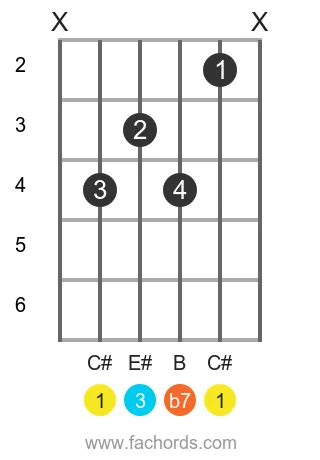
Discovering the C#7 chord on the fretboard means understanding its unique geometry and how its four notes - C#, E#, G#, and B - lay across the strings. These notes correspond to the Root (1), Major Third (3), Perfect Fifth (5), and Minor Seventh (b7) intervals, defining it as a key member of the Dominant Chords family. Use the interactive fretboard tool above to visually map out every possible fingering for this chord. What's more, our real-time microphone feedback acts as your personal tutor, confirming your finger placement instantly, ensuring you’re playing the shape accurately.
The C#7 chord is known for its strong pull towards resolution, a characteristic tension that makes it a cornerstone in various music genres, especially blues and jazz. To truly grasp how such chords are constructed, explore our in-depth guide on Chord Construction. You can also delve into the specific role and characteristics of this chord type in our dedicated Dominant Chord tutorial. For a more streamlined approach to integrating these powerful sounds, consider our guide on Learn 3-Note 7th Chords. Once you're comfortable with a particular fingering, seamless chord changes are key to fluid playing.
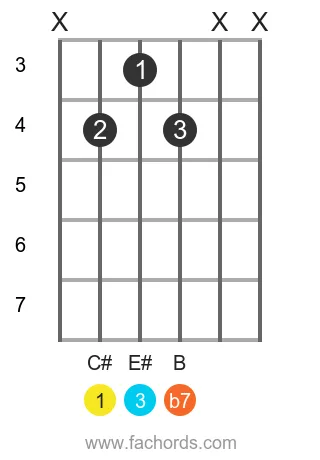
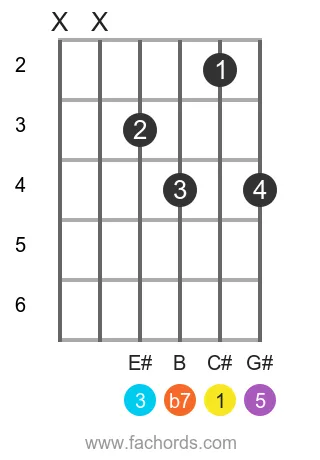
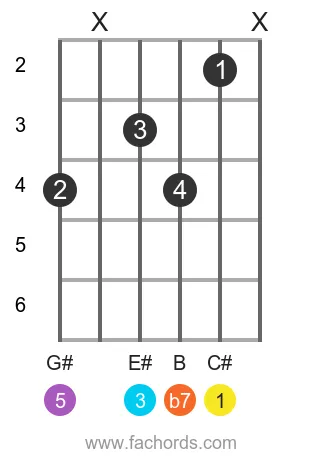
Below, you'll find 20 detailed chord diagrams, logically ranked from the simplest open positions to more challenging full barre shapes. Complementing these are insights into the music theory behind the C#7 chord, a list of songs where it features prominently, and the keys in which it most commonly appears. Before you dive into memorizing shapes, take a moment to interact with the virtual fretboard above. Set a comfortable tempo with the drum tool, try out different C#7 shapes, and let the microphone feedback confirm your hand position. This hands-on exploration is the fastest way to embed new chord shapes into your muscle memory and truly make the C#7 chord part of your playing toolkit. Happy exploring!
Notes of the C# 7 chord:
How the Dominant Seventh chord is built:
Guitar Patterns for the C# Dominant Seventh chord
Position 1
Movable
Position 2
Movable
Position 3
Movable
Position 4
Movable
Position 5
Movable
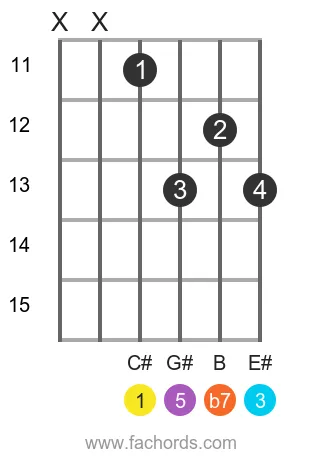
Position 6
Open
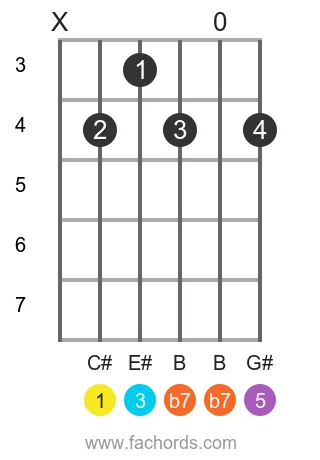
Position 7
Barre
Movable
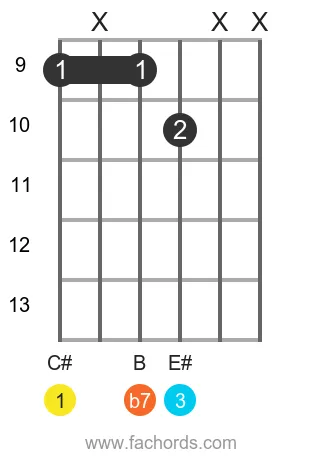
Position 8
Barre
Movable
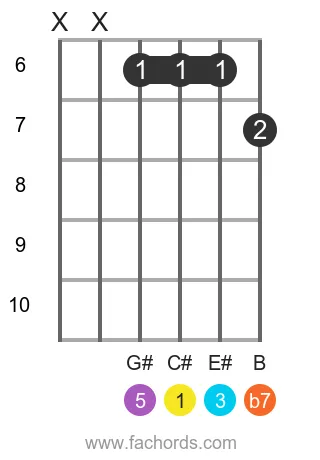
Position 9
Barre
Movable
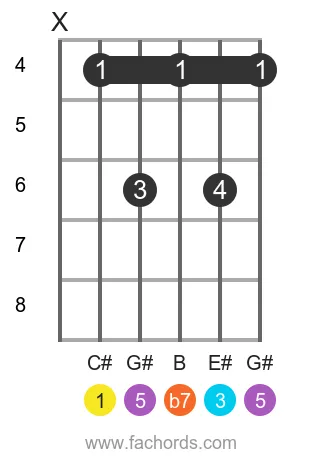
Position 10
Barre
Movable
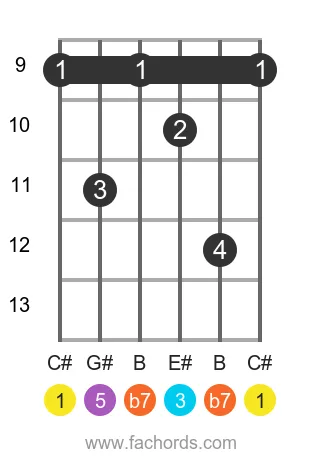
Position 11
Barre
Movable
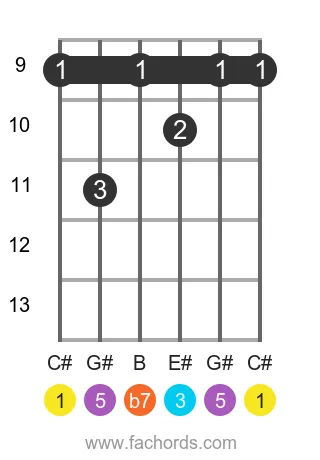
 Find more shapes in our all guitar chords online library. If you
prefer a printable pdf, download
the Free Guitar Chords Chart Pdf
Find more shapes in our all guitar chords online library. If you
prefer a printable pdf, download
the Free Guitar Chords Chart Pdf
You can also use this accessible C#7 chord page, with written diagram instructions and screen-reader support for blind users.

Created by
Giancarlo is a musician (teaching guitar since 2000), software engineer, AI consultant and published researcher
FAQ
What are the specific notes that form a C#7 chord?
The C#7 chord is composed of four distinct notes: C# (the root), E# (the major third), G# (the perfect fifth), and B (the minor seventh).
Which intervals define the structure of a C#7 chord?
The C#7 chord is defined by its characteristic intervals: the root (1), a major third (3), a perfect fifth (5), and a minor seventh (b7).
Why is the C#7 chord classified as a 'Dominant Chord'?
The C#7 chord belongs to the dominant chord family because it contains both a major third and a minor seventh interval. This specific intervallic combination creates a harmonic tension often used to lead back to a tonic chord in music.
What contributes to the 'complex and rich sound' of the C#7 chord?
The complex and rich sound of the C#7 chord primarily stems from the interplay between its major third (E#) and minor seventh (B). This particular combination of intervals generates a unique harmonic tension and depth that is highly characteristic of dominant chords.
Why is the third note of the C#7 chord spelled as E# instead of F?
The third note of the C#7 chord is correctly spelled as E# (E-sharp) to maintain its theoretical relationship as a major third interval above C#. While E# and F are enharmonically the same pitch, using E# preserves the clear intervallic structure derived from the C# major scale.
How does knowing the intervals help in playing the C#7 chord on the guitar?
Understanding the intervals (root, major third, perfect fifth, minor seventh) helps you identify the exact notes (C#, E#, G#, B) on the fretboard. This knowledge allows you to not just memorize a single chord shape, but to build and understand various voicings of the C#7 chord across different positions on the guitar neck.
