A7 Guitar Chord | Play, Hear and Practice Interactively
Want a structured chord roadmap instead of jumping between pages?
Go to the full guitar chords tutorial.
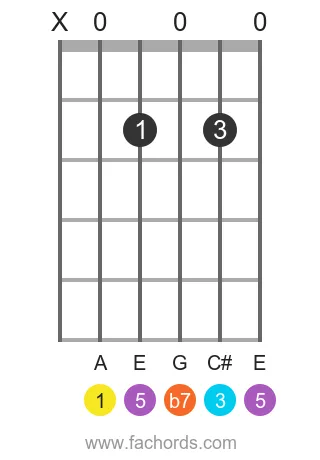
The A7 chord belongs to the Dominant Seventh family and is built from four notes: A, C#, E, and G - corresponding to the intervals Root (1), Major Third (3), Perfect Fifth (5), and Minor Seventh (b7). Use the interactive fretboard tool at the top of this page to visualize every fingering, listen to the chord played as a strum or arpeggio, and check your own playing with the real-time microphone feedback - the tool will tell you if you're nailing it.
Harmonically, the A7 creates tension that strongly wants to resolve, making it a cornerstone of blues, jazz, and rock music. To understand its role, explore our guide to the Dominant Chord family, or delve deeper into how chords are built with our Chord Construction tutorial. Many A7 shapes include barre forms; our Guitar Bar Chords guide can help you master these. Once you have the fingering down, work on smooth chord changes to integrate it seamlessly into your playing.
Below, you'll find a wealth of information: chord diagrams ranging from easy open positions to more advanced barre shapes, detailed music theory, popular songs featuring A7, and common keys where this chord appears. Before you dive into the diagrams, spend some time with the interactive tool above. Set a comfortable BPM with the drum tool, play the chord, and let the mic feedback confirm your finger placement. This hands-on approach is the most effective way to truly learn and internalize new chords.
A 7 chord Notes:
.
Dominant chords are the main chords used in blues progressions.
Formula of the Dominant Seventh chord:
A Dominant Seventh Guitar Chord Shapes
Position 1
Open
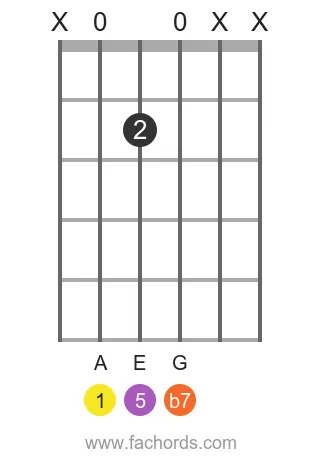
Position 2
Open
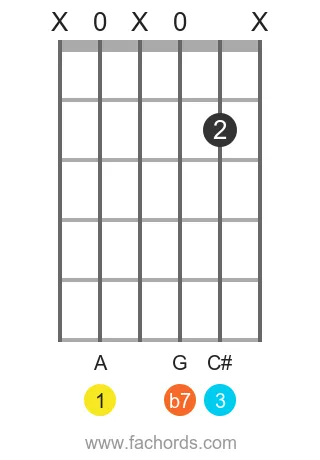
Position 3
Open
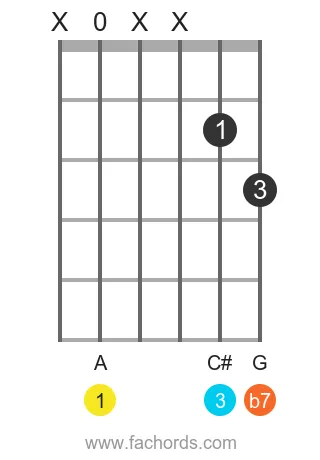
Position 4
Movable
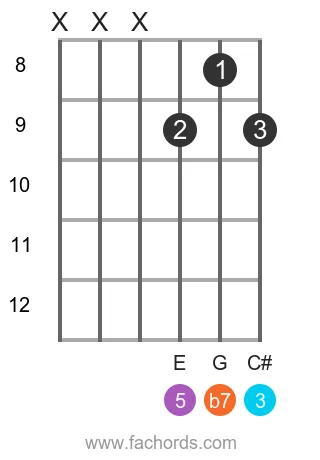
Position 5
Movable
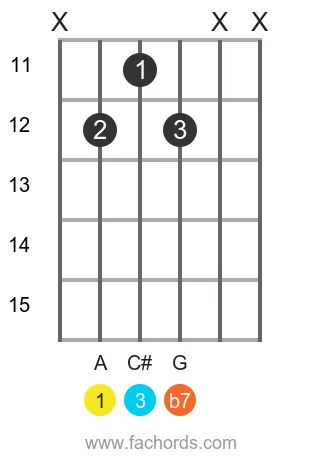
Position 6
Movable
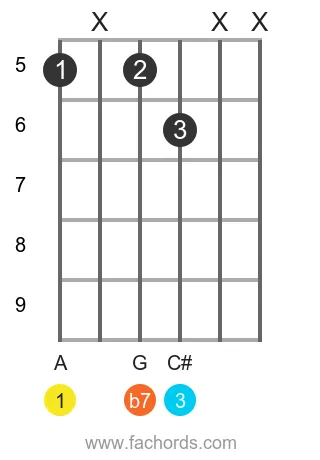
Position 7
Open
Position 8
Open
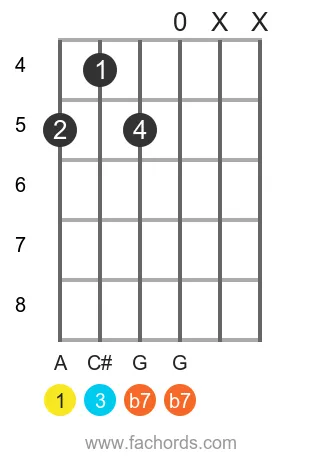
Position 9
Open
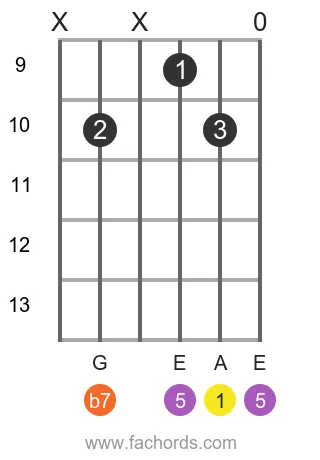
Position 10
Open
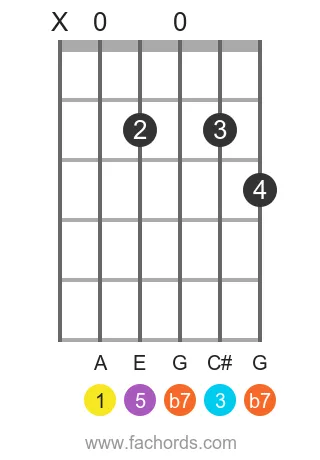
Position 11
Open
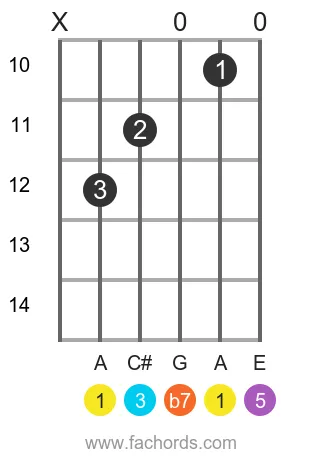
Position 12
Open
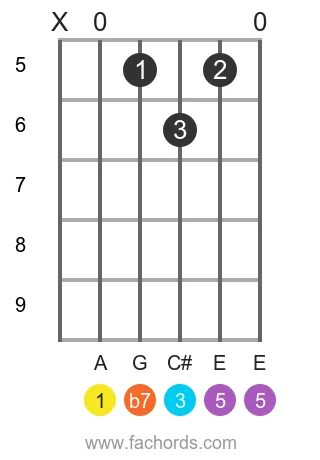
Position 13
Open
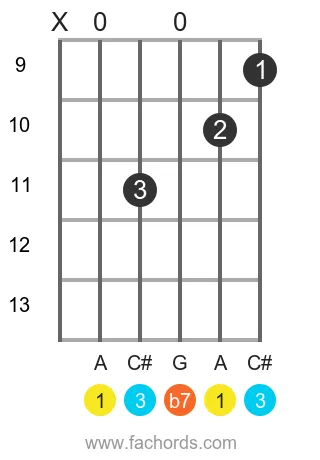
Position 14
Open
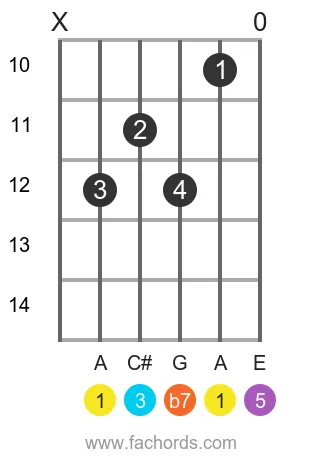
Position 15
Open
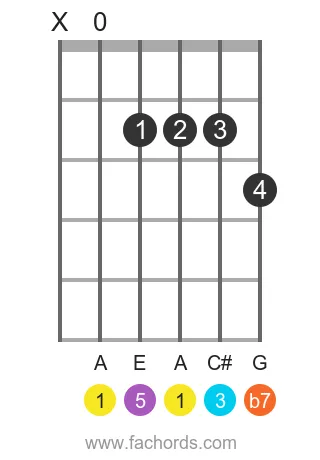
Position 16
Barre
Movable
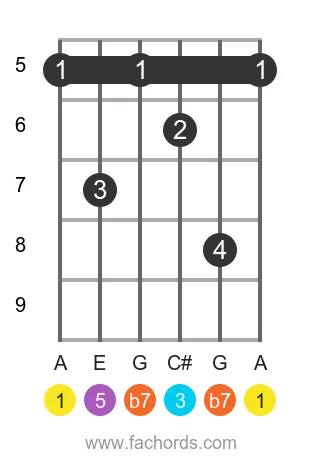
Position 17
Barre
Movable
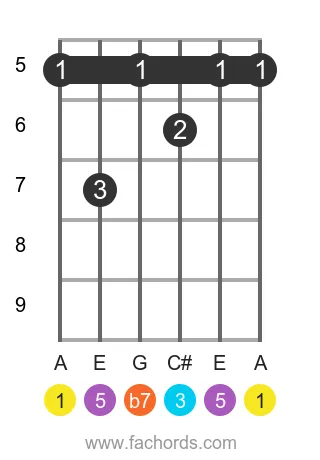
 Find more shapes in our all guitar chords online library. If you
prefer a printable pdf, download
the Free Guitar Chords Chart Pdf
Find more shapes in our all guitar chords online library. If you
prefer a printable pdf, download
the Free Guitar Chords Chart Pdf
You can also use this accessible A7 chord page, with written diagram instructions and screen-reader support for blind users.

Created by
Giancarlo is a musician (teaching guitar since 2000), software engineer, AI consultant and published researcher
FAQ
What specific notes make up the A7 guitar chord?
The A7 chord is comprised of four distinct notes: A, C#, E, and G. These notes correspond to the chord's Root, Major Third, Perfect Fifth, and Minor Seventh intervals, respectively.
Why is the A7 chord categorized as a 'dominant' chord?
The A7 chord is a member of the Dominant Chords family because it contains a minor seventh (b7) interval relative to its root. This particular interval is what gives dominant chords their characteristic sound and often creates a sense of tension that resolves to another chord.
What do the intervals '1, 3, 5, and b7' signify in the context of the A7 chord?
These numbers represent the musical intervals from the root note A. '1' is the Root (A), '3' is the Major Third (C#), '5' is the Perfect Fifth (E), and 'b7' is the Minor Seventh (G). Understanding these intervals reveals the fundamental structure and sound of the A7 chord.
In what musical genres or situations is the A7 chord commonly used?
The A7 chord is highly versatile and finds frequent use in a variety of musical styles. It is especially prominent in jazz chord progressions, but its distinct sound also makes it a staple in blues, rock, and many other popular music genres.
How do chord diagrams and fretboard patterns help in learning the A7 chord?
Chord diagrams and fretboard patterns visually illustrate where each note (A, C#, E, G) of the A7 chord is located on the guitar. This approach helps you to not only memorize the shape but also understand the underlying structure and tones that form the chord, deepening your understanding of its construction.