A 5 Guitar Chord | Play, Hear and Practice Powerfully
Want a structured chord roadmap instead of jumping between pages?
Download the step-by-step Guitar Chord Ebook
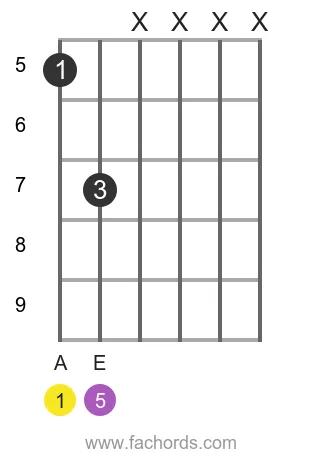
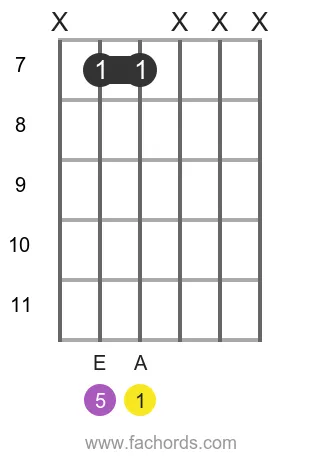
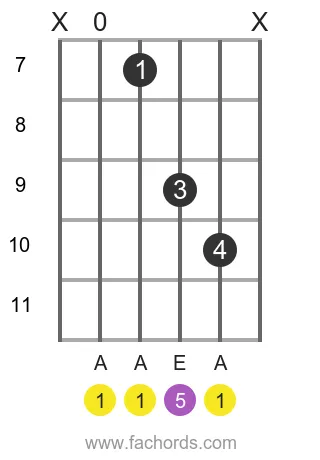
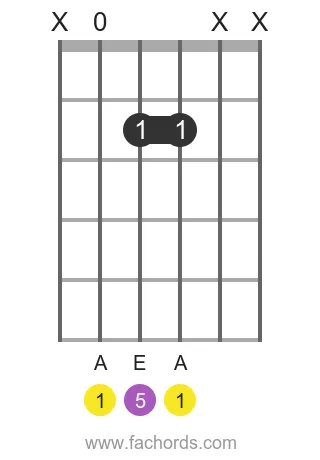
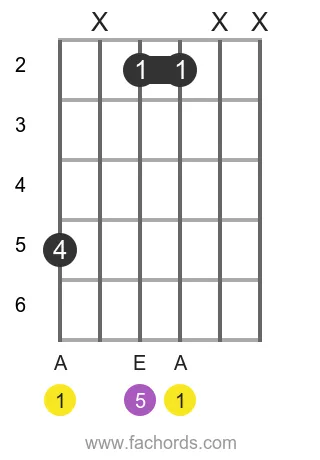
The A 5 chord is a fundamental member of the power chord family, distinctive for its composition of only the Root and the Fifth notes. For the A 5, these notes are A and E, corresponding to the intervals Root (1) and Perfect Fifth (5). Use the interactive fretboard tool on this page to explore every fingering, hear the chord with playback, and check your accuracy with real-time microphone feedback - it instantly validates your playing.
The simplicity of the A 5 chord structure makes it a staple in rock, punk, and heavy music, especially when played on an electric guitar with distortion. Understanding its fundamental construction is crucial for mastering the fretboard; delve deeper into this with our Chord Construction tutorial. For more on the role of these powerful shapes, check out our guide to Power Chords. Once you're comfortable with the fingering, our tips on Improving Chord Changes will help you integrate it smoothly into your playing.
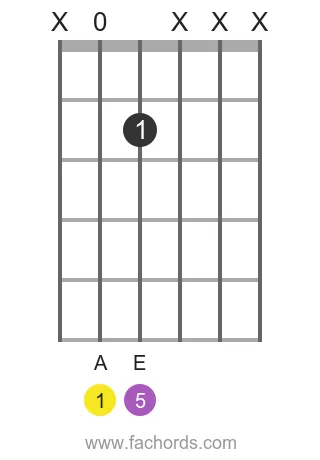
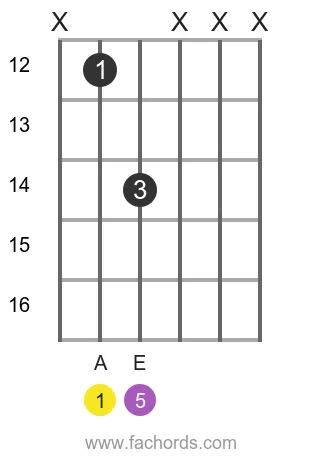
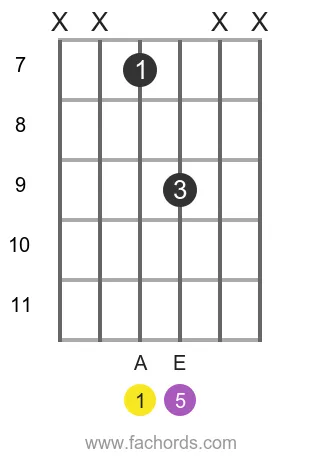
Below, you'll discover over 20 A 5 chord diagrams, ranked from the easiest open positions to full movable shapes, complete with music theory insights, popular songs that use this chord, and the keys where it appears. Before you dive into the diagrams, take a moment to use the interactive tool above - set a comfortable rhythm with the drum & BPM tool, practice playing the chord, and let the mic feedback guide you to perfect articulation. This hands-on, ear-training approach will solidify your understanding faster than any static chart.
Notes that compose the A 5 chord:
Chord formula for the Powerchord chord:
A Powerchord Guitar Chord Diagrams
Position 1
Open
Position 2
Movable
Position 3
Movable
Position 4
Movable
Position 5
Movable
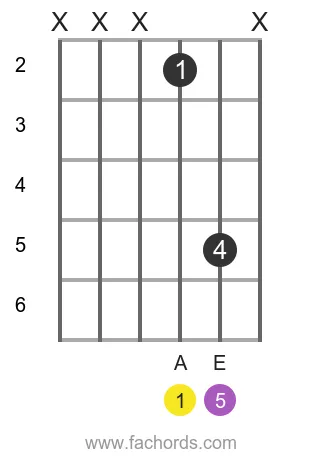
Position 6
Movable
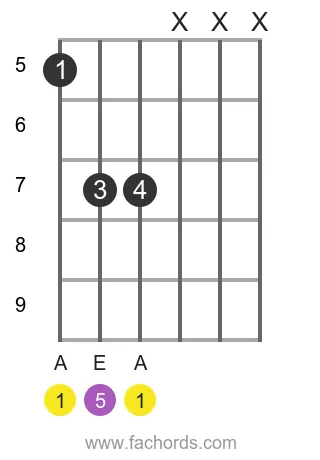
Position 7
Movable
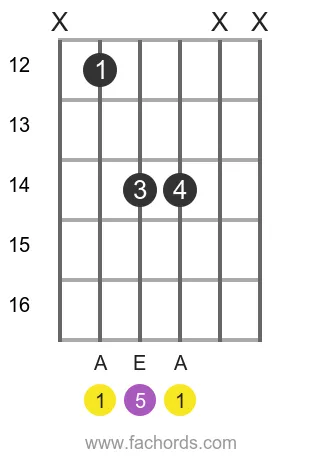
Position 8
Movable
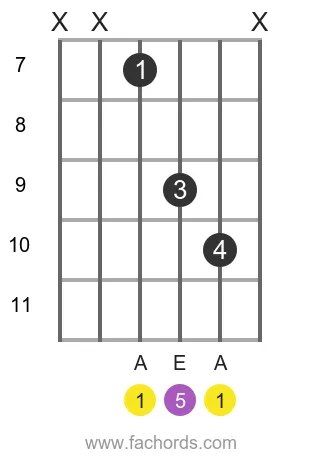
Position 9
Barre
Movable
Position 10
Open
Position 11
Barre
Open
Position 12
Barre
Movable
Position 13
Barre
Open
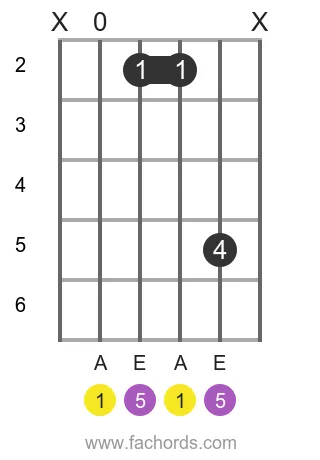
Position 14
Barre
Open
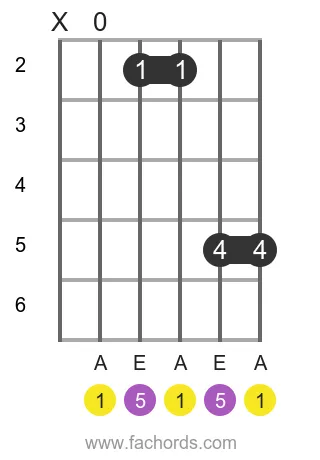
 Find more shapes in our all guitar chords online library. If you
prefer a printable pdf, download
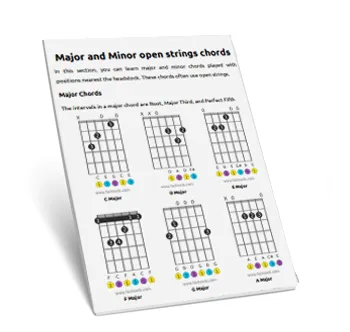
the Free Guitar Chords Chart Pdf
Find more shapes in our all guitar chords online library. If you
prefer a printable pdf, download
the Free Guitar Chords Chart Pdf
You can also use this accessible A5 chord page, with written diagram instructions and screen-reader support for blind users.
FAQ
What defines the A5 chord as a 'power chord' compared to other chord types?
The A5 chord is classified as a 'power chord' because it uniquely consists of only two distinct notes: the Root (A) and the Perfect Fifth (E). Unlike major or minor chords, it intentionally omits the third note, which contributes to its strong, stable, and harmonically ambiguous sound.
Why is the A5 chord (and other power chords) frequently used in rock and heavy music?
The A5 chord's simple two-note structure (Root and Fifth) makes it sound very stable and powerful, especially when played with distortion on an electric guitar. The absence of a third note helps avoid muddy or clashing sounds that can occur with full chords when distorted, providing a clear, driving foundation common in rock, punk, and heavy genres.
What specific notes make up the A5 power chord?
The A5 power chord is composed of the notes A and E. The A note serves as the Root (1st interval), and the E note is the Perfect Fifth (5th interval) above the A.
How do the intervals '1' (Root) and '5' (Perfect Fifth) relate to playing the A5 chord?
The intervals '1' and '5' define the structure of the A5 chord. '1' represents the root note, A, and '5' represents the Perfect Fifth above that root, which is E. When you play the A5 chord on the guitar, you are physically locating and sounding these two specific interval relationships on the fretboard.