Practice Your D6/9 Guitar Chord with Real-Time Feedback
Want a structured chord roadmap instead of jumping between pages?
Go to the full guitar chords tutorial.
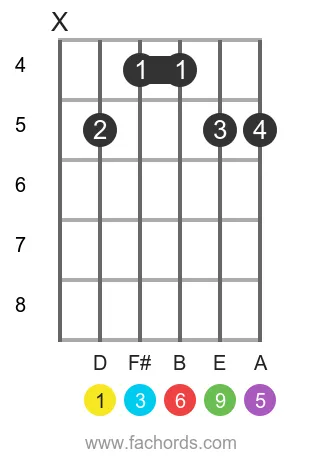
Ready to tackle the D6/9 chord? Immediately test your finger placement and precision using our interactive virtual fretboard with real-time mic feedback. Our unique tool verifies your playing, ensuring you hit every note perfectly. This vibrant chord, belonging to the Major Chords family, is composed of the notes D, F#, A, B, and E. These notes correspond to the intervals 1, 3, 5, 6, and 9 – or the Root, Major Third, Perfect Fifth, Major Sixth, and Major Ninth – giving it its distinctive rich sound.
The D6/9 chord stands out with its unique blend of extended harmony and vintage sweetness. It combines the warm resonance of a major chord with the sophisticated color tones of the sixth and ninth, making it a favorite in jazz, pop, and blues. Understanding its construction is key to unlocking its full potential; you can delve deeper into how chords are built by stacking intervals with our guide on Chord Construction. For those keen to explore similar voicings, we offer dedicated tutorials on 6th Chords and Ninth Chords, perfect for expanding your harmonic palette. Mastering these extended harmonies will significantly Improve Chords Change fluidity in your playing.
Scroll down to find a comprehensive collection of D6/9 chord diagrams, ordered from easiest to most challenging, accompanied by detailed theory. Before memorizing them, we strongly encourage you to use our virtual fretboard to experiment with different voicings and instantly hear their unique sound. Explore the various keys where this chord shines and integrate it into your songs. Now, put your knowledge to the test and see how accurately you can play!
D 6/9 guitar chord is also written as D6/9, D6add9, D69 or Dmaj6/9.
Notes in the D 6/9 chord:
Chord Structure:
D 6/9 Guitar Chord Diagrams
Position 1
Open
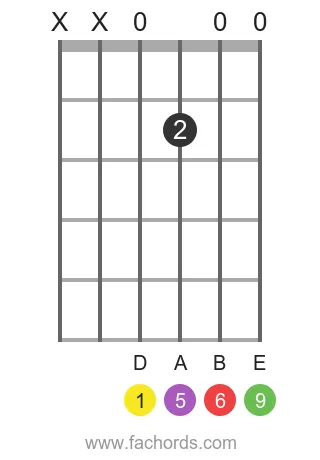
Position 2
Open
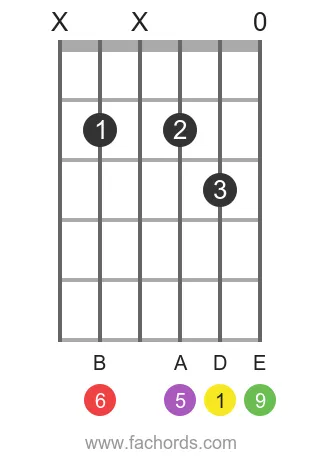
Position 3
Open
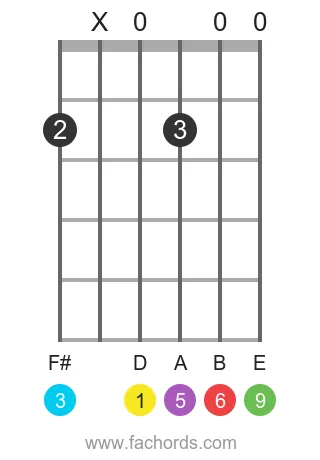
Position 4
Movable
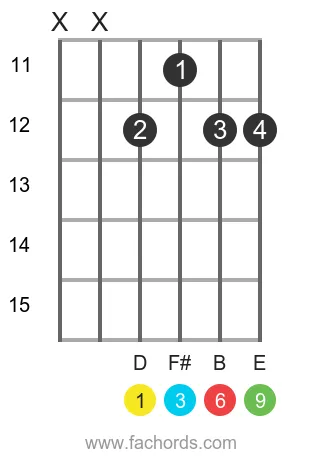
Position 5
Open
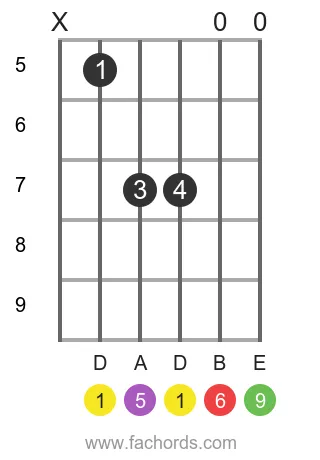
Position 6
Open
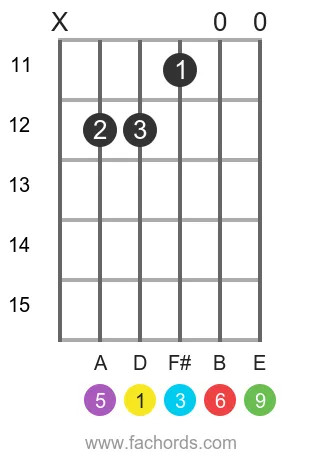
Position 7
Open
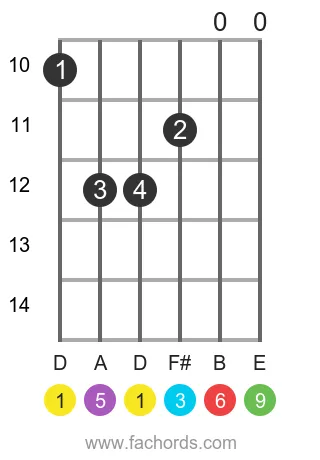
Position 8
Barre
Movable
Position 9
Barre
Movable
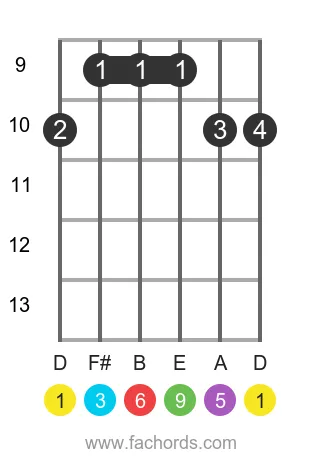
 Find more shapes in our all guitar chords online library. If you
prefer a printable pdf, download
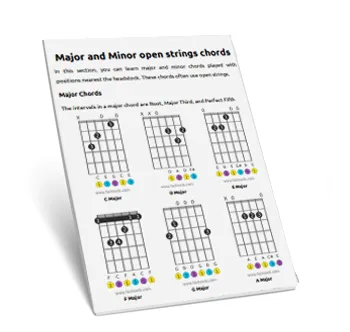
the Free Guitar Chords Chart Pdf
Find more shapes in our all guitar chords online library. If you
prefer a printable pdf, download
the Free Guitar Chords Chart Pdf
You can also use this accessible D6/9 chord page, with written diagram instructions and screen-reader support for blind users.

Created by
Giancarlo is a musician (teaching guitar since 2000), software engineer, AI consultant and published researcher
FAQ
What notes are included in a D 6/9 chord?
The D 6/9 chord is comprised of five distinct notes: D, F#, A, B, and E. These notes are derived from the root (D) and its specific extensions.
How are the intervals used to build the D 6/9 chord?
The D 6/9 chord is built using five specific intervals relative to the root note D. These are the Root (D), Major Third (F#), Perfect Fifth (A), Major Sixth (B), and Major Ninth (E).
Why is the D 6/9 chord considered a 'Major Chord'?
The D 6/9 chord belongs to the Major Chords family because it contains the defining Major Third (F#) and Perfect Fifth (A) intervals relative to its root (D). The added 6th and 9th intervals enrich the sound but do not alter its fundamental major quality.
In what musical genres is the D 6/9 chord commonly used?
The D 6/9 chord is frequently used across various musical styles, including jazz, pop, and blues. Its rich and full sound makes it a popular choice in these genres for adding harmonic color.
Is the D 6/9 chord difficult for guitarists to learn?
The D 6/9 chord is considered more advanced than basic beginner chords but is not as complex as some other intermediate guitar chords. It serves as an excellent step for guitarists looking to expand their chord vocabulary beyond the fundamentals.
What are the benefits of learning the D 6/9 chord?
Mastering the D 6/9 chord significantly enhances your guitar playing skills by expanding your chord vocabulary. It introduces you to a richer sound palette and opens up new musical possibilities, especially in genres like jazz and blues.