Boss DS-1 Distortion
Some Words About This Iconical Pedal
In this article we're going to talk about the Boss DS-1 Distortion pedal, taking into account options from expert musicians and beginners as well.
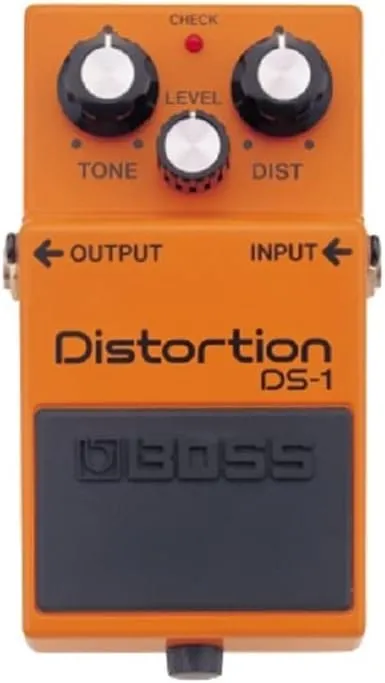 The Boss DS-1 Distortion Pedal stands as
a
monument in the landscape of electric guitar effects, offering a blend of reliability, versatility, and quality that resonates
across a broad
spectrum
of
musicians.
The Boss DS-1 Distortion Pedal stands as
a
monument in the landscape of electric guitar effects, offering a blend of reliability, versatility, and quality that resonates
across a broad
spectrum
of
musicians.
Its acclaim stretches from bedroom players to professional stages, reflecting its ability to adapt and enhance a wide range of musical styles.
At the heart of the DS-1's praise is its exceptional capability to sculpt guitar sounds, offering users a sharp, characterful distortion that breathes life into their music.
Whether it's the powerful chords of a Gibson LP 100 or the rhythmic patterns of a Roland drum machine, the DS-1 wraps these sounds in a sonic dream, providing depth and edge without sacrificing the instrument's intrinsic tone.
This versatility is a key highlight, with many users finding unexpected ways to exploit the pedal's range, from thick, lower frequency rumbles to piercing high-gain leads.
The pedal's efficiency in the studio is another point of commendation.
For musicians navigating the digital realm, the DS-1 not only streamlines the sound-shaping process but also alleviates technical burdens such as computer memory usage and latency in digital audio workstations (DAWs).
This makes it an invaluable tool for those seeking to maintain a fluid and creative workflow, offering an analog solution that complements digital efficiency.
Despite its wide-ranging utility, the pedal's transition from the DS-1 to the DS-2 model has sparked debate among users.
While some herald the DS-2 for building upon its predecessor's foundations with improved sound quality and versatility, others remain loyal to the DS-1's original charm.
Criticisms of the newer models include a shift towards a more processed sound quality that some users feel detracts from the pedal's once organic tone.
Furthermore, concerns have been raised about the pedal's output volume, with some finding the distortion too subdued for their liking.
Durability and construction quality are undisputed strengths of the DS-1, with many users attesting to its robustness over years of use.
This reliability, combined with its cost-effectiveness, positions the DS-1 as a compelling choice for musicians at all levels.
However, a notable oversight for some has been the absence of a power adapter, requiring a separate purchase and causing minor inconvenience.
In terms of sound, the DS-1 is celebrated for its clear, articulate distortion that can be finely tuned via its knobs.
It offers a range that can beautifully complement genres as heavy and demanding as metal or as subtle and nuanced as blues.
The pedal's ability to preserve the dynamics of playing, even at high distortion levels, is particularly valued, allowing musicians to express a broad emotional range through their instrument.
Despite the scattered critiques, the DS-1's reputation as an industry standard is well-deserved.
It embodies Boss's commitment to quality, innovation, and musician-focused design.
From enabling the heavy, clean distortions required for classic rock anthems to serving as the backbone for experimental and grunge tones, the DS-1 Distortion Pedal remains a cornerstone of musical creativity.
Ultimately, the Boss DS-1's enduring popularity is a testament to its ability to meet and exceed the diverse needs of musicians around the globe.
Its blend of durability, versatility, and quality ensures its place in the pantheon of guitar effects pedals, making it an essential tool for anyone looking to elevate their sound.
FAQ
What makes the Boss DS-1 Distortion pedal considered an 'iconic' effect?
The Boss DS-1 is iconic due to its strong blend of reliability, versatility, and quality. It's widely praised for its ability to sculpt guitar sounds with a sharp, characterful distortion that enhances a vast range of musical styles, from beginners to professionals, without sacrificing the instrument's inherent tone.
How does the Boss DS-1 allow guitarists to shape their sound?
The DS-1 offers a distinct, articulate distortion that adds depth and edge to your playing. Its versatility allows for a wide sonic range, from thick, lower frequency rumbles to piercing high-gain leads, tunable via its knobs. Crucially, it preserves your playing dynamics even when high distortion levels are applied.
Can the Boss DS-1 be effectively used across different musical genres?
Yes, the DS-1 is highly versatile and can beautifully complement a broad spectrum of genres. It's capable of providing the heavy, clean distortions required for classic rock and metal, as well as the more subtle and nuanced tones suitable for blues or experimental and grunge sounds.
What are the key points of comparison or debate between the Boss DS-1 and its successor, the DS-2?
While the DS-2 was introduced to build upon the DS-1's foundations with improved sound and versatility, many users prefer the DS-1's original character. Common criticisms of the newer models, including the DS-2, often highlight a shift towards a more 'processed' sound, which some feel detracts from the DS-1's classic, organic tone.
Is the Boss DS-1 a suitable pedal for use in a home studio or with digital audio workstations (DAWs)?
Absolutely. The DS-1 is highly efficient for studio use. As an analog pedal, it streamlines the sound-shaping process and helps alleviate technical burdens often associated with DAWs, such as high computer memory usage and latency. This makes it a valuable tool for maintaining a fluid and creative workflow.
Are there any common criticisms or inconveniences associated with the Boss DS-1?
While highly regarded, some users have noted that the pedal's output volume can occasionally be perceived as too subdued in certain contexts. A common minor inconvenience is that the pedal does not typically include a power adapter, requiring a separate purchase.
