E7#9 Guitar Chord (the Hendrix chord)
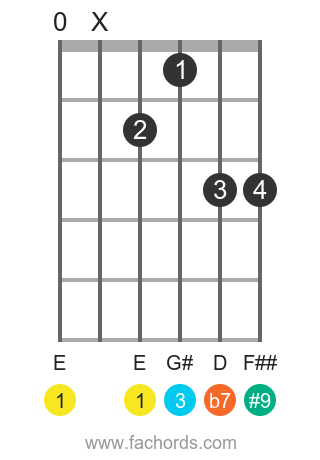
Welcome to this comprehensive tutorial dedicated to the E 7(#9) chord, a member of the vibrant Dominant Chords family. This chord, also known as the 'Hendrix chord', is known for its distinctive, rich sound that adds a touch of complexity and color to any composition.
The E 7(#9) chord is composed of the notes E, G#, B, D, and F##. The chord's construction is based on a series of intervals: the 1 (Root), 3 (Major Third), 5 (Perfect Fifth), b7 (Minor Seventh), and #9 (Augmented Ninth). Understanding these intervals is key to mastering this chord, and you can deepen your knowledge of them by visiting our tutorial about fretboard intervals.
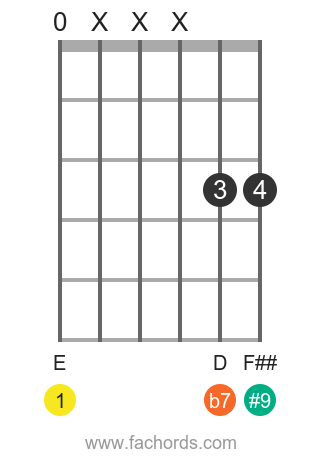
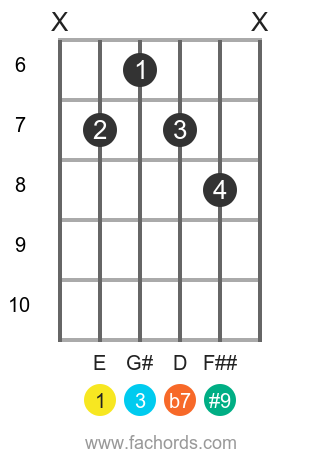
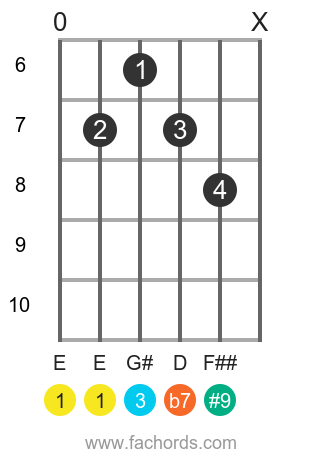
Learning to play the E 7(#9) chord can be a bit challenging, especially for beginners. However, with the right guidance and a lot of practice, you will be able to add this chord to your repertoire. This tutorial will provide you with detailed chord diagrams and fretboard patterns that visually illustrate the tones composing the chord. For a broader understanding of guitar chords, you may want to check out our full tutorial about guitar chords of all types.
The E 7(#9) chord is a staple in many genres, including blues and jazz, due to its unique and versatile sound. If you're interested in exploring more about chord progressions commonly used in these genres, our tutorial about jazz chord progressions is a great resource.
Remember, understanding the theory behind the chords you play is just as important as knowing how to play them. If you want to delve deeper into the theory of chord construction, take a look at our tutorial on how to build chords by stacking intervals.
Enjoy your journey into the world of the E 7(#9) chord and happy strumming!
E 7(#9) chord Notes:
How to create the Dominant Seventh Sharp Ninth Added chord:
Guitar Patterns for the E7(#9) chord
Chord boxes are sorted from the easiest to the hardest. Learn how to read chord diagrams.
If you have difficulties with bar chord shapes, check the Bar Chords Tips tutorial.
You can also use this accessible chords page with written diagrams instruction.
Position 1
Open
Position 2
Movable
Position 3
Open
Position 4
Open
Position 5
Open
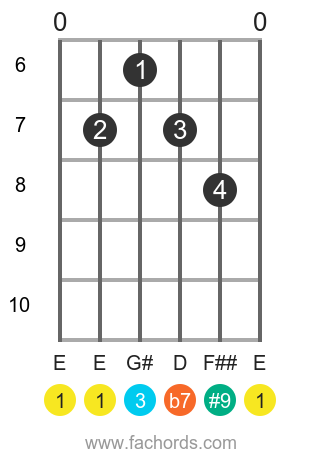
Position 6
Barre
Movable
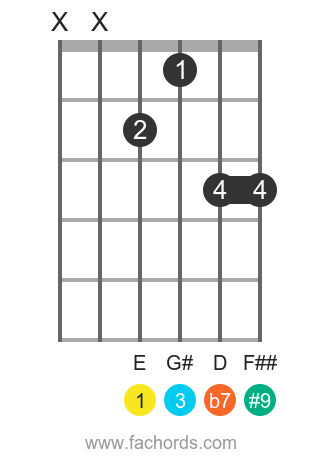
Position 7
Barre
Open
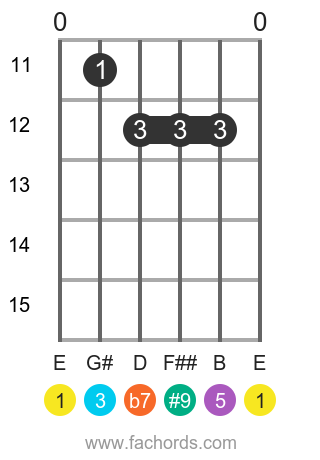
 You can find more shapes in our all guitar chords online library. If you
prefer a printable pdf, download
the Free Guitar Chords Chart Pdf
You can find more shapes in our all guitar chords online library. If you
prefer a printable pdf, download
the Free Guitar Chords Chart Pdf
FAQ
What is the E 7(#9) chord and what kind of sound does it produce?
The E 7(#9) chord is a member of the Dominant Chords family. It is known for its distinctive, rich, complex, and colorful sound, making it a unique and versatile addition to musical compositions.
Why is the E 7(#9) chord sometimes called the 'Hendrix chord'?
The E 7(#9) chord is also widely known by its alternative name, the 'Hendrix chord', due to its distinctive and prominent use, particularly in popular music.
What specific notes and intervals define the E 7(#9) chord?
The E 7(#9) chord is composed of the notes E, G#, B, D, and F##. These notes correspond to the intervals of 1 (Root), 3 (Major Third), 5 (Perfect Fifth), b7 (Minor Seventh), and #9 (Augmented Ninth).
How does the #9 interval contribute to the E 7(#9) chord's unique sound?
The #9 (Augmented Ninth) interval is a key component that gives the E 7(#9) chord its distinctive, rich, and complex character. This particular interval adds a unique color and tension that sets it apart from standard dominant chords.
In what musical genres is the E 7(#9) chord commonly used?
The E 7(#9) chord is a staple in many musical genres, especially blues and jazz, owing to its unique and versatile sound that adds complexity and color to progressions.
Why is the E 7(#9) chord considered a 'dominant chord'?
The E 7(#9) chord is classified as a dominant chord because its core construction includes the characteristic intervals of a root, major third, perfect fifth, and a minor seventh (b7), which define dominant harmony. The added #9 further enhances its unique dominant quality.