Understand and Play the D#maj7 Guitar Chord Interactively
Want a structured chord roadmap instead of jumping between pages?
Go to the full guitar chords tutorial.
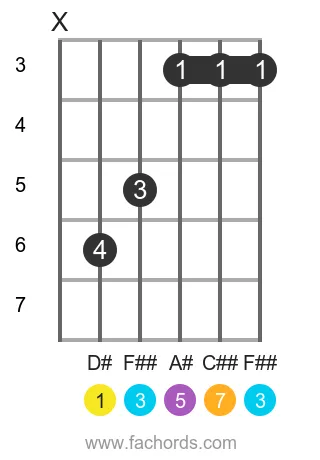
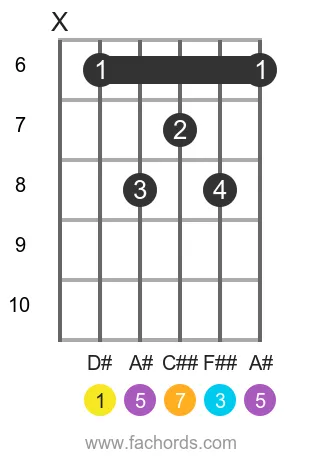
Delve into the structure of the D#maj7 chord, a rich and expressive member of the Major Chords family. It is precisely constructed from the notes D#, F##, A#, and C##, which map directly to the intervals Root (1), Major Third (3), Perfect Fifth (5), and Major Seventh (7). To truly internalize this theory, engage with our interactive fretboard tool above: visualize every possible fingering, listen to the precise audio of the chord played as a strum or arpeggio, and verify your own accuracy with real-time microphone feedback.
The D#maj7 chord’s characteristic intervals create a sophisticated sound often associated with smooth jazz and soulful ballads, adding a luxurious harmonic color to your playing. A thorough understanding of how these intervals combine is essential for true fretboard mastery. For a deeper dive into theoretical principles, our Chord Construction tutorial is highly recommended. Many D#maj7 voicings require strong barre chord technique; hone your skills with our dedicated Guitar Bar Chords guide. To ensure seamless transitions between chords, consult our expert advice on how to Improve Chords Change, integrating this advanced 7th chord smoothly into your progressions.
Further below, you'll find comprehensive chord diagrams, carefully ranked from the most accessible open positions to more advanced barre shapes. These visuals are complemented by detailed music theory, popular songs that showcase the D#maj7 chord's unique flavor, and an exploration of the keys where it naturally resides. Before moving on, dedicate some focused practice with the interactive tool above. Establish a consistent rhythm using the drum and BPM tool, strum the chord, and meticulously refine your accuracy with the mic feedback. Consistent, guided practice is the cornerstone of internalizing new chords and seamlessly integrating them into your guitar vocabulary.
Notes in the D# maj7 chord:
Tones of the Major Seventh chord:
Fingerings for the D#maj7 guitar chord
Position 1
Movable
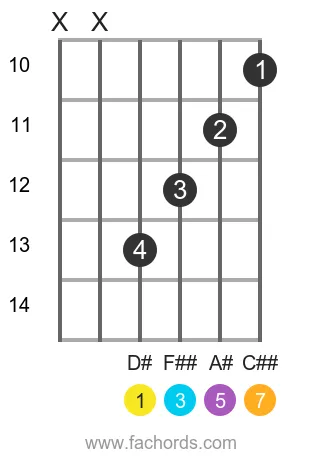
Position 2
Barre
Movable
Position 3
Barre
Movable
 Find more shapes in our all guitar chords online library. If you
prefer a printable pdf, download
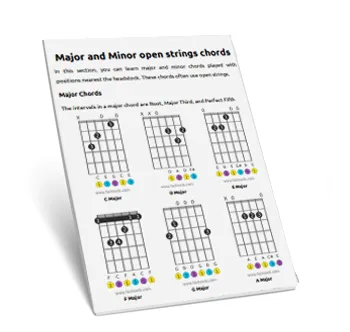
the Free Guitar Chords Chart Pdf
Find more shapes in our all guitar chords online library. If you
prefer a printable pdf, download
the Free Guitar Chords Chart Pdf
You can also use this accessible D#maj7 chord page, with written diagram instructions and screen-reader support for blind users.

Created by
Giancarlo is a musician (teaching guitar since 2000), software engineer, AI consultant and published researcher
FAQ
What specific notes make up the D#maj7 chord?
The D#maj7 chord is constructed from four distinct notes: D# (the root), F## (the major third), A# (the perfect fifth), and C## (the major seventh).
Why does the D#maj7 chord include notes with double sharps, like F## and C##?
Double sharps are used in the D#maj7 chord to accurately represent the specific intervals when building the chord from the D# major scale. This ensures each note has a unique letter name and correctly identifies its relationship to the root D#, particularly for the major third and major seventh intervals.
How does a D#maj7 chord differ from a standard D# major chord?
A standard D# major chord consists of three notes: the root, major third, and perfect fifth. The D#maj7 chord builds upon this by adding an additional note, the major seventh, which gives it a richer and more harmonically complex sound.
What is the meaning of the intervals 1, 3, 5, and 7 in the D#maj7 chord?
These numbers represent the specific intervals relative to the chord's root note, D#. '1' is the Root (D#), '3' is the Major Third (F##), '5' is the Perfect Fifth (A#), and '7' is the Major Seventh (C##). Understanding these intervals is crucial for comprehending how the chord is constructed and its harmonic quality.
In which musical genres is the D#maj7 chord commonly used by guitarists?
The D#maj7 chord is a versatile and widely used chord, particularly prominent in jazz music. It also finds its place in various styles of pop and rock, often contributing to sophisticated and rich harmonic progressions.
Why is the D#maj7 chord considered more advanced than basic major or minor chords for guitarists?
The D#maj7 chord is considered more advanced because it extends beyond the typical three-note major or minor triads by incorporating a fourth note – the major seventh. This often translates to more complex fingerings on the guitar fretboard and requires a deeper theoretical understanding of chord construction.