Train The C Maj7th Chord On Guitar with Interactive Feedback
Want a structured chord roadmap instead of jumping between pages?
Go to the full guitar chords tutorial.
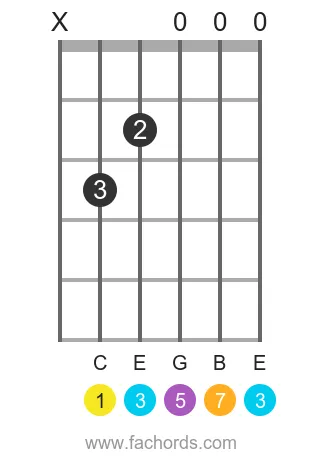
Struggling to accurately play the C Maj7th Chord On Guitar? Our interactive fretboard instantly verifies your finger placement and sound with real-time mic feedback. Once you're confident, you'll know this beautiful Major Chords family member is built from the notes C, E, G, and B, using the intervals 1 (root), 3 (major third), 5 (perfect fifth), and 7 (major seventh).
The C Maj7th Chord On Guitar embodies a smooth, sophisticated sound, making it a staple in jazz, R&B, and other genres seeking a rich harmonic color. Its characteristic major seventh interval adds warmth and a sense of resolution that differs from the simpler major triad. For those looking to dive deeper into how these harmonies are constructed, our guide on Chord Construction offers valuable insights. You can also explore how to play more compact voicings, sometimes called Learn 3-Note 7th Chords, to integrate this beautiful chord more fluidly into your playing.
Before scrolling to the chord diagrams, fretboard patterns, and theoretical explanations of its notes across different keys, we encourage you to practice the C Maj7th Chord On Guitar using our interactive fretboard. Experiment with the chord and arpeggio playback, and utilize the drum machine to solidify your rhythm. This disciplined approach will ensure you not only learn the chord but also understand how it fits into real songs.
Notes that compose the C maj7 chord:
Chord structure of the Major Seventh chord:
The C Maj 7th Chord - Analysis
Before we check out different chord positions for Cmaj7 let’s get an idea of how the chord is built and used.
The notes for the C major scale are C-D-E-F-G-A-B and a major chord is made up of the root, major third, and perfect fifth.
Which means a C major chord is made up of the notes C-E-G.
We have already discussed chords like E7 that are known as dominant sevenths, Cmaj7 is a major seventh chord.
The root, major third, perfect fifth, and major seventh is simply C-E-G-B.
The major seventh is used across the board in pop, rock, soul, funk , and of course commonly in jazz.
Dominant sevenths are often used to create tension before resolution, major sevenths are more like a little flavor in the chord progression (they give out a smoother feel than the dominant sevenths).
C major scale:
C D E F G A B
C maj7 structure:
Songs With a C Major Seventh Chord
"Imagine" : to show how mild of a change a major seventh chord can bring we have this song by John Lennon.
This song uses a Cmaj7 in the verse between a C and F chord, it helps create the light flowing feel of the song.
If you play C-C7-F it gives it more tension and a rock and blues, feel.
If we play the C-Cmaj7-F we get a song with a much different and more relaxed feel.
Another two well-known songs using major sevenths are Under the Bridge by Red Hot Chili Peppers
It’s Late by Carole King
Cmaj7 can also be found in the pop and jazz standard Fly Me to the Moon and in Al Green’s love ballad Let’s Stay Together.
How To Use The Cmaj7 Chord
The best time to play the maj7 are on the one and four chords .
So in the key of C we would use Cmaj7 and Fmaj7 in our chord progression.
Another key where the Cmaj7 would sound nice is the Key G.
If you are into jazz, funk, pop standards, or fusion this is a chord you will see pop up often.
It is a chord you will see over and over again in some of the most popular and enduring songs.
Cmaj7 Chord Fingerings
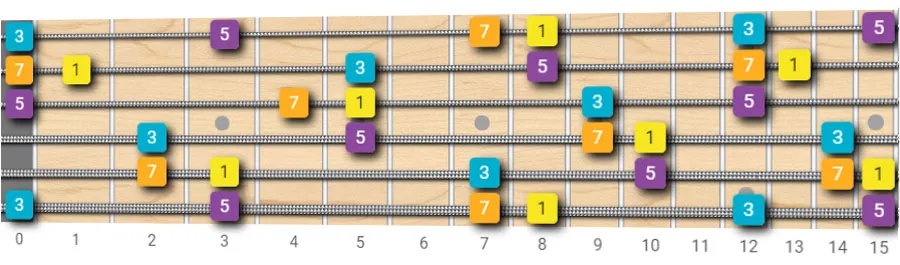
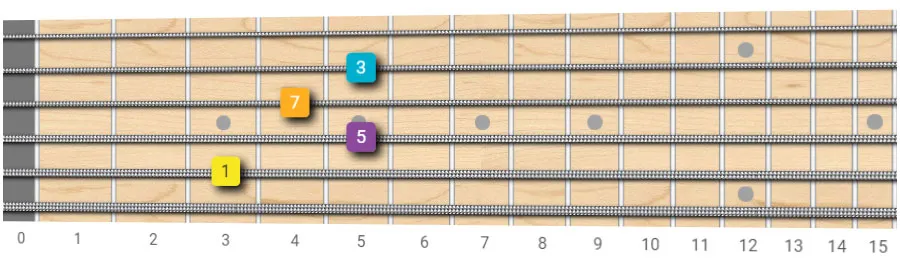
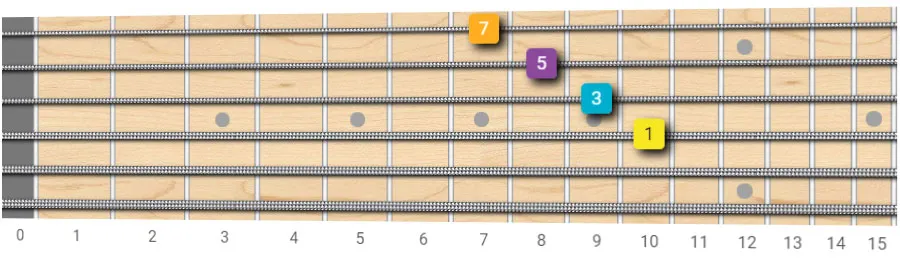
The Cmaj7 tones on the guitar fretboard ( click to zoom )
Using the tones above we can come up with some of the more popular versions of how to play the Cmaj7 chord.
Usually, when we play a chord we want the root note (here C) to be the lowest played bass note.
Sometimes we will find a chord shape where that isn’t the case, which means the chord is an inversion.
If the lowest note is B, E, or G instead of the C that is an inversion.
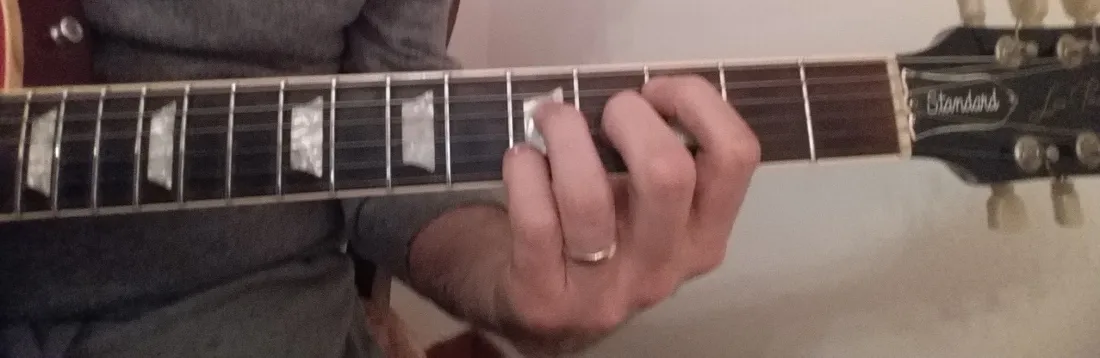
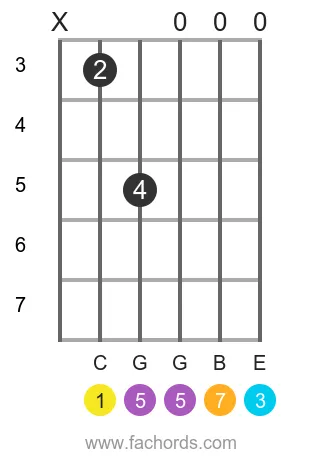
The most common and first learned open position for Cmaj7 is X32000 .
Another easy but bass heavy open position is 332000 .
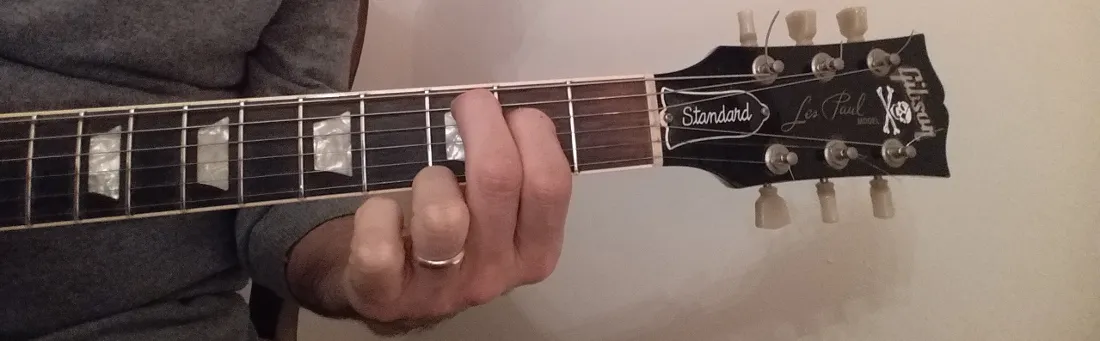
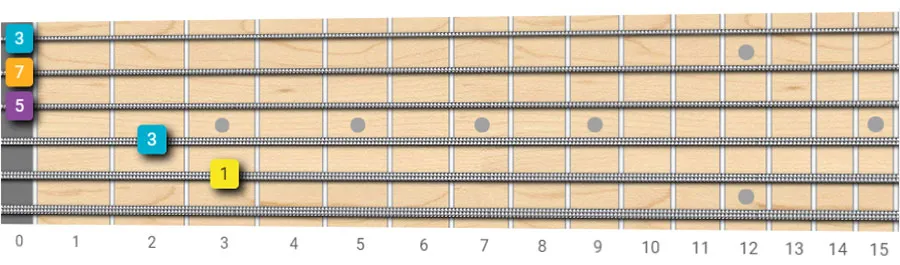
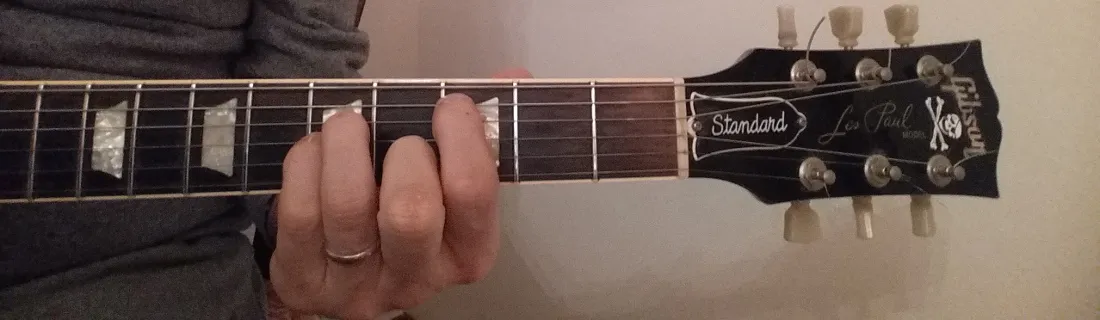
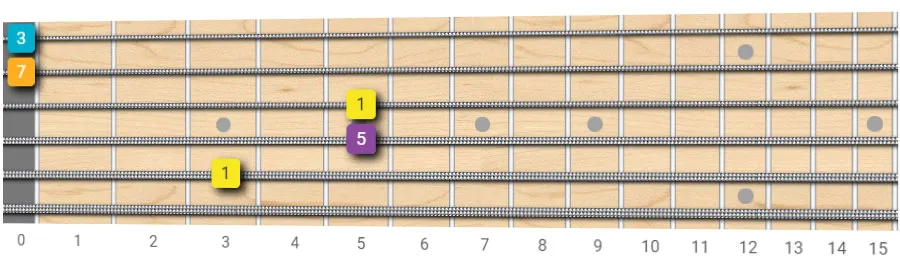
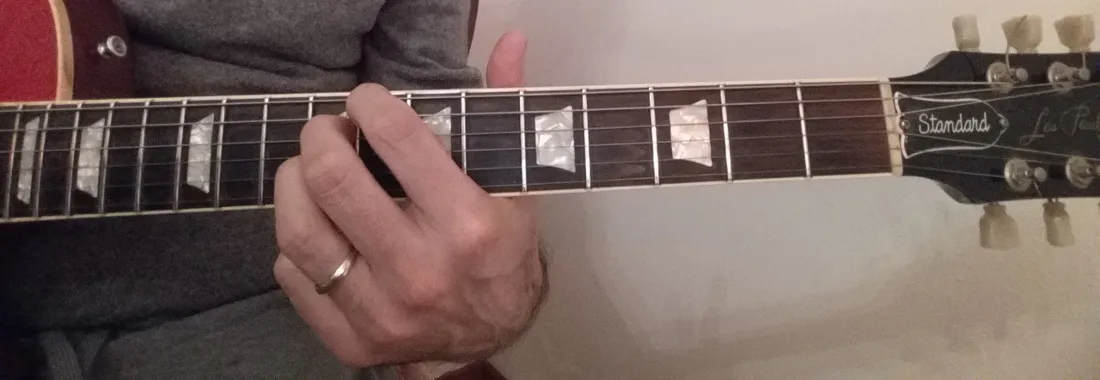
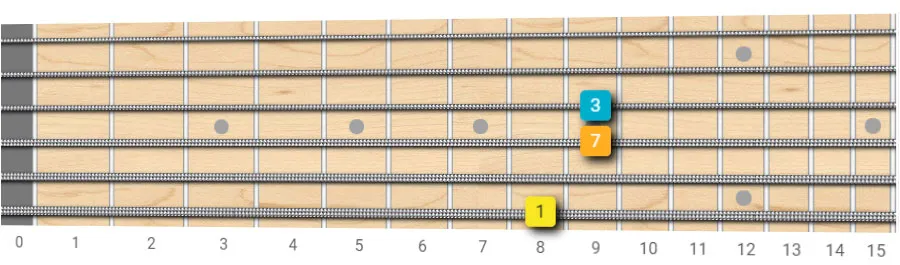
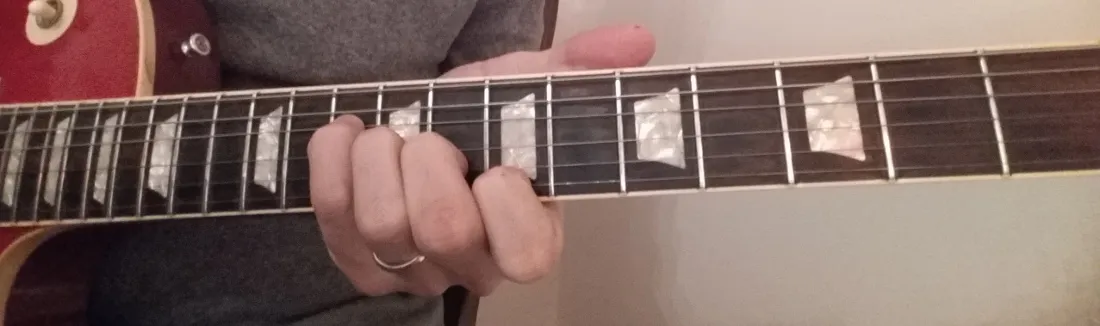
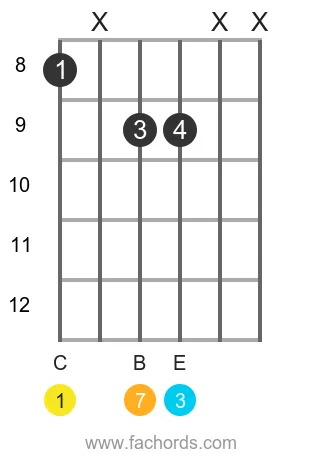
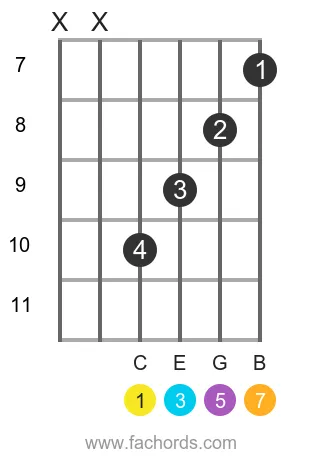
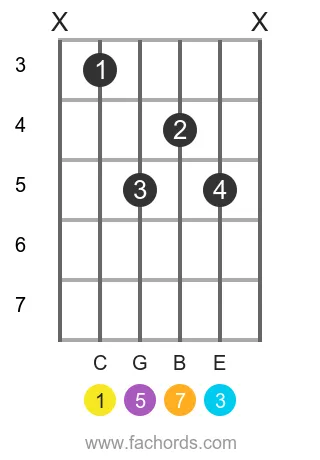
There are a few common but difficult positions that take some practice to master like the common jazz voicing of 8X99XX , along with X3545X and XX10987
Keys With The C Maj7 Chord
The most common keys in which to find the C Maj 7th chord is C major, the our chord is the root, and G major, where Cmaj7th is the 4th of the key.
C Major Key
| C maj7 | D m7 | E m7 | F maj7 | G 7 | A m7 | B m7/b5 |
|---|---|---|---|---|---|---|
| B (7) G (5) E (3) C (1) |
C (1) A (6) F (4) D (2) |
D (2) B (7) G (5) E (3) |
E (3) C (1) A (6) F (4) |
F (4) D (2) B (7) G (5) |
G (5) E (3) C (1) A (6) |
A (6) F (4) D (2) B (7) |
G Major Key
| G maj7 | A m7 | B m7 | C maj7 | D 7 | E m7 | F# m7/b5 |
|---|---|---|---|---|---|---|
| F# (7) D (5) B (3) G (1) |
G (1) E (6) C (4) A (2) |
A (2) F# (7) D (5) B (3) |
B (3) G (1) E (6) C (4) |
C (4) A (2) F# (7) D (5) |
D (5) B (3) G (1) E (6) |
E (6) C (4) A (2) F# (7) |
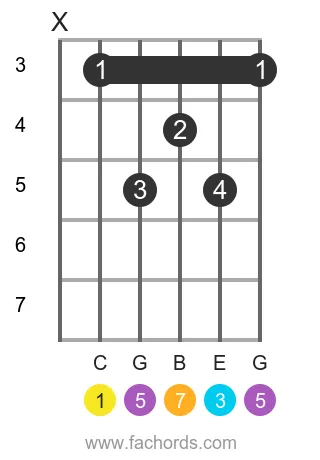
Cmaj7 Guitar Chord Shapes
Position 1
Movable
Position 2
Open
Position 3
Open
Position 4
Movable
Position 5
Movable
Position 6
Movable
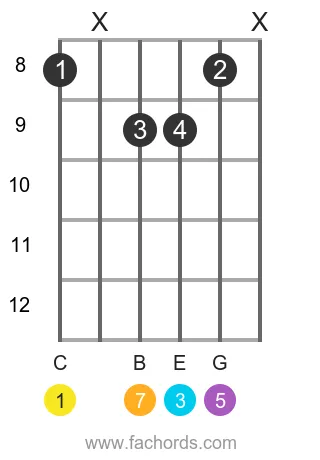
Position 7
Open
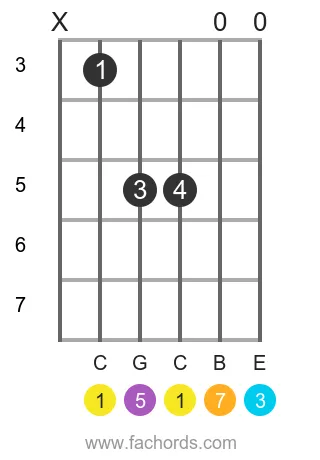
Position 8
Open
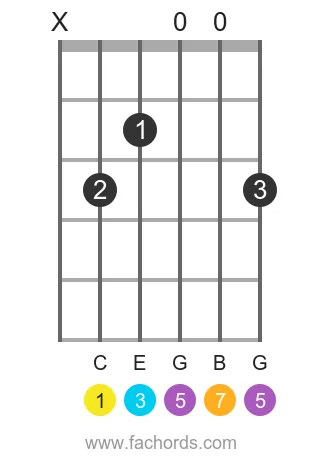
Position 9
Movable
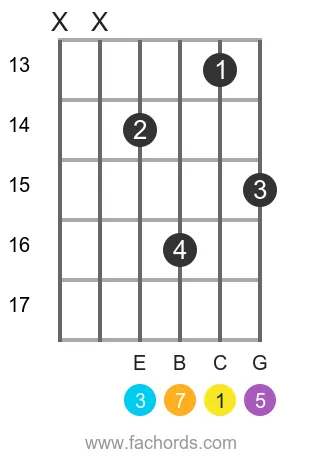
Position 10
Movable
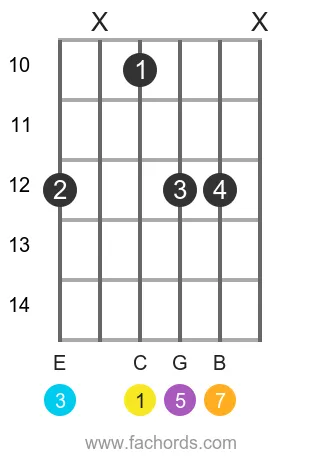
Position 11
Movable
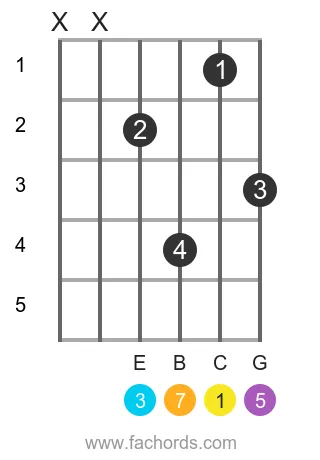
Position 12
Open
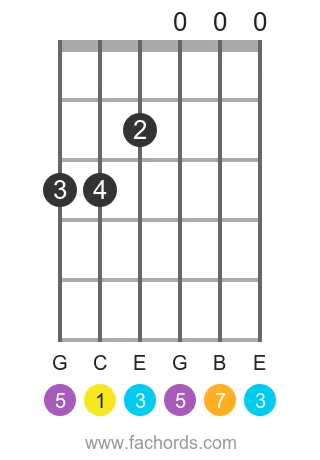
Position 13
Open
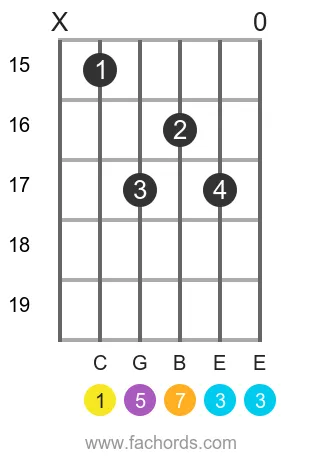
Position 14
Open
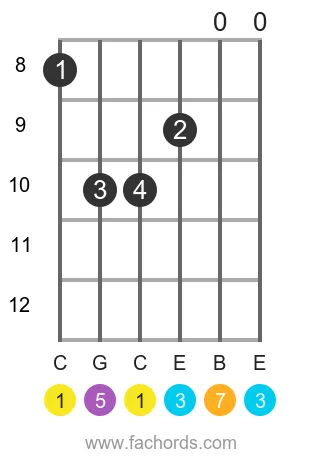
Position 15
Barre
Movable
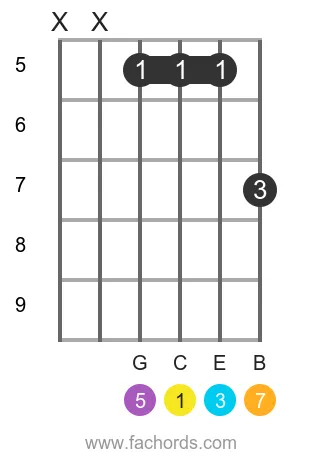
Position 16
Barre
Movable
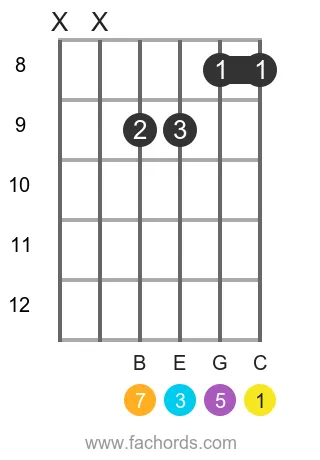
Position 17
Barre
Movable
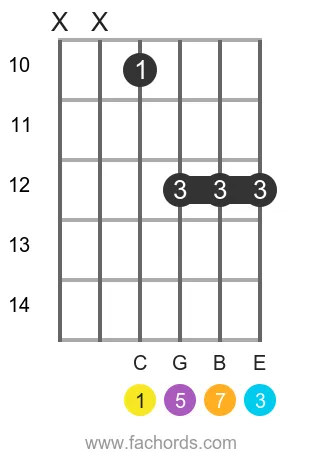
Position 18
Barre
Movable
 Find more shapes in our all guitar chords online library. If you
prefer a printable pdf, download
the Free Guitar Chords Chart Pdf
Find more shapes in our all guitar chords online library. If you
prefer a printable pdf, download
the Free Guitar Chords Chart Pdf
You can also use this accessible Cmaj7 chord page, with written diagram instructions and screen-reader support for blind users.
FAQ
What notes make up the C major 7th (Cmaj7) chord?
The Cmaj7 chord is composed of four specific notes: C, E, G, and B. These correspond to the root, major third, perfect fifth, and major seventh intervals of the C major scale, respectively.
How is a Cmaj7 chord different from a C dominant 7th (C7) chord?
The main distinction lies in the seventh interval. A Cmaj7 chord features a major seventh (B), contributing to its bright, uplifting, and smoother sound. In contrast, a C dominant 7th (C7) chord uses a minor or flattened seventh (B♭), which creates tension and typically leads to a resolution.
What kind of sound does the Cmaj7 chord create, and in what music genres is it commonly used?
The Cmaj7 chord has a bright, uplifting, and smooth sound, often described as adding a rich 'flavor' to a chord progression rather than tension. It is widely used across various genres, including jazz, pop, rock, soul, and funk.
When is the best time to use a Cmaj7 chord in a chord progression?
The Cmaj7 chord is typically best used when it functions as the 'one' (Imaj7) or 'four' (IVmaj7) chord within a major key. For instance, you'd use Cmaj7 as the I chord in the key of C major, or as the IV chord in the key of G major. It's a fundamental chord in jazz, pop standards, and other contemporary styles.
What does it mean if a Cmaj7 chord fingering is an 'inversion'?
A Cmaj7 chord fingering is an inversion if the lowest note played on your guitar is not the root note (C). Instead, one of the other chord tones, the E (major third), G (perfect fifth), or B (major seventh), will be the lowest-sounding bass note, changing the chord's emphasis without changing its fundamental quality.
In which musical keys does the Cmaj7 chord naturally appear?
The Cmaj7 chord naturally appears as the Imaj7 chord in the key of C Major and as the IVmaj7 chord in the key of G Major. This means it harmonically fits and sounds coherent when played within chord progressions in these specific keys.
