B7(#9) Guitar Chord Diagrams | B Dominant Seventh Sharp Ninth Added
Welcome to our tutorial on the B 7(#9) chord, a fascinating member of the Dominant Chords family. This chord, also known as the "Hendrix chord", is composed of the notes B, D#, F#, A, and C##. The intervals that create this chord are 1 (Root), 3 (Major Third), 5 (Perfect Fifth), b7 (Minor Seventh), and #9 (Augmented Ninth).
The B 7(#9) chord is an excellent chord to add to your repertoire, especially if you are interested in genres like blues, jazz, and rock. It can add a touch of complexity and intrigue to your chord progressions. For a more comprehensive understanding of chords in general, you may want to visit our full tutorial about guitar chords of all types.
Learning the B 7(#9) chord, like any other chord, involves understanding the unique combination of intervals that make it up. If you're not familiar with terms like 'Major Third' or 'Minor Seventh', you might find our tutorial about fretboard intervals immensely helpful. You can also check our tutorial that teaches how to build chords by stacking intervals for a deeper dive into the subject.
As a dominant chord, the B 7(#9) has a strong pull to resolve to the tonic. It's a common feature in many jazz chord progressions, and you'll often find it in blues and rock as well. To further explore the world of dominant chords, don't forget to check our tutorial about dominant (7) guitar chords.
Once you've mastered the B 7(#9) chord, you can experiment with different chord inversions to create new shapes and sounds. And remember, if you ever stumble upon a chord shape and you're unsure how to name it, our interactive tool to analyze chord shapes can be a great help.
Let's dive into the world of the B 7(#9) chord and discover how this unique and versatile chord can enhance your guitar playing skills!
B 7(#9) chord Notes:
Chord Structure:
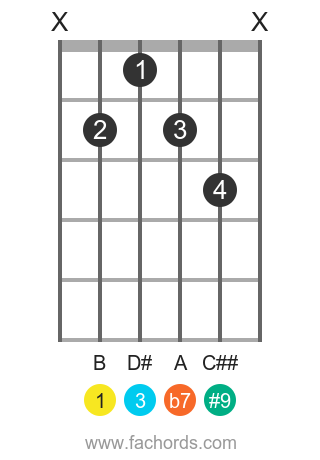
How To Play The B Dominant Seventh Sharp Ninth Added chord on guitar
Chord boxes are sorted from the easiest to the hardest. Learn how to read chord diagrams.
If you have difficulties with bar chord shapes, check the Bar Chords Tips tutorial.
You can also use this accessible chords page with written diagrams instruction.
Position 1
Movable
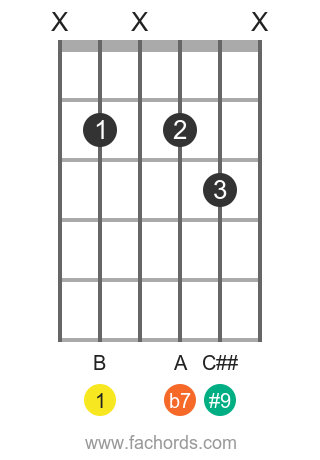
Position 2
Movable
Position 3
Barre
Movable
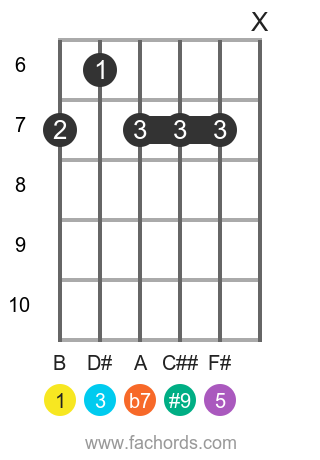
Position 4
Barre
Movable
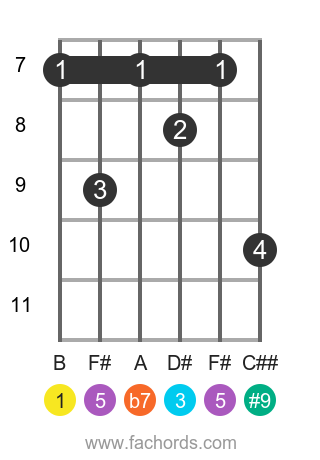
 You can find more shapes in our all guitar chords online library. If you
prefer a printable pdf, download
the Free Guitar Chords Chart Pdf
You can find more shapes in our all guitar chords online library. If you
prefer a printable pdf, download
the Free Guitar Chords Chart Pdf
FAQ
What notes and intervals make up the B 7(#9) guitar chord?
The B 7(#9) chord is composed of the notes B, D#, F#, A, and C##. These notes correspond to the intervals of the 1 (Root), 3 (Major Third), 5 (Perfect Fifth), b7 (Minor Seventh), and #9 (Augmented Ninth), respectively.
When should I use the B 7(#9) chord in my playing?
The B 7(#9) chord is ideal for adding complexity and intrigue to your chord progressions. It's a common feature in blues, jazz, and rock music, where it functions as a dominant chord with a strong harmonic pull towards resolving to the tonic.
Why is the B 7(#9) considered a dominant chord?
The B 7(#9) chord is a dominant chord because its fundamental structure includes the root, a major third, a perfect fifth, and a minor seventh (B, D#, F#, A). This combination inherently creates a tension that leads the listener's ear to expect resolution to the tonic, a defining characteristic of dominant chords.
What is the significance of the '#9' in the B 7(#9) chord?
The '#9' signifies an Augmented Ninth interval. In the B 7(#9) chord, this specific interval is the C## note. It adds a distinctive, often bluesy or jazzy, color and heightened tension to the dominant seventh chord, making it particularly expressive.
Can I play the B 7(#9) chord in different ways on the guitar?
Yes, once you've learned the basic shape of the B 7(#9) chord, you can explore various chord inversions. Experimenting with inversions allows you to discover new shapes and sounds for the same chord on the fretboard, enhancing your playing versatility.