Explore G9 Guitar Chord Shapes with Interactive Fretboard
Want a structured chord roadmap instead of jumping between pages?
Go to the full guitar chords tutorial.
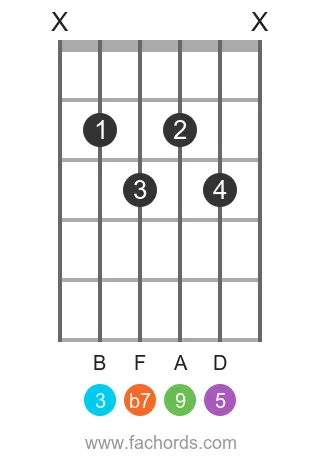
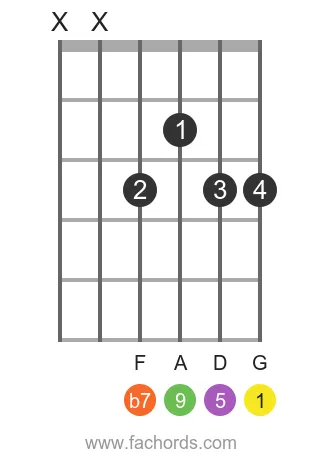
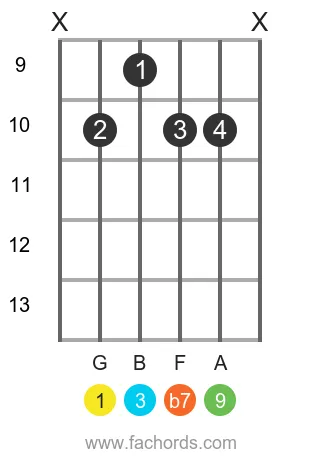
Discovering new chord shapes on the fretboard is key to unlocking the full potential of the G9 guitar chord. Our virtual fretboard instantly highlights how this rich Dominant chord, formed by the notes G, B, D, F, A, lays across the strings. With intervals of 1, 3, 5, b7, and 9 – the Root, Major Third, Perfect Fifth, Minor Seventh, and Major Ninth – you can visualize its construction. Use the real-time mic feedback to confirm your finger placement and ensure every note rings true as you experiment with different voicings.
Ninth chords like the G9 introduce extended harmony, adding a sophisticated 'color tone' to your playing. This expanded harmonic palette moves beyond basic triads, enriching the sonic landscape and offering expressive possibilities in genres from jazz to funk. To understand how these advanced chords are built from simpler foundations, delve into our comprehensive tutorial on guitar music theory. For a deeper dive into these complex structures, explore our dedicated resource on ninth guitar chords, and see how they relate to the broader family of Dominant Chords.
Instead of simply memorizing static chord charts, explore the interactive fretboard above to see the G9 in various positions. You'll find a range of diagrams, from easier voicings to more challenging shapes, alongside the core theory explaining its function. Practice these shapes in different keys and apply them within songs. This hands-on approach helps you understand the geometry of the chord, making it easier to recall and use in your music.
Notes of the G 9 chord:
Tones in the Dominant Ninth chord:
How To Play The G Dominant Ninth chord on guitar
Position 1
Movable
Position 2
Movable
Position 3
Movable
Position 4
Movable
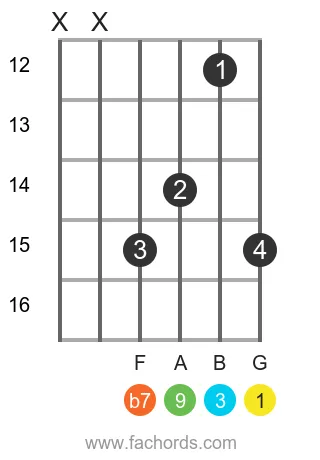
Position 5
Open
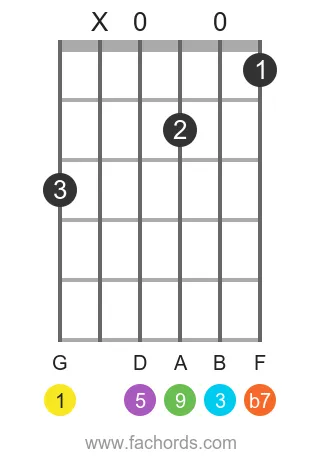
Position 6
Barre
Movable
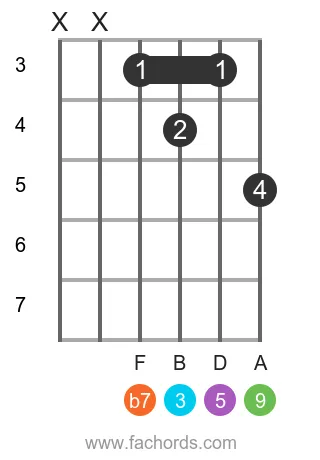
Position 7
Barre
Movable
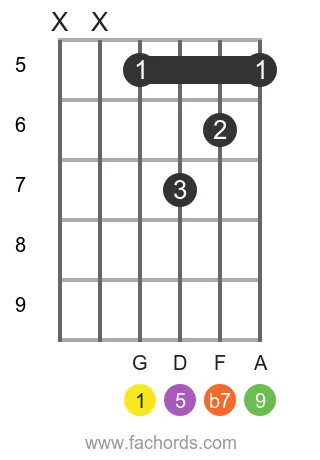
Position 8
Barre
Movable
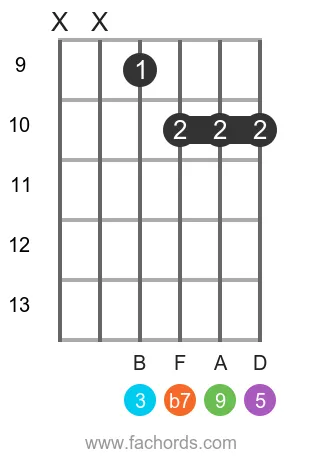
Position 9
Barre
Movable
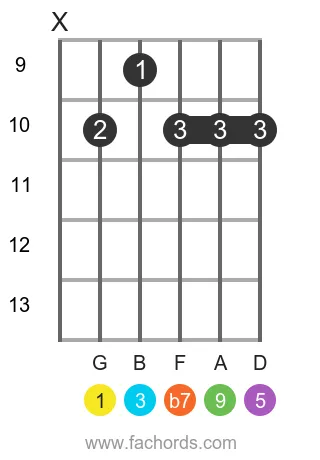
Position 10
Barre
Movable
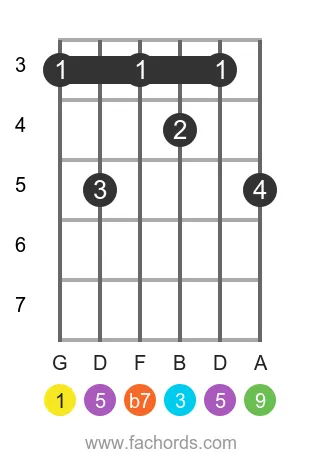
 Find more shapes in our all guitar chords online library. If you
prefer a printable pdf, download
the Free Guitar Chords Chart Pdf
Find more shapes in our all guitar chords online library. If you
prefer a printable pdf, download
the Free Guitar Chords Chart Pdf
You can also use this accessible G9 chord page, with written diagram instructions and screen-reader support for blind users.

Created by
Giancarlo is a musician (teaching guitar since 2000), software engineer, AI consultant and published researcher
FAQ
What specifically defines the G9 chord's composition?
The G9 chord is defined by its five specific notes: G (Root), B (Major Third), D (Perfect Fifth), F (Minor Seventh), and A (Major Ninth). These notes correspond to the intervals 1, 3, 5, b7, and 9 when stacked from the root.
Why is the G9 chord classified as a 'dominant' chord?
The G9 chord belongs to the Dominant Chords family because it includes a minor seventh interval (F, or b7) above the root, alongside a major third. This specific combination creates a harmonic tension that typically resolves to the tonic, a hallmark characteristic of dominant chords.
What do the interval numbers '1, 3, 5, b7, 9' signify for the G9 chord?
These numbers represent the specific musical distance and quality of each note from the root (G). '1' is the Root (G), '3' is the Major Third (B), '5' is the Perfect Fifth (D), 'b7' is the Minor Seventh (F), and '9' is the Major Ninth (A). They indicate the precise structure and harmonic color of the chord.
Why does the G9 chord have a 'rich and complex sound'?
The G9 chord's rich and complex sound comes from its five distinct notes, particularly the inclusion of both the minor seventh and the major ninth intervals stacked above the root. This adds a denser, more sophisticated harmonic texture compared to simpler triads or seventh chords.
Is the G9 chord challenging for beginners to play on guitar?
Yes, learning the G9 chord can be somewhat challenging for beginners. This is often due to the requirement of fretting five specific notes simultaneously, which can demand more complex fingerings, hand stretches, or muting techniques compared to more basic open or barre chords.
In what music genres is the G9 chord commonly used?
The G9 chord is a versatile and expressive chord often utilized in various music genres. Its rich and complex sound makes it a staple in jazz, blues, and rock music, where it adds harmonic color, tension, and a sophisticated feel.