Explore the D5 Power Chord on Guitar: Diagrams & Theory
Want a structured chord roadmap instead of jumping between pages?
Go to the full guitar chords tutorial.
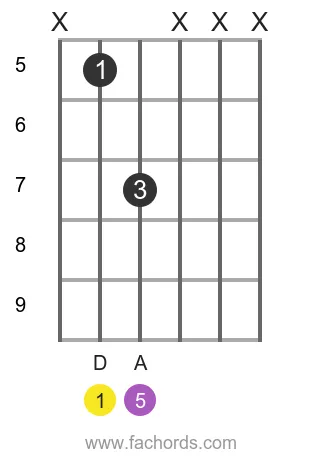
Unleash the raw energy of rock and metal with the D5 chord, a fundamental power chord that defines countless anthems. This powerful voicing is built from just two essential notes: the root D and the perfect fifth A, forming the iconic 1 and 5 intervals. Dive into its sound using our interactive fretboard, where you can hear the chord playback and get real-time mic feedback to perfect your playing technique. Experiment with different voicings and understand how this simple yet effective chord drives powerful guitar riffs.
The D5 chord, often called the D power chord, is central to rock and heavy music because its open, strong sound cuts through distortion without becoming muddy. Its construction, using only the Root and Perfect Fifth intervals, makes it incredibly versatile for creating driving riffs and punchy rhythms. This minimalist structure is precisely why power chords are so effective on an electric guitar, especially with a bit of distortion, making them a cornerstone for many guitarists. To delve deeper into how these two-note chords revolutionize sound, explore our comprehensive guide on Power Chords. Understanding the simple principles of Chord Construction will further illuminate why the D5 chord is such a fundamental building block.
Before dissecting the theory, truly feel and hear the D5 chord come alive through our interactive tools. Once you've explored its sonic impact, scroll down to find detailed diagrams, ranked from easiest to most challenging, along with comprehensive theory and practical applications for songs and different musical keys. Grab your guitar, experiment, and let your ears guide your journey!
Notes that compose the D 5 chord:
Chord structure of the Powerchord chord:
Guitar Patterns for the D5 chord
Position 1
Open
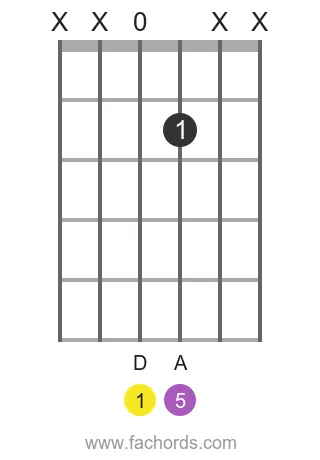
Position 2
Movable
Position 3
Movable
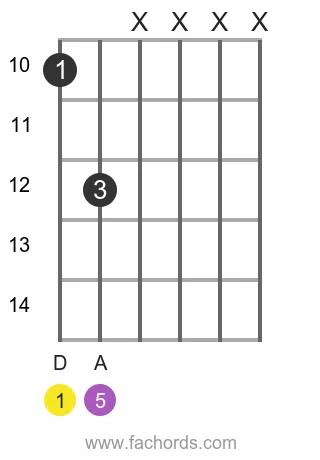
Position 4
Movable
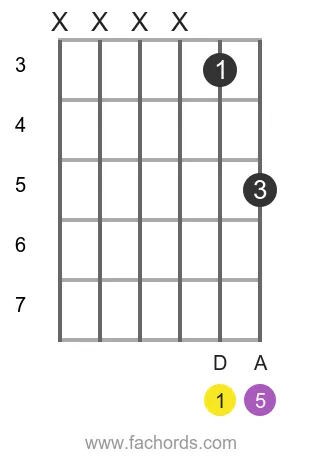
Position 5
Movable
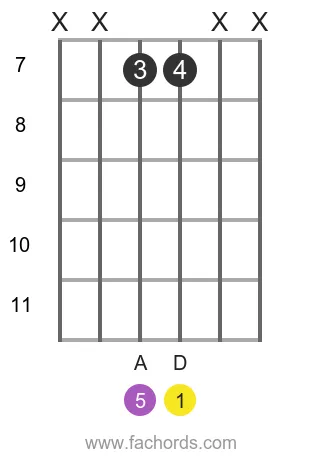
Position 6
Open
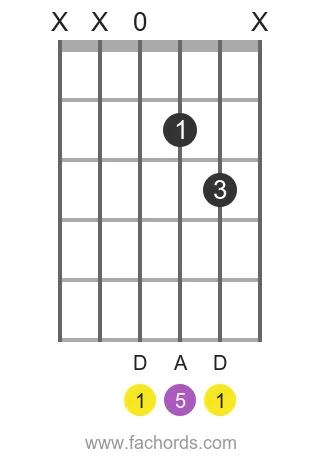
Position 7
Movable
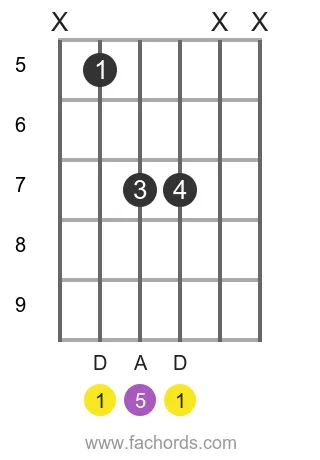
Position 8
Movable
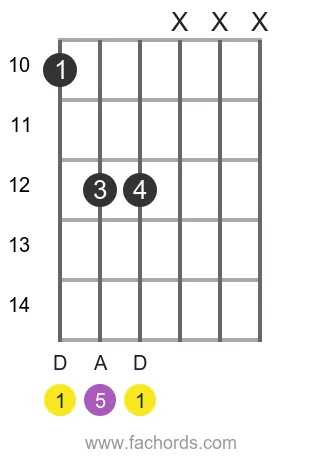
Position 9
Movable
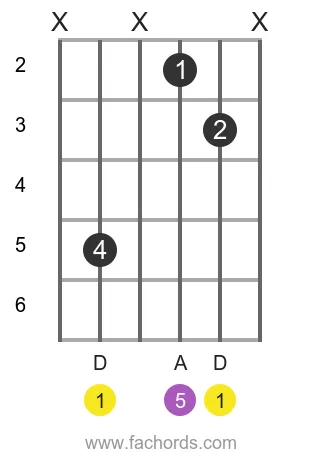
Position 10
Open
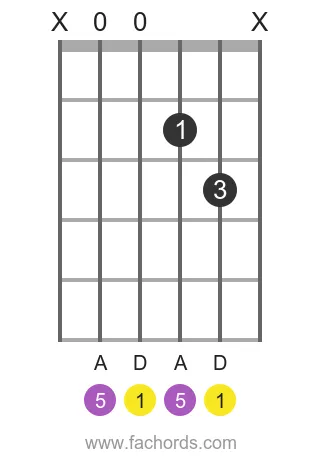
Position 11
Open
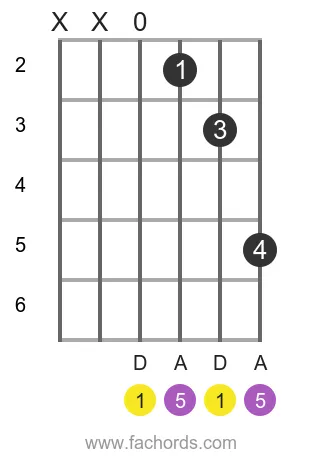
 Find more shapes in our all guitar chords online library. If you
prefer a printable pdf, download
the Free Guitar Chords Chart Pdf
Find more shapes in our all guitar chords online library. If you
prefer a printable pdf, download
the Free Guitar Chords Chart Pdf
You can also use this accessible D5 chord page, with written diagram instructions and screen-reader support for blind users.

Created by
Giancarlo is a musician (teaching guitar since 2000), software engineer, AI consultant and published researcher
FAQ
What notes make up the D5 power chord?
The D5 power chord is constructed from two notes: the root note, which is D, and its perfect fifth, which is A. These two notes (D and A) are the fundamental building blocks of this chord.
Why is it called a 'power chord' or 'D5'?
The D5 chord is called a 'power chord' because it uniquely consists of only the root and the perfect fifth intervals, omitting the major or minor third. This gives it a strong, direct, and unambiguous sound. The '5' in its name signifies the presence of the perfect fifth interval.
Is the D5 power chord a major or minor chord?
No, the D5 power chord is neither major nor minor. Its construction, using only the root and perfect fifth, means it lacks the third interval, which is what defines a chord as major or minor. This absence is precisely what gives power chords their versatile and 'powerful' sound.
In which music genres is the D5 power chord most commonly used?
The D5 power chord is a fundamental element in rock, punk, and heavy music genres. Its simple, strong structure makes it ideal for driving riffs and powerful rhythmic accompaniment, especially when played on an electric guitar with distortion.
Does the D5 power chord sound different on an electric guitar compared to an acoustic?
Yes, while playable on an acoustic guitar, the D5 power chord is particularly effective and frequently used on electric guitars, especially with added distortion. This combination enhances its inherent power, creating a heavier, more aggressive, and energetic sound characteristic of rock and metal.