A#9(#11) Guitar Chord | How to Play The A# Dominant Ninth Sharp Eleventh Added Chord
Welcome to our tutorial on the A# 9(#11) chord, a member of the Dominant Chords family. This chord is composed of the notes A#, C##, E#, G#, B#, and D##. It's built using a series of musical intervals, specifically the 1, 3, 5, b7, 9, and #11. If you're new to understanding how chords are constructed, you might want to check out our tutorial on building chords by stacking intervals.
The A# 9(#11) chord is a bit more complex than some of the chords you might have encountered in our beginner tutorials, so if you're ready to take on a challenge, you're in the right place. For a comprehensive understanding of guitar chords, you can also refer to our full tutorial on all types of guitar chords.
We will be providing you with chord diagrams and fretboard patterns that clearly illustrate the tones composing the A# 9(#11) chord. For further insights on fretboard intervals, do check out our tutorial about fretboard intervals.
This tutorial is part of our series on dominant (7) guitar chords and ninth (9) guitar chords. These chords are frequently used in various genres, including jazz and blues, and knowing how to play them will greatly enhance your versatility as a guitarist.
Lastly, if you're interested in exploring how this chord can be used in context, our tutorial on common chord progressions will be a great resource. Happy playing!
Notes that compose the A# 9(#11) chord:
Chord Structure:
 Download
the Free Guitar Chords Chart Pdf
Download
the Free Guitar Chords Chart Pdf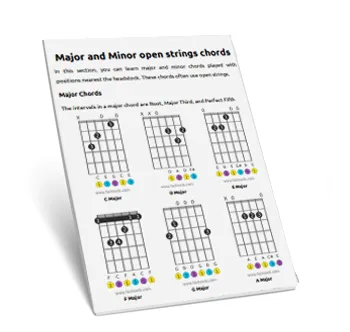
FAQ
What are the specific notes that make up the A# 9(#11) chord?
The A# 9(#11) chord is composed of six distinct notes: A#, C##, E#, G#, B#, and D##. These notes give the chord its unique sound.
How is the A# 9(#11) chord constructed using musical intervals?
This chord is built using a specific series of intervals from the root (A#): the 1st (root), 3rd (major third), 5th (perfect fifth), b7th (minor seventh), 9th (major ninth), and #11th (augmented eleventh).
Why is the A# 9(#11) chord considered a member of the Dominant Chords family?
The A# 9(#11) chord belongs to the Dominant Chords family primarily because it includes a minor seventh (b7) interval. This interval is a characteristic feature of dominant chords.
What does the '(#11)' signify in the A# 9(#11) chord name?
The '(#11)' in the chord name indicates the inclusion of an augmented eleventh interval (D##). This specific interval adds a distinct color and richness to the chord, differentiating it from a standard ninth chord.
Why is the A# 9(#11) chord described as being more complex for guitarists?
The A# 9(#11) chord is considered more complex because it contains six unique notes and incorporates extended intervals like the 9th and #11th. This often requires more advanced finger placement and understanding of voicings on the guitar fretboard.
In what musical genres is the A# 9(#11) chord commonly used?
The A# 9(#11) chord is frequently used in genres such as jazz and blues. Its rich, extended harmony contributes to the sophisticated sounds often found in these styles, enhancing a guitarist's versatility.