Guitar Fretboard Intervals: The Complete Guide
Master Intervals on the Fretboard with Diagrams, Theory, and Interactive Exercises
Intervals are the building blocks of all music: every chord, scale, and melody is made of them. This guide covers what they are, why they matter, and how to master them on the fretboard with diagrams and an interactive practice tool.
Interactive Fretboard Intervals Game
The fastest way to internalize fretboard intervals is through active practice. The tool above has two modes:
- Training Mode: choose which intervals to practice. Start with octaves, then add fifths, fourths, and so on. Focus on one type at a time.
- Game Mode: 100 seconds to identify as many intervals as possible (+1 for correct, -1 for wrong). Check the leaderboard to compare your score.
Use the Show Answer button when stuck (no penalty). In the settings you can switch tuning (7-string, bass, mandolin, banjo, etc.) and enable left-handed view.
What Are Music Intervals?
In music, an interval is the distance between two pitches. That's it. Whether you play piano, guitar, saxophone, or sing, intervals are the same universal concept.
On the guitar fretboard, an interval translates to the distance (in semitones) between two fret positions. For example, the interval between the C note on the 3rd fret of the A string and the G note on the 5th fret of the D string is a perfect fifth (7 semitones).
Depending on the size of this distance, intervals have specific names: seconds, thirds, fourths, fifths, sixths, sevenths, and octaves. Each interval has its own distinct sound quality, sometimes called its "color." Learning to recognize these colors by ear and by sight on the fretboard is one of the most powerful skills a guitarist can develop.
1 semitone = 1 half-step = 1 fret
On the guitar, we measure interval distance in semitones (also called half-steps or frets). These are different names for the same thing. One fret up or down on any string equals exactly one semitone.
Why Learning Intervals Is Essential for Guitarists
Many guitarists rely on memorized chord shapes and scale patterns without understanding why those shapes work. Intervals are the answer. Here's why they matter:
- Build any chord from scratch. A major chord is root + major third + perfect fifth. Know your intervals, and you can construct any chord anywhere on the neck, no chord chart needed.
- Understand scales deeply. Every scale is defined by its interval formula. The major scale is W-W-H-W-W-W-H (whole and half steps). Intervals turn scale patterns into musical understanding.
- Communicate with other musicians. When someone says "play a flat seventh over that chord," you need to know what that means on your instrument, instantly.
- Improvise with intention. Instead of randomly moving through scale shapes, you can target specific intervals that create the sound you want: a major third for brightness, a minor seventh for tension, a perfect fifth for stability.
- Transpose anything instantly. If you understand the interval structure of a song, you can move it to any key without re-learning it from scratch.
- Train your ear. Recognizing intervals by sound is the foundation of ear training. Each interval has a unique sonic character.
Why Intervals on Guitar Are Tricky at First
One challenge beginners face is that the same note appears in multiple locations on the fretboard. For example, the C note exists on the 8th fret of the low E string, the 3rd fret of the A string, and several other places. This means the same interval can be played with different geometric shapes depending on where you are on the neck.
On the piano keyboard, intervals are easier to visualize because the layout is linear: low pitches on the left, high pitches on the right, one location per note. The guitar's two-dimensional layout (frets + strings) makes intervals harder to see at first, but it also gives guitarists great expressive power: the ability to play the same note with different timbres on different strings.
We've discussed the fretboard layout in depth in our guitar fretboard theory series. If you haven't studied fretboard notes yet, start there first.
Complete Interval Reference Table
Here is every interval within one octave, its distance in semitones, and the symbol used in chord and scale formulas. Some intervals share the same number of semitones but have different names; these are called enharmonics.
| Interval | Semitones | Symbol | Example (from C) |
|---|---|---|---|
| Root (Unison) | 0 | 1 | C - C |
| Minor Second | 1 | b2 | C - Db |
| Major Second | 2 | 2 | C - D |
| Minor Third | 3 | b3 | C - Eb |
| Major Third | 4 | 3 | C - E |
| Perfect Fourth | 5 | 4 | C - F |
| Diminished Fifth / Augmented Fourth (Tritone) | 6 | b5 | C - Gb / C - F# |
| Perfect Fifth | 7 | 5 | C - G |
| Minor Sixth | 8 | b6 | C - Ab |
| Major Sixth | 9 | 6 | C - A |
| Minor Seventh | 10 | b7 | C - Bb |
| Major Seventh | 11 | 7 | C - B |
| Octave | 12 | 8 | C - C (higher) |
Major and Perfect Intervals Explained
Let's look at each of the "primary" intervals. The colored boxes below show where each interval sits within the chromatic scale. The highlighted boxes indicate the root and the target interval.
2 semitones (e.g. C - D)
The major second is a whole step (2 frets). It's the distance between the first two notes of any major scale. On guitar, it's 2 frets on the same string.
4 semitones (e.g. C - E)
The major third is what gives major chords their bright, happy sound. It's 4 semitones from the root. This is one of the most important intervals to recognize, as it defines whether a chord sounds major or minor.
5 semitones (e.g. C - F)
The perfect fourth is the interval between adjacent open strings on the guitar (except between G and B, which is a major third). This is why the fourth is so natural on guitar: it's literally built into the tuning.
7 semitones (e.g. C - G)
The perfect fifth is the strongest, most stable interval after the octave. It's the foundation of power chords. Root + fifth is the most common two-note combination in rock and metal guitar.
9 semitones (e.g. C - A)
The major sixth has a warm, sweet quality. It's the interval you hear at the start of "My Bonnie Lies Over the Ocean." On guitar, the sixth is essential for constructing sixth chords and major pentatonic patterns.
11 semitones (e.g. C - B)
The major seventh is just one semitone below the octave. It creates a dreamy, sophisticated sound found in jazz and bossa nova. Major seventh chords (like Cmaj7) use this interval for their lush quality.
12 semitones (e.g. C - C higher)
The octave is the same note at a higher pitch. It's the most consonant interval possible (besides unison). On guitar, octave shapes are the key to navigating the entire fretboard quickly.
Practice tip: Play each of these intervals using the C note at the 8th fret of the low E string as your root. Find the target note on different strings. Listen carefully to the sound of each interval and notice how they feel different. If you don't know the notes on the fretboard yet, use the fretboard notes trainer to memorize them first.
Minor, Diminished, and Augmented Intervals
Every major or perfect interval can be altered by raising or lowering it. When you lower a major interval by one semitone, it becomes minor. When you lower a perfect interval by one semitone, it becomes diminished. When you raise a perfect interval by one semitone, it becomes augmented. Here are all the altered intervals:
Lowering a Major Second by 1 semitone gives us a Minor Second:
1 semitone (e.g. C - Db)
The minor second is the smallest interval: just one fret. It creates a tense, dissonant sound. Think of the "Jaws" theme.
Lowering a Major Third by 1 semitone gives us a Minor Third:
3 semitones (e.g. C - Eb)
The minor third is what makes minor chords sound sad or dark. The difference between a major and minor chord comes down to this single interval: major third vs. minor third.
Raising a Perfect Fourth by 1 semitone gives us an Augmented Fourth:
6 semitones (e.g. C - F#)
Lowering a Perfect Fifth by 1 semitone gives us a Diminished Fifth. Same distance as the Augmented Fourth (6 semitones), different name:
6 semitones (e.g. C - Gb)
The augmented fourth and diminished fifth are both 6 semitones, also known as the tritone. This is the most unstable interval in music, historically called "the devil's interval." It creates strong tension that wants to resolve. It's a key ingredient in dominant seventh chords.
Lowering a Major Sixth by 1 semitone gives us a Minor Sixth:
8 semitones (e.g. C - Ab)
Lowering a Major Seventh by 1 semitone gives us a Minor Seventh:
10 semitones (e.g. C - Bb)
The minor seventh is the sound of blues and dominant seventh chords. It adds a bluesy, unresolved quality. When you hear a "dominant" sound, the minor seventh is doing the work.
Lowering a Major Seventh by 2 semitones gives us a Diminished Seventh (same distance as a Major Sixth, 9 semitones):
9 semitones (e.g. C - Bbb)
The diminished seventh sounds the same as a major sixth (9 semitones) but functions differently in harmony. It's a key component of diminished seventh chords, which are used for dramatic tension and smooth voice leading.
Enharmonics: Same Sound, Different Names
You may have noticed that some intervals share the same number of semitones:
- Augmented Fourth and Diminished Fifth are both 6 semitones (C - F# and C - Gb)
- Diminished Seventh and Major Sixth are both 9 semitones (C - Bbb and C - A)
- Diminished Fourth and Major Third are both 4 semitones (C - Fb and C - E)
These are called enharmonic equivalents. They sound identical on the guitar but have different names because they serve different functions in music theory. Just like C# and Db are the same pitch but different note names, these intervals produce the same sound but are spelled differently depending on the harmonic context.
For practical guitar playing, you don't need to worry about this distinction much. It matters more in written music theory, composition, and when communicating with classically trained musicians. On the fretboard, the geometric shape is the same regardless of the name.
The Octave: Your Most Useful Interval on Guitar
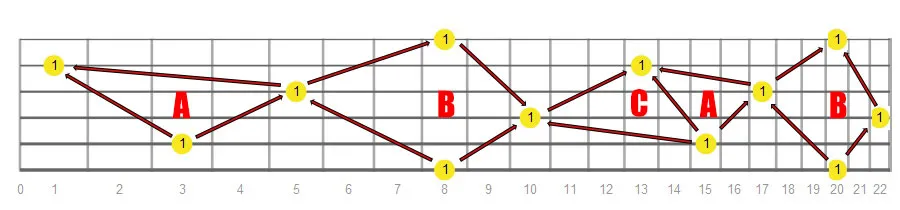
If there's one interval you should master first, it's the octave. Octave shapes let you instantly find the same note on another string, allowing you to navigate the entire fretboard with confidence.
Study the diagram below carefully. Notice how octaves create three geometric shapes labeled A, B, and C, and how these shapes repeat in the same A-B-C sequence across the neck. Memorize these three shapes and you'll always know where to find any note.
You can find more details on the guitar fretboard layout page.
How to Use Intervals in Real Music
Once you have intervals under your belt, you can apply this knowledge directly to your playing:
Building Chords From Intervals
Every chord is a stack of intervals measured from the root. For example, a C major chord is: root (C) + major third (E) + perfect fifth (G). With your interval knowledge, you can now find these notes anywhere on the fretboard and create new chord voicings, not just the ones from a chord chart.
A C minor chord simply swaps the major third for a minor third: root (C) + minor third (Eb) + perfect fifth (G). That's the only difference. For a complete reference of chord formulas, check our chord formulas page.
Understanding Scale Formulas
Scales are also defined by intervals. The major scale follows the pattern: 1 - 2 - 3 - 4 - 5 - 6 - 7 (all major/perfect intervals). The natural minor scale is: 1 - 2 - b3 - 4 - 5 - b6 - b7. By knowing intervals, you can construct any scale from any root without memorizing separate patterns for each key.
Interval Ear Training
Each interval has a distinctive sound that you can learn to recognize by ear. A common approach is to associate each interval with a well-known song:
- Minor Second (1 semitone): "Jaws" theme
- Major Second (2 semitones): "Happy Birthday" (first two notes)
- Minor Third (3 semitones): "Greensleeves" opening
- Major Third (4 semitones): "When the Saints Go Marching In"
- Perfect Fourth (5 semitones): "Here Comes the Bride"
- Tritone (6 semitones): "The Simpsons" theme
- Perfect Fifth (7 semitones): "Star Wars" main theme
- Minor Sixth (8 semitones): "The Entertainer"
- Major Sixth (9 semitones): "My Bonnie Lies Over the Ocean"
- Minor Seventh (10 semitones): "Somewhere" (West Side Story)
- Major Seventh (11 semitones): "Take On Me" (chorus)
- Octave (12 semitones): "Somewhere Over the Rainbow"
Interval Inversion
Every interval has an inversion: when you flip the two notes so the top note becomes the bottom note (or vice versa). The rule is simple: an interval and its inversion always add up to 12 semitones (one octave). For example, a perfect fifth (7 semitones) inverts to a perfect fourth (5 semitones). A major third (4 semitones) inverts to a minor sixth (8 semitones). Learn more about interval inversions here.
Complete Fretboard Interval Diagrams
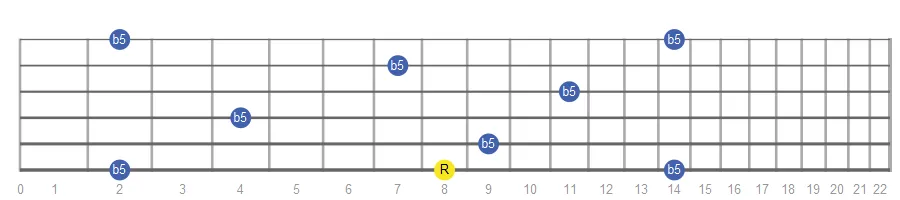
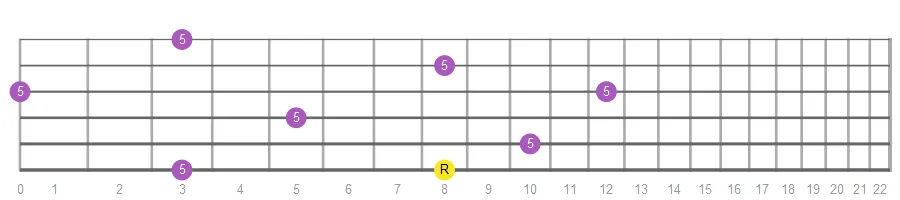
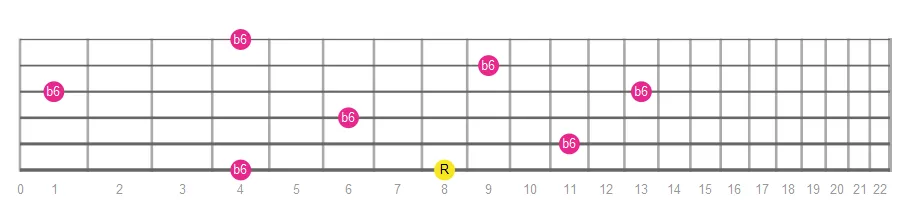
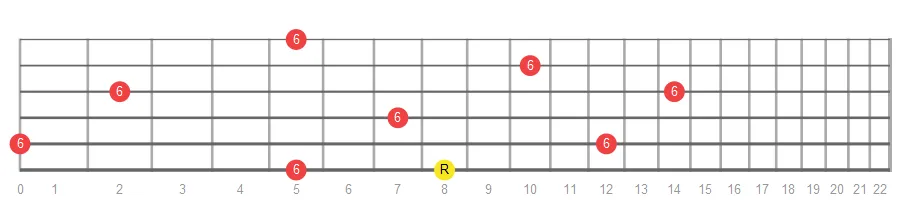
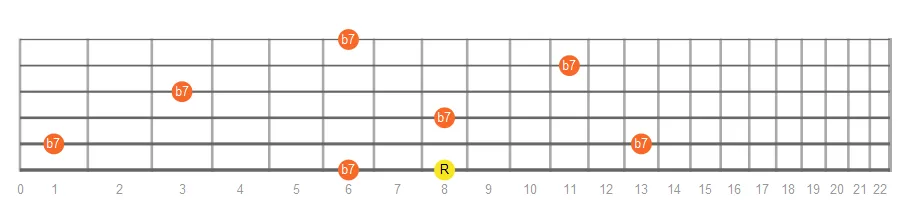
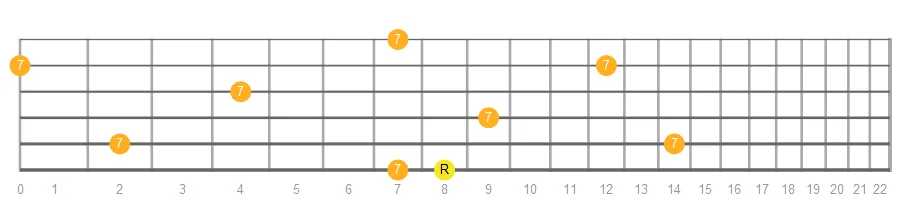
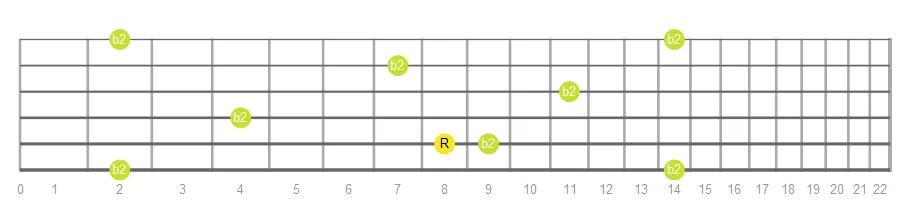
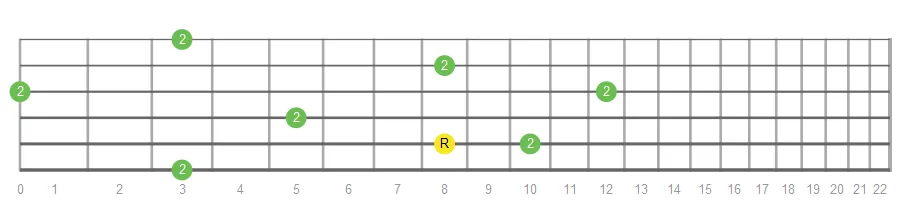
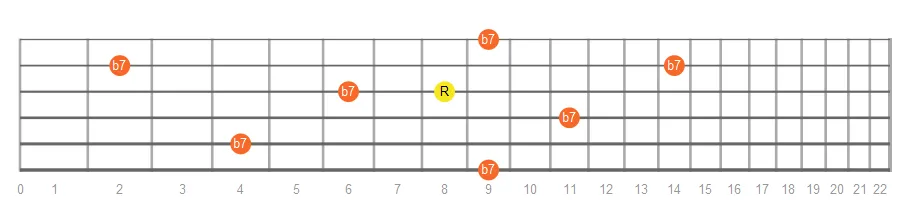
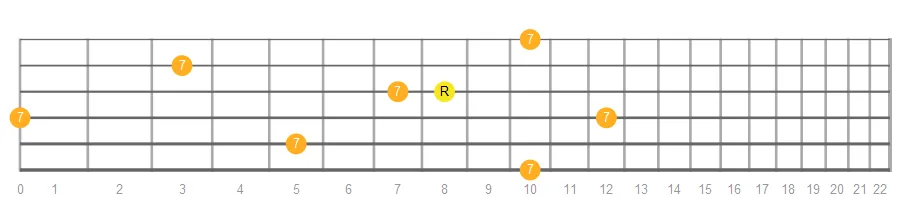
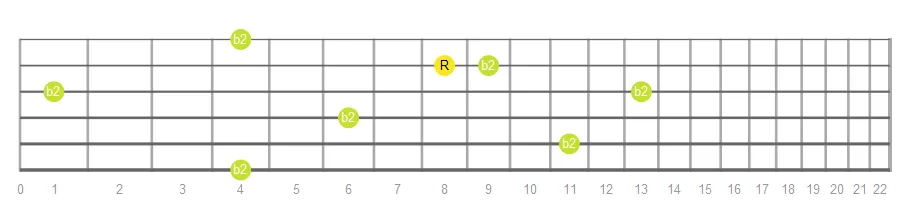
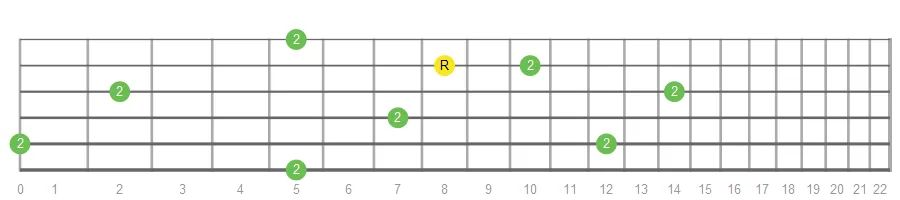
Below are complete fretboard maps showing every interval from each root string position. These diagrams show you the geometric shapes that each interval creates on the neck. Study one string at a time and notice how the shapes shift slightly when crossing the B string (due to the guitar's tuning).
Compact Visualization
The maps below show one interval at a time from each string. For a more compact view with all intervals in a given chord combined, check the Chords Domination ebook.
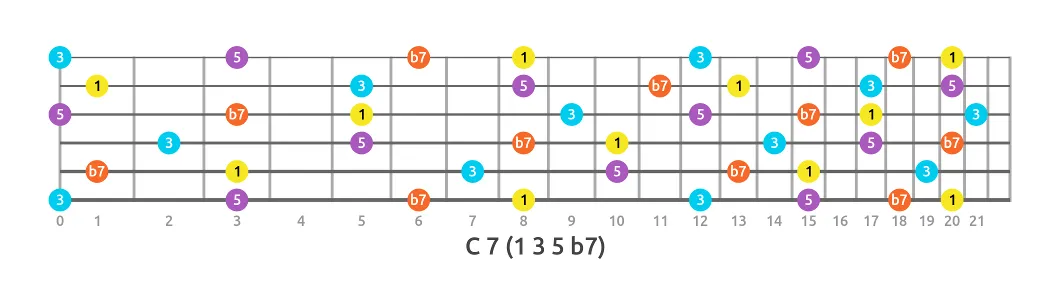
Compact visualization of the fretboard intervals in a Dominant 7th chord (from Chords Domination ebook)
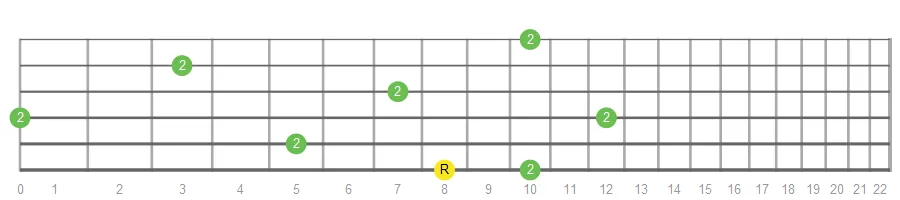
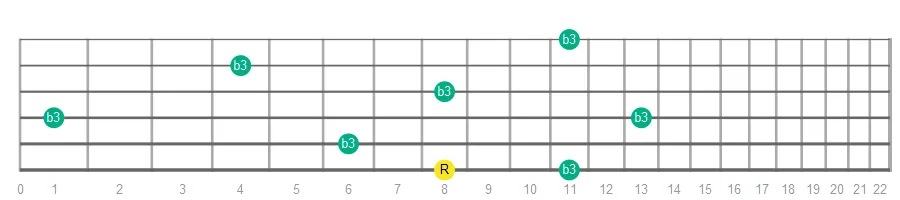
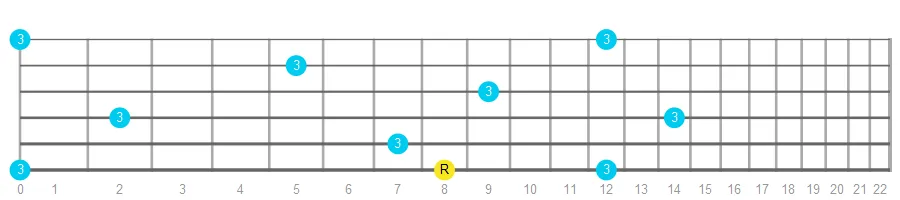
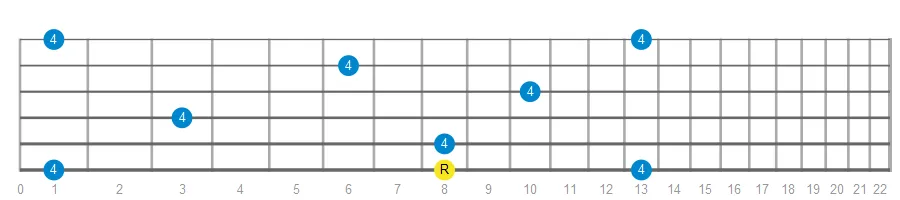
Fretboard Intervals with Root on 6th String (Low E)
The 6th string is the most common starting point for barre chords and scale patterns. Master these shapes first.
Minor Second intervals with root on 6th string
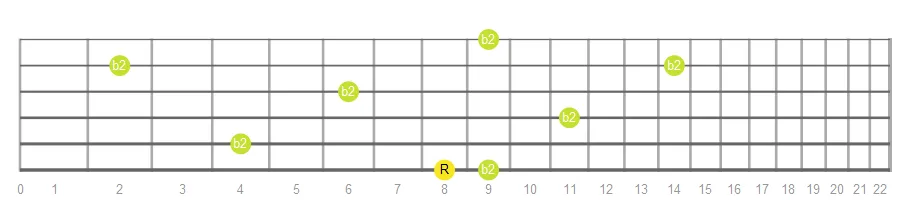
Major Second intervals with root on 6th string
Minor Third intervals with root on 6th string
Major Third intervals with root on 6th string
Perfect Fourth intervals with root on 6th string
Diminished Fifth intervals with root on 6th string
Perfect Fifth intervals with root on 6th string
Minor Sixth intervals with root on 6th string
Major Sixth intervals with root on 6th string
Minor Seventh intervals with root on 6th string
Major Seventh intervals with root on 6th string
Fretboard Intervals with Root on 5th String (A)
The 5th string is the second most common root position for chords. Many A-shape barre chords and CAGED patterns start here.
Minor Second intervals with root on 5th string
Major Second intervals with root on 5th string
Minor Third intervals with root on 5th string

Major Third intervals with root on 5th string

Perfect Fourth intervals with root on 5th string
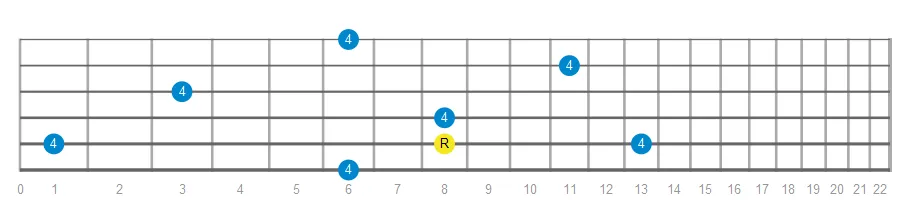
Diminished Fifth intervals with root on 5th string

Perfect Fifth intervals with root on 5th string

Minor Sixth intervals with root on 5th string
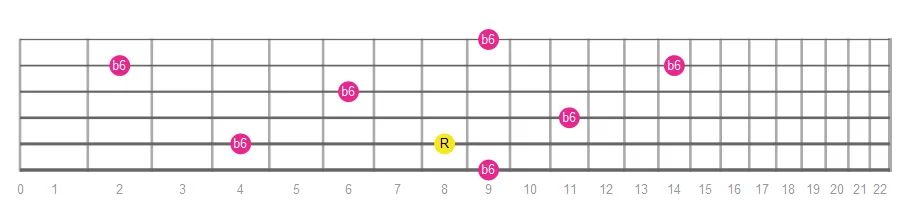
Major Sixth intervals with root on 5th string
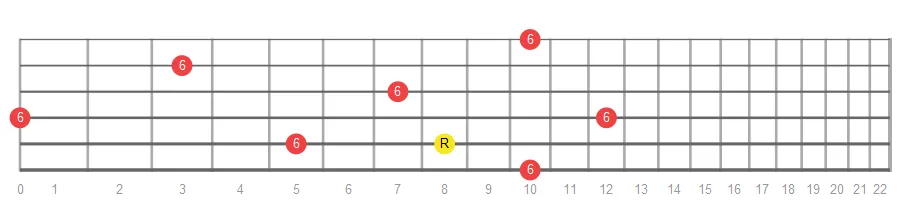
Minor Seventh intervals with root on 5th string

Major Seventh intervals with root on 5th string

Fretboard Intervals with Root on 4th String (D)
The 4th string is important for D-shape chords and many jazz voicings that use the inner strings.
Minor Second intervals with root on 4th string
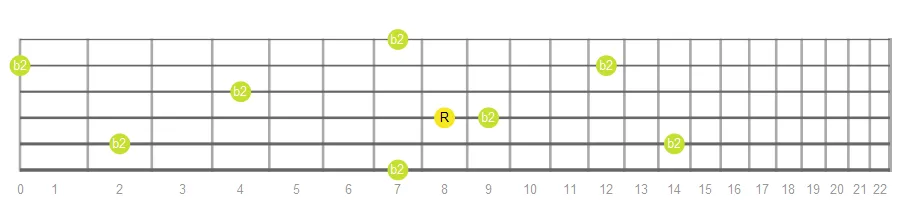
Major Second intervals with root on 4th string
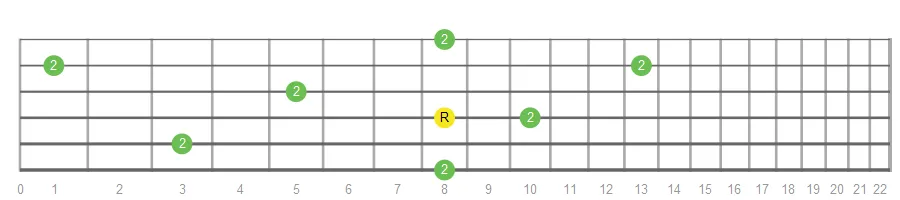
Minor Third intervals with root on 4th string
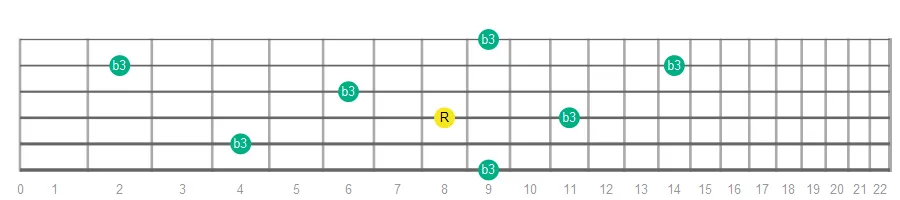
Major Third intervals with root on 4th string
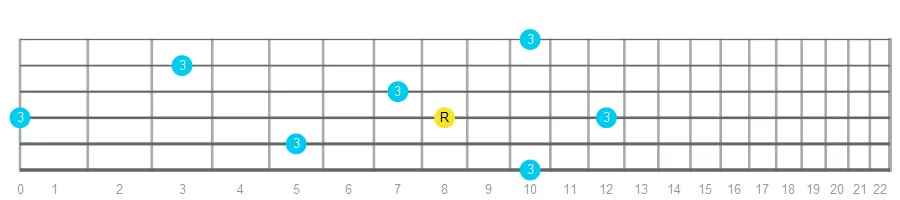
Perfect Fourth intervals with root on 4th string
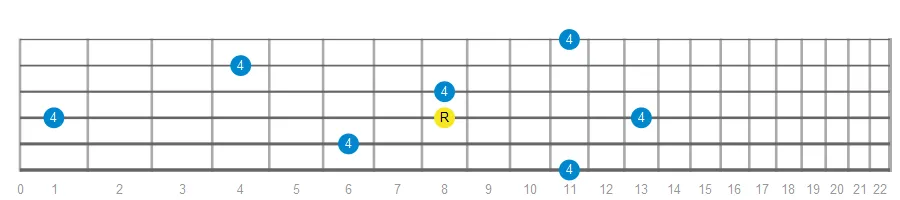
Diminished Fifth intervals with root on 4th string

Perfect Fifth intervals with root on 4th string
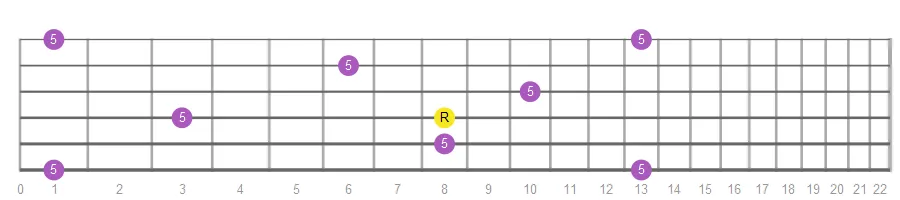
Minor Sixth intervals with root on 4th string

Major Sixth intervals with root on 4th string
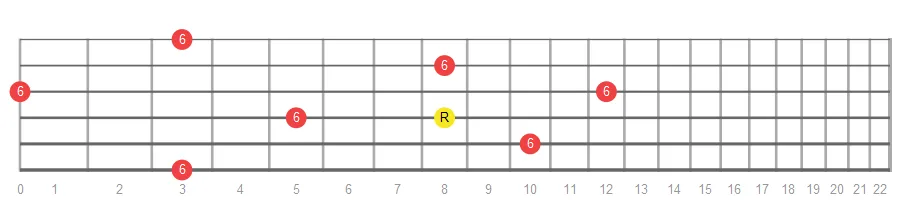
Minor Seventh intervals with root on 4th string
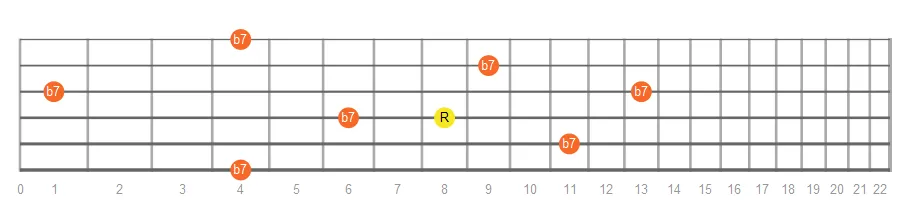
Major Seventh intervals with root on 4th string
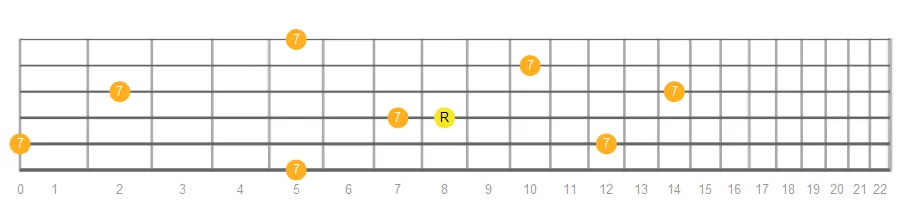
Fretboard Intervals with Root on 3rd String (G)
The 3rd string sits at the boundary where guitar tuning shifts (the B string is a major third above G, not a fourth). Pay attention to how interval shapes change here.
Minor Second intervals with root on 3rd string
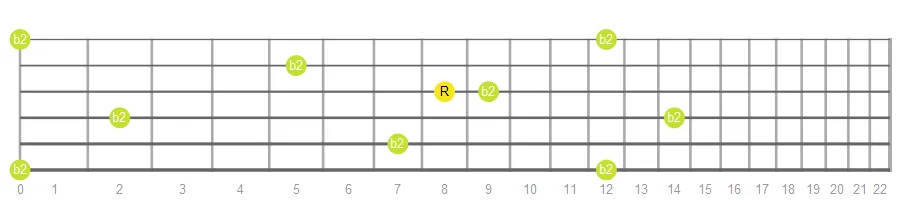
Major Second intervals with root on 3rd string
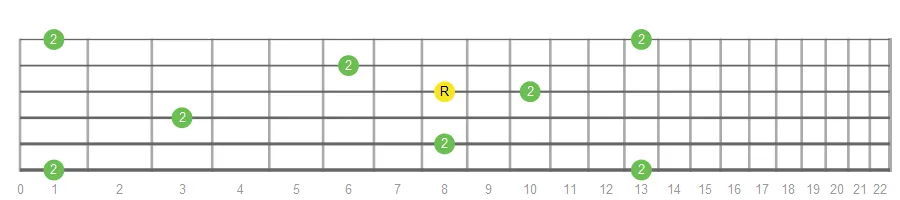
Minor Third intervals with root on 3rd string
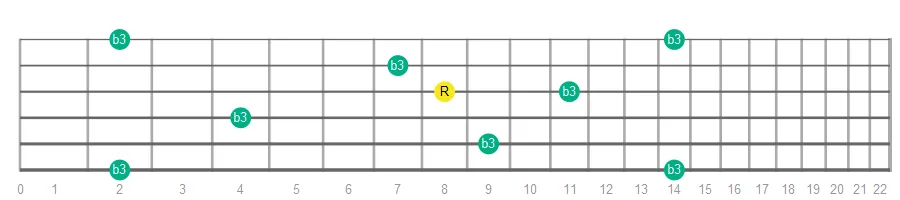
Major Third intervals with root on 3rd string
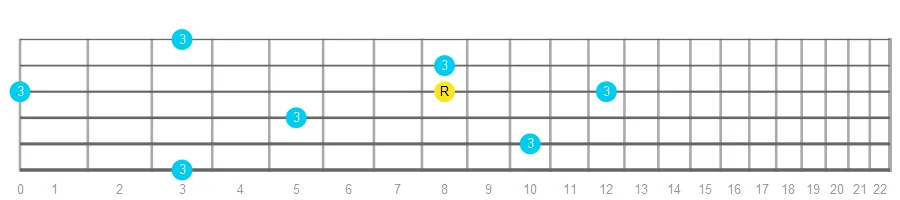
Perfect Fourth intervals with root on 3rd string
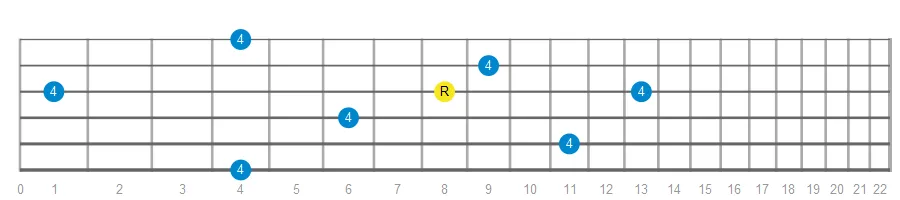
Diminished Fifth intervals with root on 3rd string
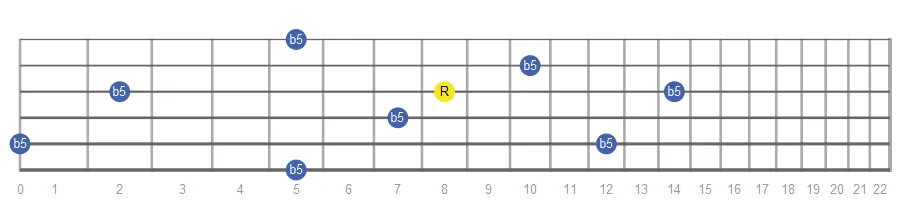
Perfect Fifth intervals with root on 3rd string
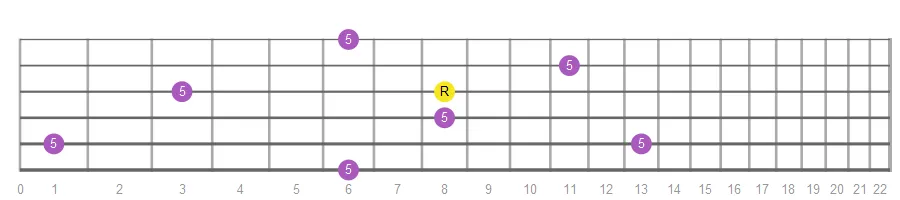
Minor Sixth intervals with root on 3rd string
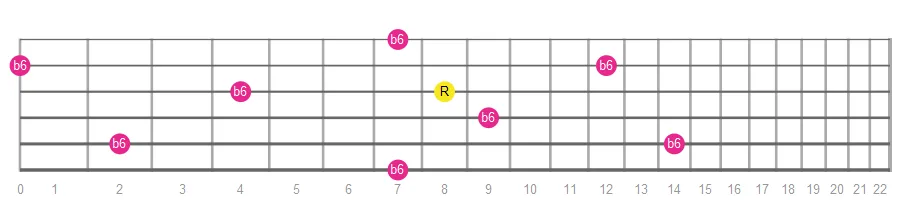
Major Sixth intervals with root on 3rd string

Minor Seventh intervals with root on 3rd string
Major Seventh intervals with root on 3rd string
Fretboard Intervals with Root on 2nd String (B)
The 2nd string is commonly used for melody notes and upper-register chord voicings, especially in jazz and fingerstyle.
Minor Second intervals with root on 2nd string
Major Second intervals with root on 2nd string
Minor Third intervals with root on 2nd string
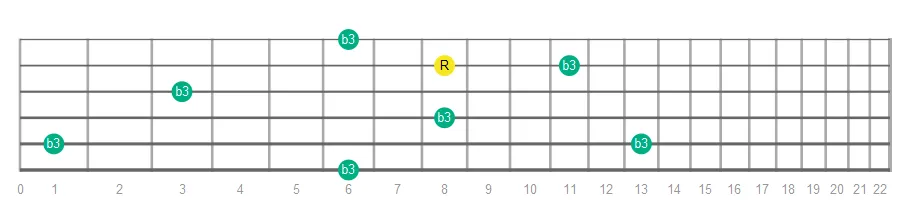
Major Third intervals with root on 2nd string
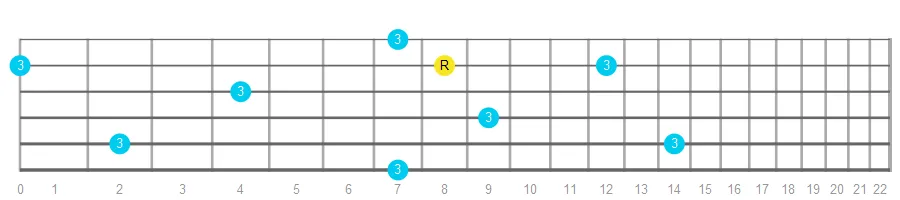
Perfect Fourth intervals with root on 2nd string
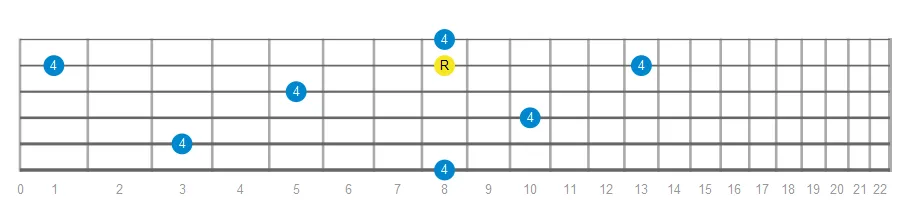
Diminished Fifth intervals with root on 2nd string
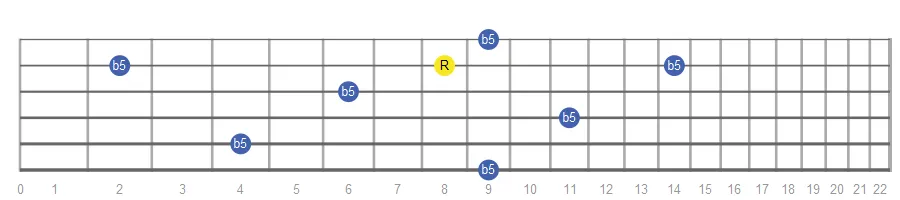
Perfect Fifth intervals with root on 2nd string
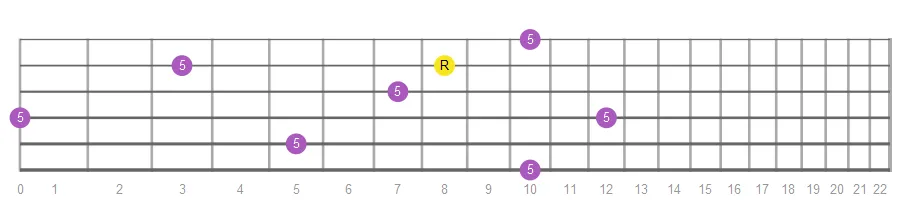
Minor Sixth intervals with root on 2nd string
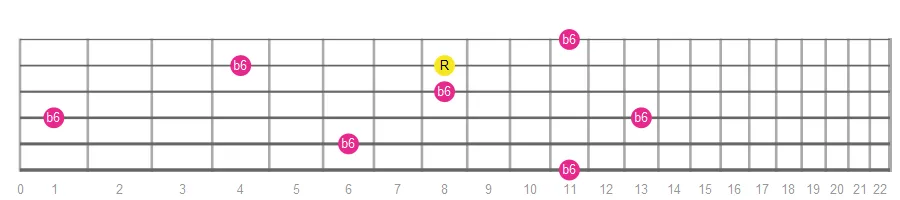
Major Sixth intervals with root on 2nd string
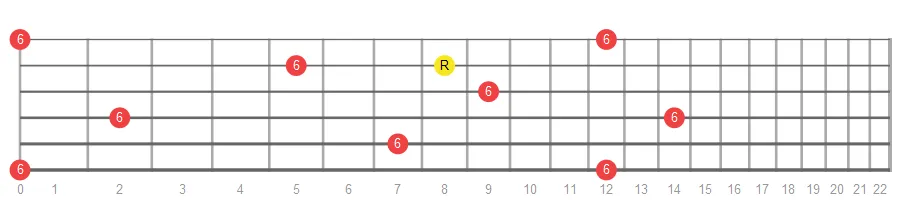
Minor Seventh intervals with root on 2nd string
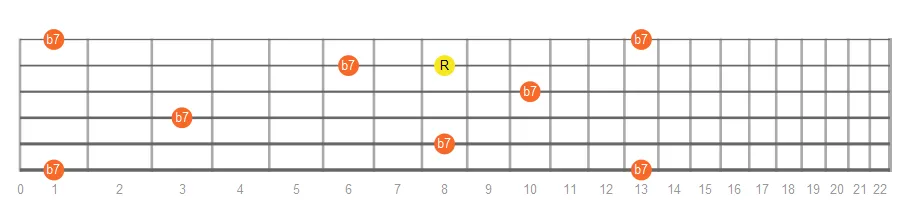
Major Seventh intervals with root on 2nd string
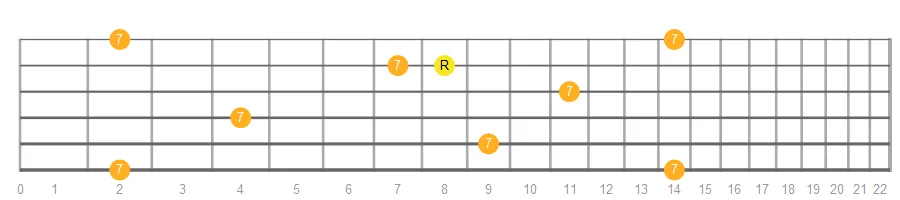
Fretboard Intervals with Root on 1st String (High E)
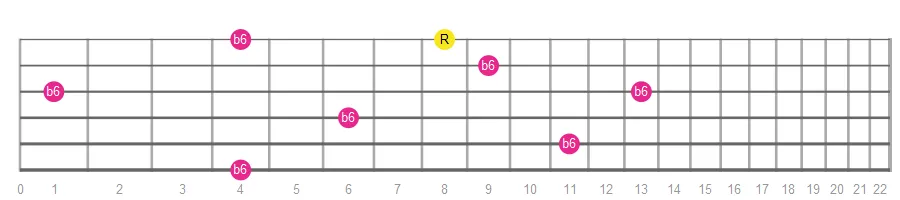
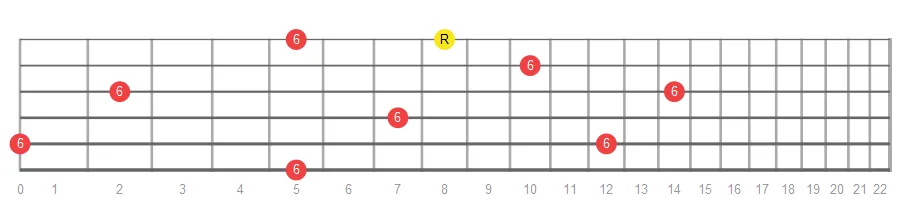
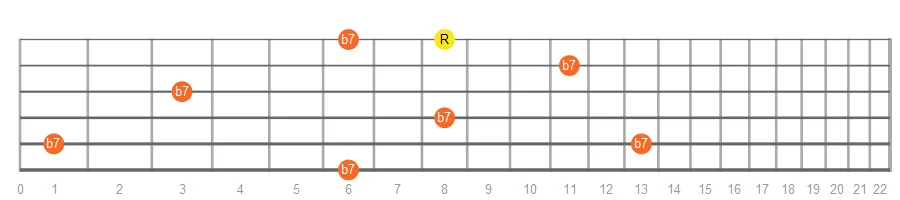
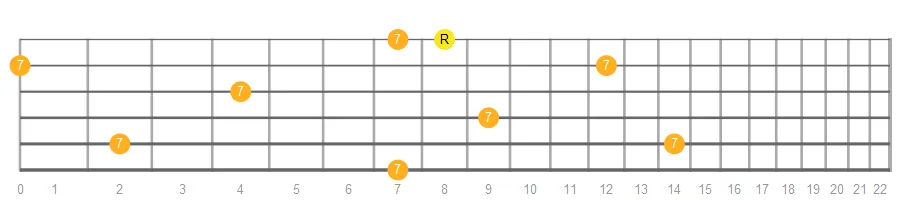
The 1st string mirrors the 6th string in note names (both are E strings). Intervals from this string mostly extend to lower strings.
Minor Second intervals with root on 1st string
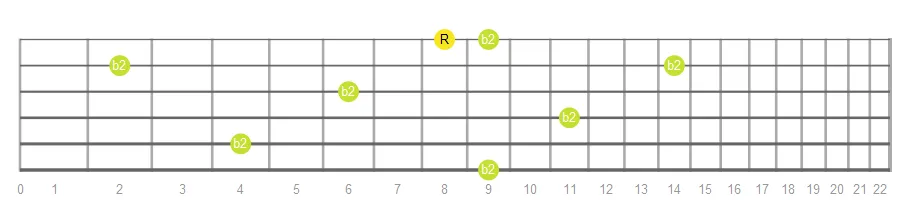
Major Second intervals with root on 1st string
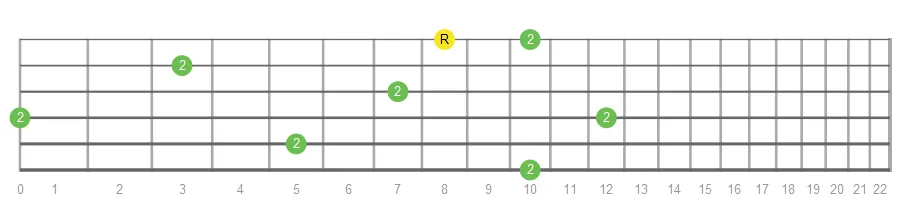
Minor Third intervals with root on 1st string
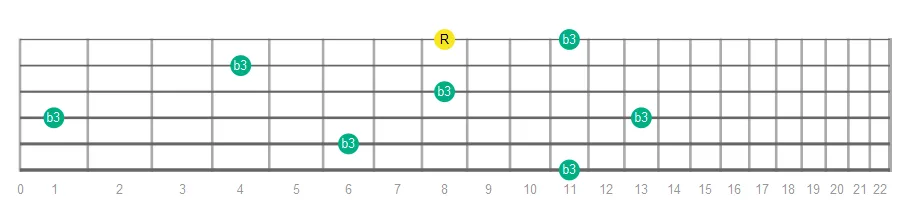
Major Third intervals with root on 1st string
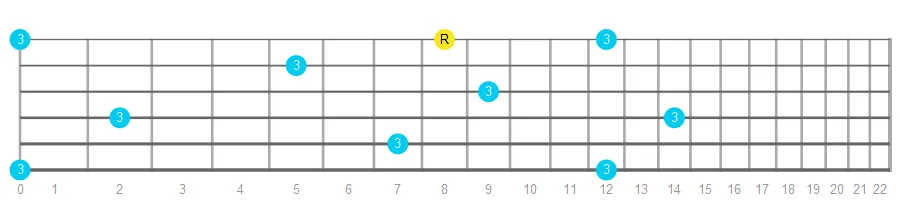
Perfect Fourth intervals with root on 1st string
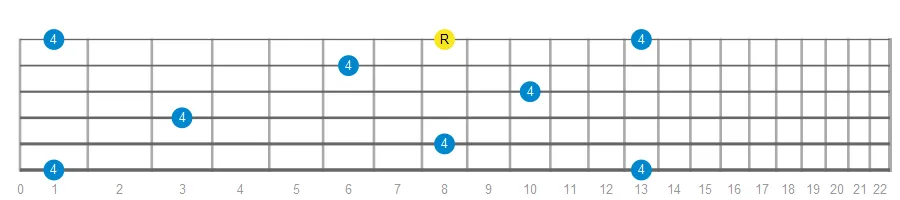
Diminished Fifth intervals with root on 1st string
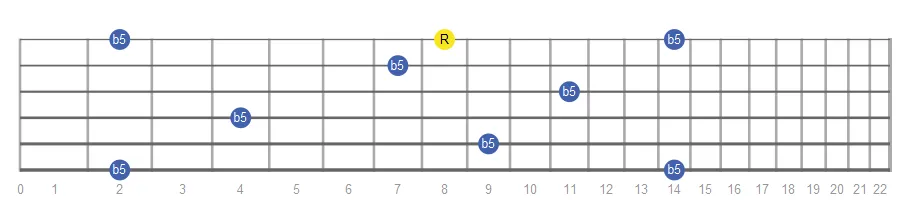
Perfect Fifth intervals with root on 1st string
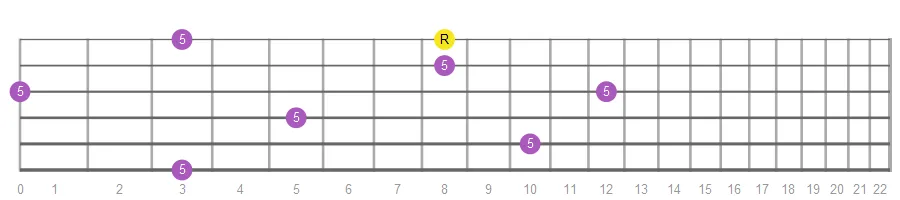
Minor Sixth intervals with root on 1st string
Major Sixth intervals with root on 1st string
Minor Seventh intervals with root on 1st string
Major Seventh intervals with root on 1st string
Conclusions
Intervals are the language of music. Once you internalize them on the fretboard, you stop thinking in terms of memorized shapes and start thinking in terms of musical relationships. You'll be able to build chords, understand scales, communicate with other musicians, and improvise with real intention.
The key to mastering intervals is consistent practice. Use the interactive game above regularly, study the fretboard diagrams, and most importantly, apply what you learn to actual songs and chord progressions.
For more resources, check out our complete guitar music theory tutorial, and don't forget to request your free access to the download page for printable chord, scale, and fretboard PDFs.

Created by
Giancarlo is a musician (teaching guitar since 2000), software engineer, AI consultant and published researcher
FAQ
What does it mean for intervals to have 'different names for the same distance,' and what are enharmonic intervals?
This refers to enharmonic intervals, where the same physical distance in semitones (half-steps) on the fretboard can be named differently based on musical context. For example, a Diminished Fifth and an Augmented Fourth both span 6 semitones. Their specific name depends on the key, scale, or chord from which they are derived, even though they sound the same on the guitar.
Why is the octave interval highlighted as the 'most helpful' interval to learn on guitar?
The octave interval is crucial because it allows you to quickly locate the same note at different positions across the guitar fretboard. By mastering the geometric shapes that octaves form (like the A, B, and C shapes shown in the diagrams), you can smoothly navigate the neck, find corresponding notes, and understand how to move chords and melodies across strings, greatly enhancing your fretboard fluidity.
How should I use the extensive fretboard interval diagrams provided in this tutorial?
The diagrams serve as a visual guide to map out all types of intervals from any given root position on the guitar. To use them effectively, select a root note on a specific string (e.g., the 6th string), then consult the corresponding diagrams to see where each interval (like a Major Third or Perfect Fifth) is located relative to that root across the entire fretboard. Consistent practice with these visual patterns will help you internalize interval relationships.
What is the difference between the 'full fretboard maps' and the 'compact visualizations' mentioned?
The 'full fretboard maps' (the bulk of the tutorial's diagrams) show all possible locations for a *single specific interval* (e.g., Minor Second) relative to a chosen root note on a particular string, covering the entire fretboard. In contrast, a 'compact visualization' (like the C7 arpeggio example shown) displays *multiple intervals simultaneously* within a specific chord or scale shape, offering a condensed view of how several intervals relate to a root note within a musical structure.