How to practice guitar with a metronome
5 Tips for a fun practice
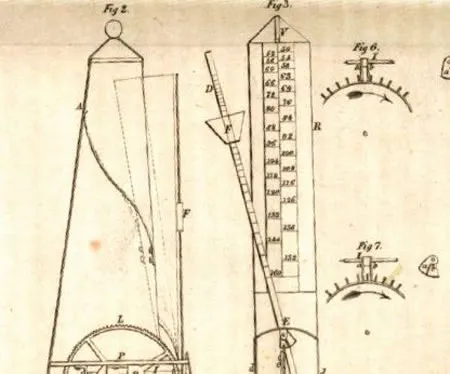
Metronomes have been around for hundreds of years, devices that produce audible clicks or beats set to a regular pulse. They were first patented for use by mister Johann Maelzel in 1815 (" Instrument/Machine for the Improvement of all Musical Performance, called Metronome "), and since have been a regular training tool for all students and professionals.
Humans are known for not being able to play in an exact tempo over time, they start to speed up or slow down as a song progresses.
Of course there are occasional drummers who are called "human metronomes" like the drummer Alan Myers from the band Devo (who could nearly play the drums like a robot!).
However, for the rest of us mere mortals, it is imperative that we use a metronome to practice.
In fact, these days I often see only heavy metal players using metronomes, to practice the amazingly fast solos they play.
Metronomes have definitely lost their importance to many beginning musicians in recent times, its time we bring them back . Here are 5 ways to improve your playing with a metronome!
Get The Best Metronome You Can
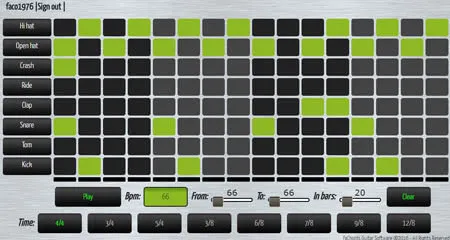
As cool as the older analog metronomes are, lets face it we can do so much more with a proper digital metronome.
There are a variety of apps, software, and digital machines to help us increase our timing ability and speed.
Here is one of the more well known app and here on this site we have our own metronome (actually a complete rhythmic station).
Of course the guitar speed trainer on our site is a little more than a simple metronome , and that is the key. With the speed trainer we can set the B eats Per Minute low , and increase them automatically after so many bars.
That way we can start out playing slow and increase our speed gradually .
The speed trainer also allows for changing a variety of parameters, which allows us to do so much more than a regular metronome.
Practice Perfectly
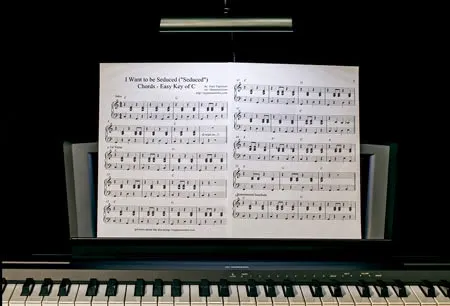
This has been mentioned before in my article " Learning how to learn how to play guitar ": practice makes perfect but only if you practice perfectly. Of course you will always make mistakes but that is why you should use the metronome .
If you keep making a mistake, slow the tempo down.
You may realize you aren't as good as you think you are, which is fine as long as you learn from your mistakes. Once you can play a scale at a certain BPM, increase the tempo, after you have mastered a faster speed, learn to switch to a different scale without missing a beat on the metronome.
Use the metronome when practicing scales, solos, and chord progressions, when a mistake is made, start over until you have it perfect .
Change The Subdivisions of the Beat
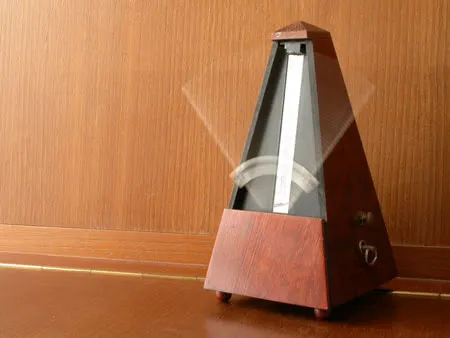
When you first start playing the metronome, choose a simple scale and play each note with the click. Start slow and over time speed the scale up.
After you have this down change the subdivisions of the beat. So instead of playing 1, 2, 3, 4 switch to eighth notes 1 and 2 and 3 and 4 and.. and then try it at sixteenth notes.
The key is to play this same scale over various subdivisions. With the FaChords metronome you can break the beat down in a variety of ways.
If you add the snare on the 3rd subdivision of each beat, you can get a triplet feel going. Next attempt to play quarter notes while the metronome is playing in eighths, and so on. Essentially the goal is to really switch up your playing , literally confuse your brain and make it think.
Thanks to digital metronomes you can to really break subdivisions and beats into endless possibilities. Use that metronome to challenge how well you can play a scale over a variety of subdivisions.
Get Creative

Now that you have the idea to use metronome software to change the subdivisions , take the creativity a step further.
Play around with time signatures, tempos, BPM's, notes, add swing if possible, and just get crazy with the metronome. Sometimes its fun to click a bunch of parameters and press play and see where it takes you!
Of course if you have trouble playing along, slow it down.
Over time you will get to know the metronome and you will be able to program certain styles right into it. That is one of the fun aspects of FaChords online metronome , it is very much like a drum machine and can be tweaked in many ways.
See how many genres you can create and play along with. Getting creative with a digital metronome is not only great practice, its hours of fun.
You might even accidentally write a song while practicing! It happened to me!
Set the Metronome to go Silent
And finally the key to great metronome practice is turning it off !
Well sort of, these days many digital metronomes can be programmed to go silent for a certain length of time.
Program them to start playing, perhaps go silent after so many bars, and then have them start up again.
The key is to see how on time you are after it starts back up. You can also place a metronome on the other side of the room, that way when you start playing you will not be able to hear it, once you stop playing you can listen to see how on time you were. The longer you use the metronome the more you will want to incorporate this aspect of silence.
After all, when you play on stage or in front of some friends and family you will not have the metronome to help you.
You want to make sure you can keep the beat perfectly during those silent times.
There are many other ideas to improve practice using a metronome, but the key is just to use one.
Whether it is digital or an old school analog, they are essential to practice. Do not make the mistake of thinking you can learn guitar without one , or you will discover down the road that your timing is atrocious .
Just remember that it can be used in a variety of ways, so there is no need to be bored with the endless ticking!
Useful links:
FAQ
Why is using a metronome crucial for guitarists, even experienced ones?
Humans naturally tend to speed up or slow down while playing, making it difficult to maintain an exact tempo over time. A metronome provides a consistent, unwavering pulse, which is essential for developing precise timing, rhythm, and overall musical accuracy in your guitar playing.
What kind of metronome is best for effective guitar practice?
While analog metronomes offer basic timekeeping, digital metronomes or specialized apps are generally superior. They often include advanced features like automatically increasing the BPM after a set number of bars, changing beat subdivisions (e.g., quarter, eighth, sixteenth notes), adjusting time signatures, and programming silent sections, which significantly enhance practice routines.
The tutorial mentions 'practice perfectly.' What does this mean when using a metronome?
'Practice perfectly' means prioritizing accuracy over speed. If you make a mistake, immediately slow the metronome tempo down until you can play the specific section or exercise flawlessly. Only once you can consistently execute a passage without errors at a given BPM should you gradually increase the tempo. This method ensures you reinforce correct technique and timing, rather than mistakes.
How can changing the metronome's beat subdivisions help improve my guitar playing?
Changing beat subdivisions, such as playing notes along with eighth or sixteenth note clicks instead of just quarter notes, significantly challenges your internal rhythm and precision. It forces you to play notes more accurately within the beat, refining your rhythmic feel. You can also play longer note values (e.g., quarter notes) against a metronome set to smaller subdivisions (e.g., eighth notes) to further develop rhythmic independence and accuracy.
How can I make metronome practice more engaging and creative?
Digital metronomes allow for creative exploration beyond basic clicking. Experiment with different time signatures, tempos, and swing feels. Some advanced metronomes can mimic drum machine patterns by adding percussive elements to specific subdivisions. This variety makes practice more enjoyable and helps you develop versatility across different musical styles and rhythmic contexts.
Why is practicing with the metronome set to 'go silent' a beneficial technique?
Programming your metronome to go silent for certain periods trains your internal clock and rhythmic independence. It forces you to maintain a steady tempo without an audible guide, revealing how accurate your internal timing truly is when the metronome restarts. This technique is crucial for developing the ability to keep perfect time in real-world scenarios, such as performing on stage or playing with other musicians, where a metronome isn't present.
