One simple exercise to master the fretboard
Turn upside-down your fretboard knowledge
In this article I'm going to talk you about an amazing and very simple exercise which will completely turn upside-down your fretboard knowledge , and remarkably improve the way you play guitar .
In the past I worked it out literally for hours, and occasionally I practice it even now (by the way, if you need to kill time in office or just want to hack your fretboard practice, check my Fretboard Trainer software out).
When you practice scales, commonly you do it in a vertical way. For example, when you are practicing C major scale you start - let's say - from the third fret on the A string and, playing two or three notes each string, you go upward. Of course this is the very first approach in practicing scales - and it's a good approach.
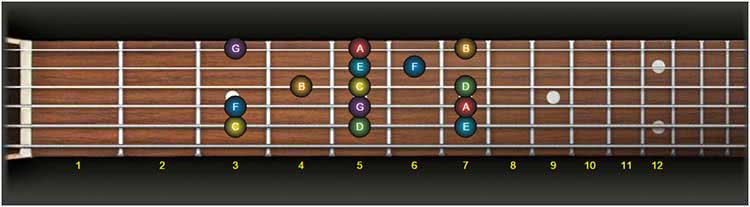
Even more useful is to get yourself used to practice scales from different positions, starting the root note from different fingers . I recommend three positions at least: from the index finger, from the middle finger and from pinkie.
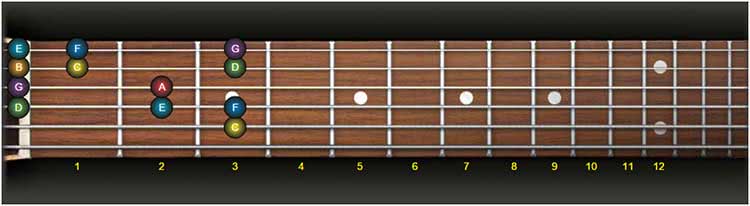
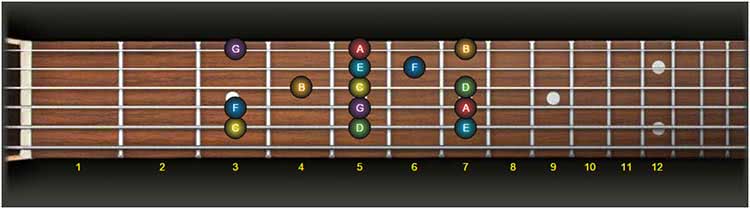
But even practicing scales in this way, you could still remain stuck to a vertical vision of the fretboard . This could limit you, and sort of become a mental cage: a bad habit! Actually, when you look at a great guitar player playing a solo, you can see his fingers moving with confidence up and down all over the neck.
This exercise I'm gonna talk you about today will extraordinarily help you in breaking this kind of mental ties. Introducing it in your daily practice routine you'll develop a really deeper knowledge of the fretboard, along with a incomparable better confidence with scales and tonalities. Guarantee! Well, here's the exercise.
It's very simple. Basically we're going to practice a scale on a string by string basis.
That means we're going to play the scale in a horizontal way , not a vertical. Let's take for example the C major scale.
The C major scale has these notes: C, D, E, F, G, A and B. What we're going to do is playing the C major scale on just one string, let's say the E string, from the lowest note possible (which in this particular case is the open string, because E is part of the C major scale) to the highest note possible. And return: from the highest note possible, downward to the lowest note possible.
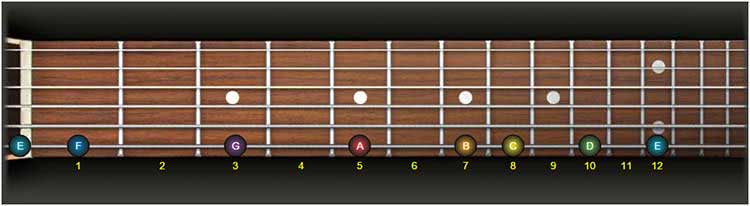
When we have done this, we're gonna do the same on the next string: we're gonna playing all the notes of C major scale from the lowest note possible on the A string to the highest note possible, and return.
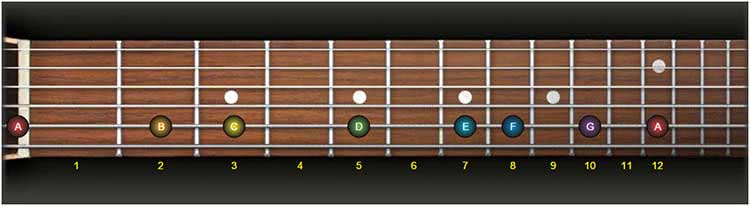
Then comes the D string, same thing; then the G string, same thing. And so on, for all the other strings. That's it! It's not important that you play this exercise very fast . It's definitely more important focus on playing accurately just the notes of the scale you are practicing on.
You have to feel confident and natural. I suggest you playing just one scale for a consistent amount of time, a week or two at least. When you'll handle it with confidence, you can try the exercise with another scale.
Obviously you can choose whichever scale you want, but I strongly recommend you going around the circle of fifths ( here you can find a nice pdf about the circle of fifths ): so, for example, after the C major scale you can practice the G major scale, which has these notes: G, A, B, C, D, E and F#.
As we said, we're gonna play these notes on the E string, from the lowest possible to the highest possible, and return; then we'll do the same on the A string; and so on.
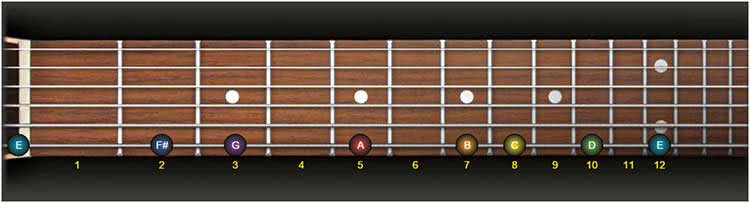
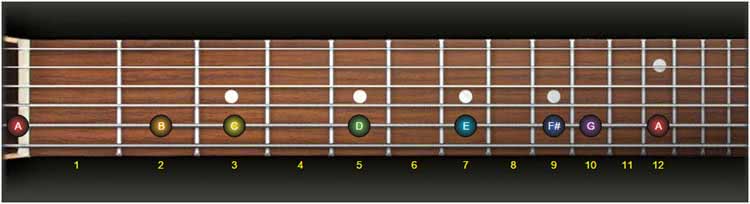
When you'll feel at ease with the G major scale, you can carry on along the circle of fifths : the D major scale, the A major scale, the E major scale, and so on.
Take your time, don't rush: dedicate the proper time to each scale, weeks or even months, until you feel very comfortable with it! As time goes on, you’ll expand amazingly your fretboard knowledge: you’ll be able to move freely through tonalities, and you’ll definitely raise your skills to a upper level!
FAQ
What is the main difference between 'vertical' and 'horizontal' scale practice on the guitar?
Traditional 'vertical' scale practice typically involves playing scale patterns across multiple strings within a fixed fretboard position. The 'horizontal' exercise, as described, focuses on playing all possible notes of a chosen scale along the entire length of a *single string*, from the lowest fret to the highest, and back down.
Why is practicing scales 'horizontally' on a single string beneficial for fretboard knowledge?
This horizontal approach helps break the 'vertical vision' where guitarists might get stuck in specific shapes or positions. By playing a scale along one string, you're forced to recognize and locate every note of that scale across the entire fretboard, which significantly improves your overall understanding and confidence in moving freely along the neck.
How exactly do I perform this single-string scale exercise?
Choose a specific scale (e.g., C major). For each guitar string, start from the lowest available note of that scale on the string, play all subsequent notes of the scale moving upwards along that string until you reach the highest possible note of the scale on that string, then play back downwards to the starting note. Repeat this process for each of your guitar strings, one at a time.
Should I focus on speed or accuracy when practicing this fretboard exercise?
Accuracy is much more important than speed for this exercise. The primary goal is to precisely play only the notes belonging to the scale you are practicing. Focus on feeling confident and natural with each note location before attempting to increase your pace.
How long should I dedicate to each scale before moving to another?
You should dedicate a consistent and substantial amount of time to each scale, at least a week or two, or even several months. The key is to feel completely at ease and comfortable playing the chosen scale across all strings before progressing to a new one.
What is the recommended method for choosing subsequent scales to practice?
After mastering one scale, the tutorial strongly recommends progressing through the Circle of Fifths. For example, after C major, you would practice G major, then D major, and so on. This systematic approach helps you gradually learn scales in related keys.
What is meant by a 'vertical vision of the fretboard' and why is it a problem?
A 'vertical vision' refers to the habit of viewing the fretboard in distinct, fixed positions or shapes for scales, rather than seeing the individual notes and their relationships across the entire neck. This can become a 'mental cage' that limits your ability to move fluidly, improvise, and truly understand the fretboard beyond familiar patterns.