How to practice guitar: tips and tricks
Learning how to learn to play guitar

Seems like a funny title right? Well, in this day in age neuroscience has advanced tremendously, in the past few decades we have gotten closer to cracking many secrets in the brain especially when it comes to behavior and learning.
Believe it or not we can take some of these newly discovered ideas and use them to learn how to learn guitar in the most effective way.
Unfortunately, we cannot take a pill or purchase an item that will make us more intelligent or more talented musicians, but we can take some basic ideas on how our brains learn and apply it to our daily practice habits, for an effective guitar practice .
In writing this post I was really inspired by the work of professor Barbara Oakley at Oakland University.
These suggestions apply to everybody, from young learners to old guitar folks.
Procrastination and focus
No matter what you are trying to learn almost everybody suffers from procrastination. Our brains are amazing at tuning out anything we do not want to do.
Of course we all want to be great guitarists, but the work we have to do to get there? Ugh.. who wants to do that! And then in steps the procrastination, one of the leading causes of failed musicians . When you feel weary or nervous about a task, your brain moves you onto something happier (if you don't have the discipline of a Navy Seal), which leads to the procrastination.
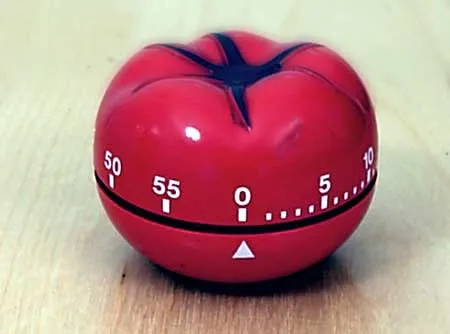
The key to changing your habits is to train your brain that you will be rewarded for the task. Set a timer for 25 minutes , turn off all distractions, and work on guitar scales, chords, or songs for the entire time.
Do not stray or stop your practice, when the timer goes off give yourself a reward. Something that you enjoy and will look forward too.
A famous example of this time management technique is the Pomodoro , a method invented by the italian Francesco Cirillo.
It may seem simple but if you do this every time you practice, pretty soon your brain will associate the practice time with a rewarding experience and you will no longer wish to procrastinate, soon you will look forward to it!
Keypoints:
- Turn off all distractions
- 25 min short focused sessions (Pomodoro timer)
- Reward yourself at the end of the session
Practice

They say practice makes perfect, and of course they are right. However, we have to remember that the practice has to be as perfect as possible to do us any good.
Practice is a learning method of repetition, so what ever we are repeating, it must be done correctly. Of course when you start playing a scale the first time you will make mistakes, but the key is to aim for perfection.
When a mistake is made you need to stop and start over until you are doing it right.
For guitarists this applies to how you hold the instrument, your right and left hand technique, and that the correct sound is being played.
If you do not correct mistakes as they are made, the practice will not lead to much advancement in the learning of guitar.
Each time you sit down to play the guitar, strive for perfection. Even if you do not achieve it, by keeping your brain focused on the correct method, your practice will be far more productive. Fewer practices done correctly outweigh the benefits of many practices done incorrectly.
Keypoints:
- Be aware of mistakes and correct them
- Strive for perfection
- Go slow
Memory

When you are playing guitar you are relying on your working or short term memory and long term memory.
Your brain is using what it has learned in the past and at the same time applying it to the new task at hand.
If you have spent hours playing scales, when it comes time to improvise a solo you will take your past knowledge and use it to create something new.
That is why it is so important to practice correctly, that way the new task is pulling from information that was properly obtained.
The key to having a good working memory is repetition , that is why a musician will play pieces over and over.
Of course guitar players also rely on muscle memory, which is a long term memory. At first it may be hard to make barre chords, but if you keep working at it with the proper technique, eventually the process will come naturally without much thought or effort.
If the solo you played above was worth playing again, be sure to practice it the same way over the course of a few days and it will be readily available in your long term memory! This technique is very effective and is called spaced repetition .
Basically you practice your scales, chords or theory, but you put a day between repetitions.
Research has shown that repeating an exercise 30 times in one single day is far less effective than practice the same exercise once a day for several weeks.
Keypoints:
- Repetition is the key
- Spaced repetition for long term memory
Sleep and Rest

One of the more important factors overlooked while learning anything new is getting sleep . Those students who study and cram all night for an exam, usually end up doing worse than they should have. That is because the brain needs rest to store any new information learned.
Without proper sleep and rest even learned tasks become difficult, let alone something new that you are trying to retain. As for muscle memory,
it can be quite surprising how well it is maintained after proper practice and rest.
It is very possible to over practice, which doesn't lead to any gains in the long run.
For most beginning guitar players, it is wise to practice about 25 minutes a night and to take at least two days off during the week (just be sure they are not consecutive days). Sleep and rest are essential to the learning process , let your brain use that time to tidy up and reinforce the connections you have taught yourself during practice.
Keypoints:
- During sleep your brain elaborates what you have practiced
- Sleep and rest are essential to the learning process
Change Your Practice Routine

Every now and then it is good to change how you practice, it will not only help your brain learn new tasks, it also trains you to play in more stressful situations.
Different methods of change include; play standing up if you are often sitting down, try playing completely different genres, time signatures, and styles that you are not used to (check this guide on the best online guitar lessons to find new things learn), try silent rehearsing (playing the left hand scales without actually making any sound, perhaps while watching TV or engaging in another activity), and most of all practice with others.
The last one is very important even if you never plan to play in a band. By practicing with others you train your ears to listen , which is very important in the world of guitar playing.
At the same time that disciplined practice is very important, don't be afraid to try new and difficult techniques . Even if you fail this is an important step in advancing your brain to higher levels.
Just remember if you fail to figure out why you failed, and start over until you can do it correctly.
Keypoints:
- Once a while try something new
- Challenge yourself with difficult things
- For new ideas, exercises and lessons check out the complete guitar courses guide .
How to practice guitar: conclusions
If you use these scientific learning techniques correctly, not only will you become a great guitar player , it will stay with you for a long time. I once had a period of 4 months where I was not able to play guitar, surprisingly after I started again it only took a few minutes to shake off the rust and get back into the groove.
When you learn how to learn.. what you learn stays with you!
For more information and insights, check out the "
Learning how to learn
" class
on Coursera at
this link
.
And you? Do you have some guitar practice tips that you'd like to share?
Drop
a comment below
!
FAQ
How can I overcome procrastination and stay focused during my guitar practice sessions?
To combat procrastination and enhance focus, implement short, dedicated practice sessions. Set a timer for 25 minutes, eliminate all distractions, and concentrate solely on your guitar task. Crucially, reward yourself immediately after the timer goes off. This method, similar to the Pomodoro Technique, trains your brain to associate practice with a positive outcome, making it easier to engage in future sessions.
What is the most effective way to handle mistakes when I'm practicing guitar?
When you make a mistake, stop immediately and correct it. Do not continue practicing the incorrect movement or sound. Your goal should be to strive for perfection in each repetition. Practicing slowly and deliberately to ensure accuracy is far more beneficial than repeatedly practicing incorrectly, as this prevents ingrained errors and builds correct muscle memory.
Why is 'spaced repetition' considered a highly effective memory technique for guitarists?
Spaced repetition is effective because it leverages how your brain stores information long-term. Rather than practicing a new scale or chord extensively in one sitting, it's more beneficial to practice it once a day over several weeks. This allows your brain to solidify the learning over time, moving the information from short-term to long-term memory, which makes it more accessible for recall and performance without conscious effort.
How does sleep and rest impact my progress as a guitarist?
Sleep and rest are essential for effective learning and skill retention. During sleep, your brain processes and consolidates the information and motor skills you've practiced, reinforcing neural connections. Without adequate rest, your ability to retain new knowledge and execute learned tasks diminishes. Proper rest prevents over-practice and allows your brain to integrate new skills, making your practice sessions more productive in the long run.
How long should a beginner guitarist practice daily, and what is a good rest schedule?
For most beginning guitarists, an effective practice duration is about 25 minutes per day. It's also important to incorporate rest into your weekly schedule, ideally taking at least two non-consecutive days off. This balance allows your brain sufficient time to process and consolidate what you've learned without risking burnout or over-practice.
When should I consider changing my guitar practice routine, and what are some ways to do it?
It's beneficial to change your practice routine occasionally to stimulate new learning and adapt to different playing scenarios. Ways to vary your routine include practicing standing up if you usually sit, exploring different genres, time signatures, or styles, engaging in silent rehearsing (e.g., left-hand finger exercises without sound), and practicing with other musicians. Challenging yourself with new and difficult techniques, and learning from any failures, also contributes significantly to your development.
