Which Sound to Use for Guitar Practice?
Pros and Cons of Clean, Crunch and Distortion Tone
 If you read and watch enough guitar lessons, you will see a variety of opinions on whether you should practice
with a clean guitar sound or with distortion. For the best results on
guitar, you
should use both. In this article we will discuss the difference in guitar tones like clean, crunch, and distortion and how they should be used in practice.
If you read and watch enough guitar lessons, you will see a variety of opinions on whether you should practice
with a clean guitar sound or with distortion. For the best results on
guitar, you
should use both. In this article we will discuss the difference in guitar tones like clean, crunch, and distortion and how they should be used in practice.
The Rising Guitar Tone
The original popular American instrument in the 1800's was the loud banjo. Guitars gained in favor in the 1900's but they couldn't keep up with the volume of the big band instruments and orchestras. While early microphone recordings helped the guitar stand out, it was amplification that made it the centerpiece of most pop music from 1955-2000ish.
These days guitars do not have the prominence they once had, but they are still relevant. And they never would have reached such popularity if it wasn't for the exploration of guitar tones. Especially for a solid body electric! With no acoustic space and just an electric signal, we must try everything we can to get the guitar sound to stand out.
The Need for Distortion
A clean guitar signal can sound amazing in the right song but as the blues and rock progressed, artists began turning their vacuum tube amps up to high volumes so they would cause distortion. The next step was accidentally or purposely damaging amplifiers to get specific gritty sounds.
Broken equipment is mostly what led to many of the first effects like fuzz boxes. The Rolling Stones, Jimi Hendrix, and The Beatles all used various fuzz distortion boxes, and then Pink Floyd came along with a slightly cleaner but still distorted sound.
Musicians and companies were then actively finding new ways to modify the electric signal to sound complex and warm, or loud and the obvious lead instrument. You can now choose tube screaming distortion, solid-state-distortion, a myriad of overdrive pedals, amplifier speaker distortion (nothing like regular speakers); and they can sound crisp or crunchy!
Why practicing with a clean tone is better
One of the best parts of playing with a clean sound is that each note mistake and imperfection is audible. If you have sloppy technique, then you need to start with clean tones. Even if you have plans for playing distorted music, you need to have some guitar basics down before moving on.
Generally, a beginning guitarist will want to practice with a clean and quiet tone, it doesn't help the confidence when there are loud distorted squelches of the wrong notes.
When you are playing scales and clean arpeggios, they will also sound a lot better and nicer with a clear tone, too much distortion will muddy them up. Alternate picking, legato, and tremolo picking are usually better to start out with clean tones.
Proper picking articulation will also be a lot easier to work on with a clean sound, as any distortion will cover it up. With large amounts of distortion, the gain is so high it is hard to differentiate between individual note dynamics.
Practicing with a clean tone is usually best when you are first learning a song. Get the technique down and the proper articulation and then move onto distortion if it requires it.
Why practicing with distortion is better
The compressed and amplified signal creates a lot of noise and feedback. When a guitarist normally plays with a clean tone they will be surprised by the extra noise of distortion. But there are many times when that comes in handy.
Muting strings is also a lot easier to practice with distortion, and it is one of the main reasons to use with the overdriven sound. It is a lot more obvious and louder when you do not mute the proper string. When you mute strings you do not want a single sound to come from them, and with distortion you will hear any problems.
A little bit of distortion will also help with note bends, especially if the overdrive gives it sustain. And sweep picking works best with distortion, so you are aware of any excess noise in the strings.
With more of a crunch sound, you can focus more on practicing dynamics, tone, and expressivity. Your distortion doesn't always have to be used in a loud or excessively overdriven way. Fuzz and crunch effects can be used to shape the notes beyond just your physical playing technique.
With the right amount of distortion, you can add overtones, texture, and other aspects to the music that would never be possible with a clean tone.
How to Practice with Clean, Crunch, and Distortion Tones
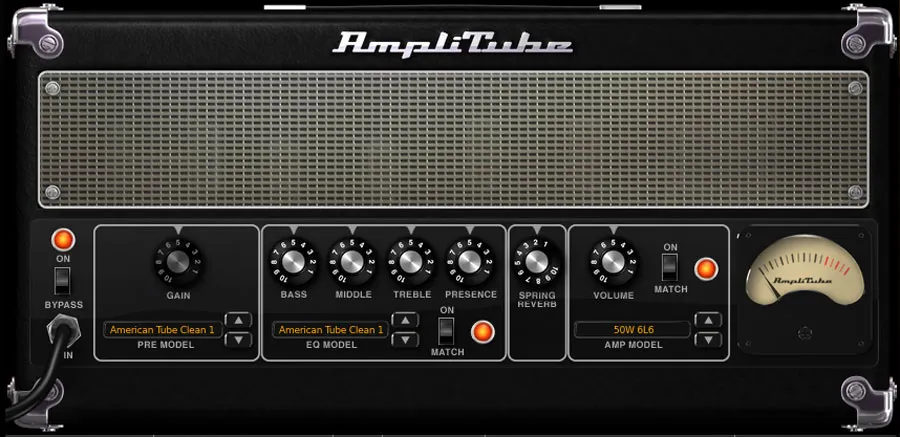
In the past you would have to buy a nice amp if you were going for a particular sound, or even a cheaper alternative with lots of effects like a Line 6. If you have the money to buy amps and distortion pedals, they are mostly analog and the better choice. But these days there are apps and software that model all guitar tones.
There are many to choose from, and they make it so you can try out a huge variety of guitar tones, just the presets alone are worth it. They will make it easy to play with clean, distorted, fuzz, crunch, and overdrive tones. Guitar amp modeling software is a modern miracle for guitar players.
Song Examples of Clean, Distortion, Overdrive, and Crunch
- Clean guitar examples are never hard to find, but a few are very clean. Songs like "Beast of Burden", "Hallelujah", and "Hey Nineteen".
- Some great crisp distortion is heard in In "A Gadda Da Vida"
- Guns n Roses is heavy on overdrive in most of their songs and it even shows up in hip hop bands like in "Sabotage".
- A great early example of crunch is "Walk This Way" and "Aqualung".
- Finally, most punk and heavy metal music is filled with some type of distortion.
Obviously whether you practice more with clean or distorted sounds will depend on your genre and style you want to play. If you are going for a clean jazz fusion then you will have a little overdrive and some other warmth, but generally a clean tone. If you are in a death metal band, serious distortion may be necessary.
If you aren't sure, just play it safe and practice with a variety of guitar tones! And don't forget, sometimes you want to turn the amp completely off and just work on muscle memory and hitting notes properly without any signal at all.
That's all for today, don't forget to subscribe here, you'll be notified on new published content and you'll get access to the free download area.
FAQ
How does practicing with distortion or crunch help improve specific guitar skills?
Practicing with distortion or crunch is highly beneficial for refining string muting, as any unmuted strings become much louder and more obvious. It also aids with note bends by adding sustain, and with sweep picking by highlighting excess noise. A crunch sound, in particular, helps develop dynamics, tone, and expressivity, allowing you to shape notes and add overtones or texture beyond just physical playing technique.
When should I choose to practice with a clean tone versus a distorted tone?
You should generally start with a clean tone when first learning a song or focusing on fundamental techniques like articulation, to clearly hear and refine every detail. Once your technique is solid, switch to a distorted tone if the song requires it. This allows you to practice how the sound behaves with effects, focusing on muting, dynamics, and sustain that are specific to the distorted style.
What specific guitar techniques are best developed using a clean sound?
Techniques like alternate picking, legato, tremolo picking, and proper picking articulation are best developed with a clean sound. This clarity allows you to precisely hear and work on individual note dynamics and accuracy without the high gain of distortion covering up subtle imperfections or making it hard to differentiate individual notes.
Can guitar amp modeling software assist in practicing with different tones?
Yes, guitar amp modeling software is a modern and versatile tool. It allows guitarists to easily access and experiment with a vast array of tones, including clean, distorted, fuzz, crunch, and overdrive, without the need to purchase multiple physical amps or pedals. This makes it convenient to try out different sounds that are relevant to various genres and techniques during practice.
Is it beneficial for guitarists to practice without any amplified sound at all?
Absolutely. Practicing without any amplification is highly beneficial as it allows you to focus purely on muscle memory, precise finger placement, and hitting notes accurately. This ensures your physical technique is strong and independent of any sonic distractions or reliance on the amplifier's output.
